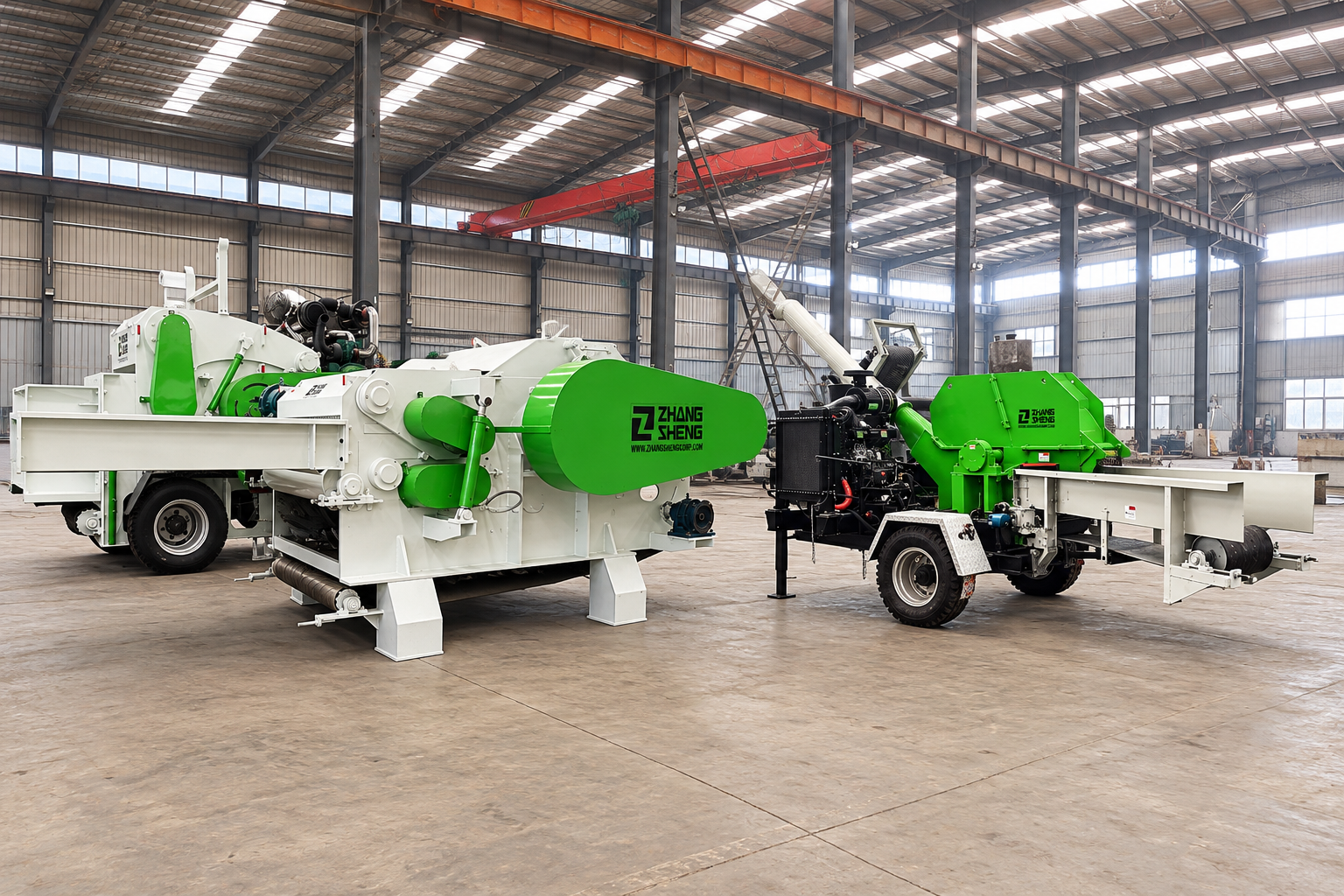
Branches do not look expensive until they block the worksite, slow the crew, fill trucks, and turn a clean job into a cost problem.
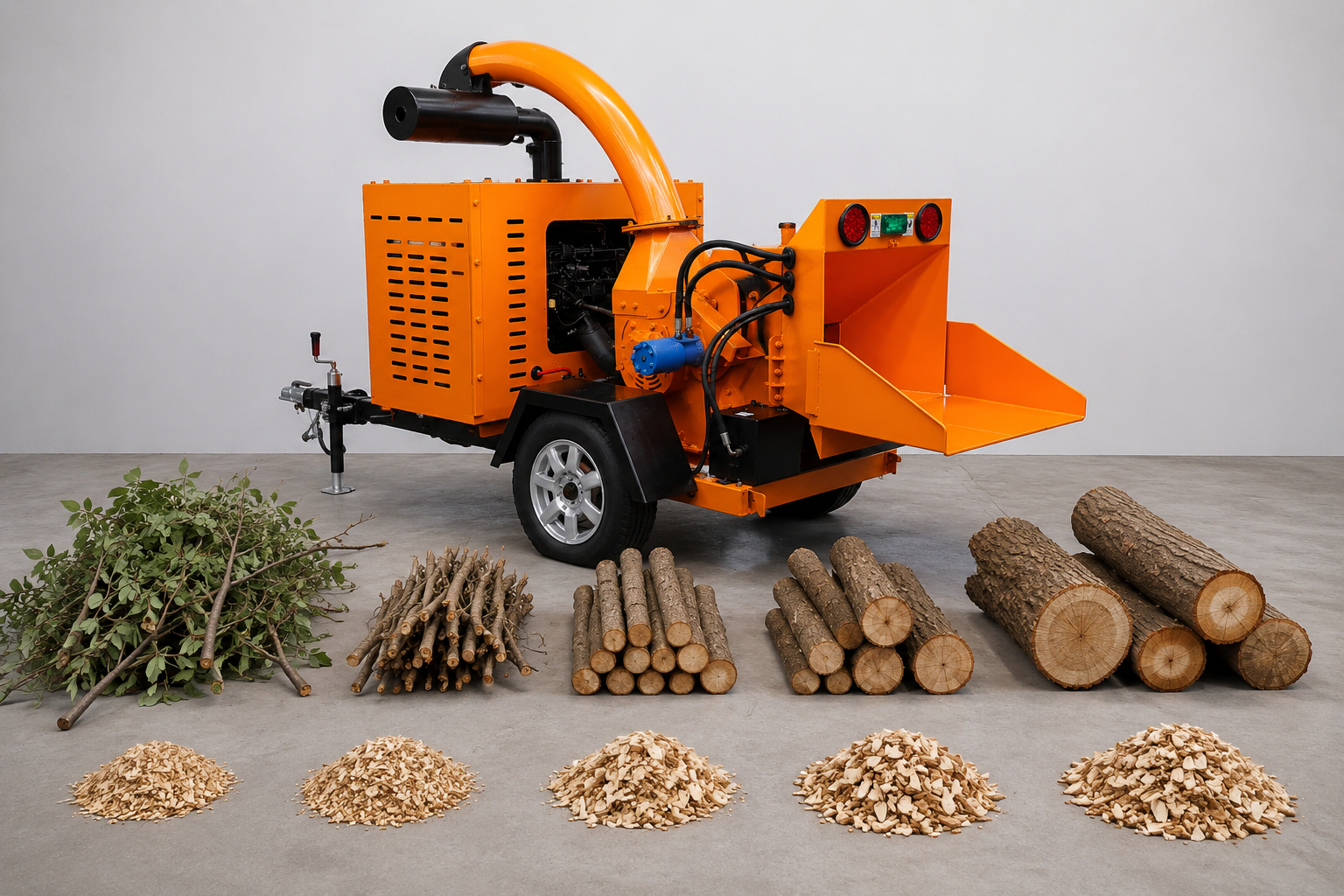
Commercial wood chippers help tree care professionals reduce bulky branches into manageable chips on-site. This cuts handling time, lowers transport pressure, improves job flow, and gives crews better control over pruning, removal, and green-waste work.
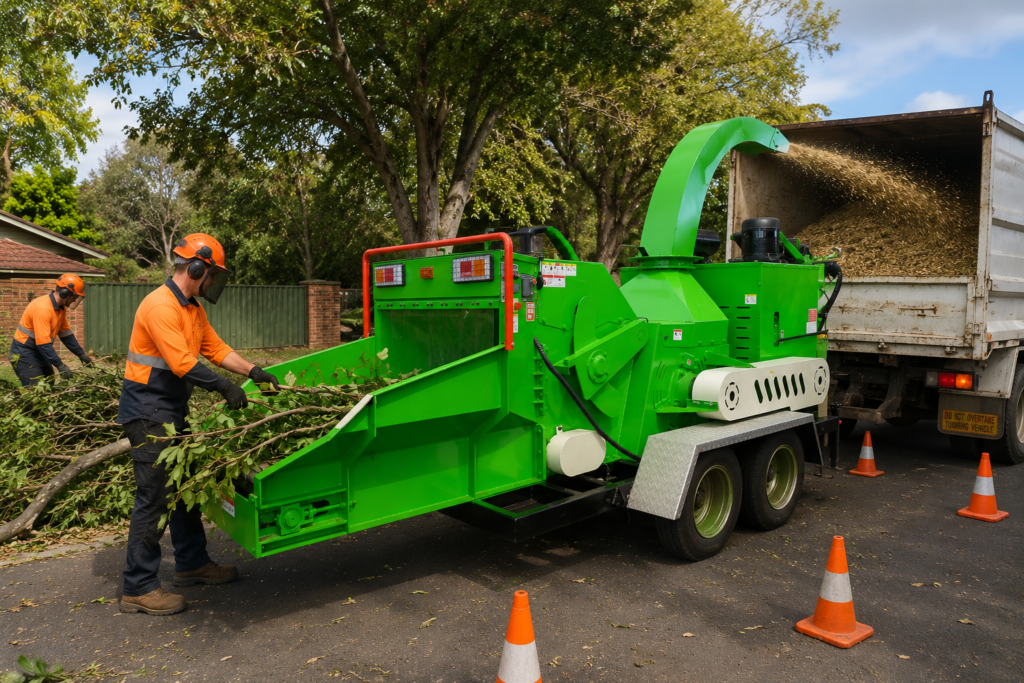
Many buyers first ask about engine power or maximum feeding diameter. We understand that question, because it is simple. But in our customer communication, the better question is usually about work continuity. A tree care team does not only need a machine that can chip one large branch. The team needs a machine that can keep working through mixed branches, wet leaves, forks, and daily jobsite pressure without constant stopping.
Why does jobsite waste make a commercial wood chipper necessary?
A pruning job can finish quickly, but branch cleanup can take longer than expected. That hidden labor can eat the profit from the whole project.
A commercial wood chipper is necessary because it turns loose branches, trunks, and green waste into compact chips at the jobsite. This reduces loading work, truck volume, disposal trips, and cleanup time after pruning or tree removal.
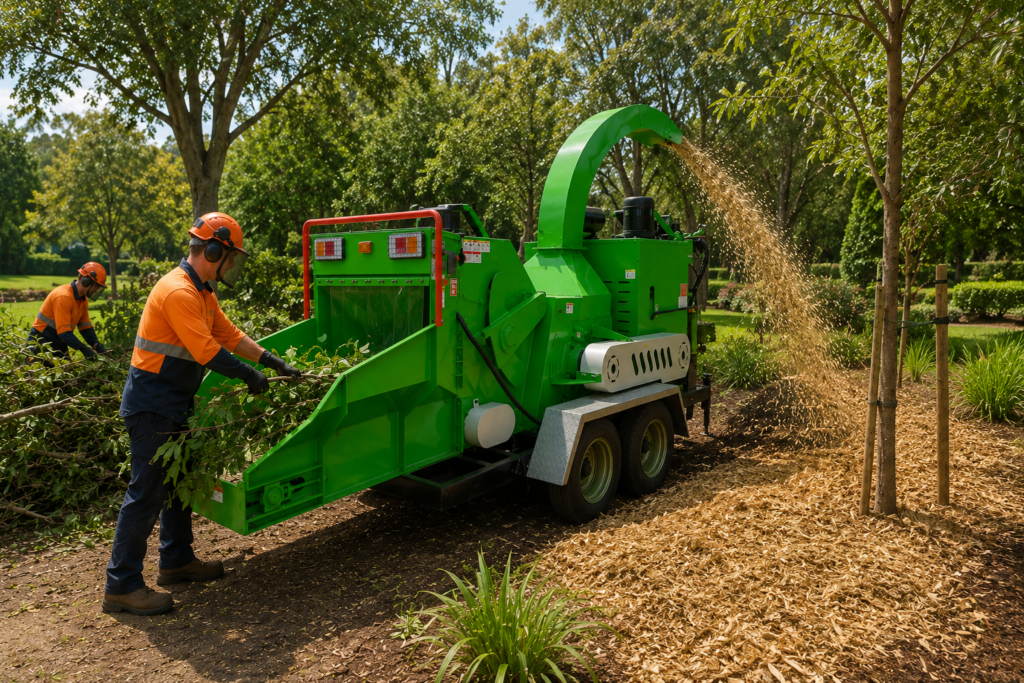
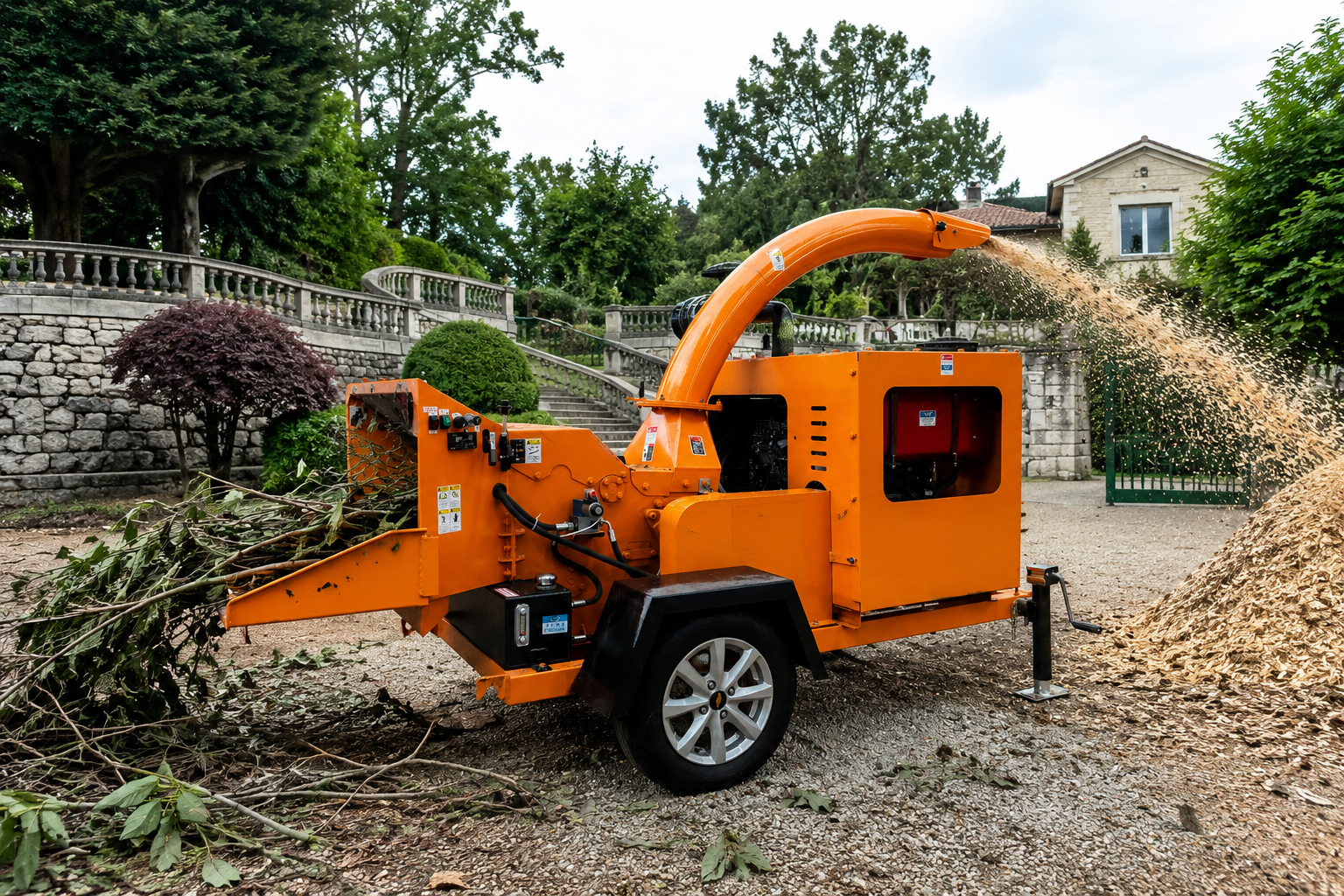
After tree pruning or removal, the real problem is often not cutting. The problem is movement. Long branches are hard to stack. Forked branches take space. Wet green waste adds weight. If workers load whole branches by hand, the truck fills fast and the crew loses time. A commercial chipper changes the work order. The crew can feed material near the cutting area, discharge chips into a truck body, a hopper, or a safe ground pile, and keep the site cleaner.
From a manufacturer view, this is where machine design connects directly with business cost. A strong feed system reduces manual pushing. A wide feed opening helps with branches that are not perfectly straight. A 360-degree discharge chute helps the operator place chips where they are useful. The final chips are not “magic profit,” but they are easier to move, store, or reuse.
| Jobsite Problem | Without Chipper | With Commercial Chipper |
|---|---|---|
| Long branches | Hard to load | Fed into machine on-site |
| Truck space | Fills quickly | Chips take less space |
| Labor | More lifting and cutting | More continuous feeding |
| Cleanup | Slow and messy | More controlled workflow |
| Disposal | More trips | Fewer transport loads |
What makes a chipper truly commercial-grade?
A light machine may work for a garden, but commercial tree care needs repeat work, tough feeding, safety control, and lower downtime risk.
A commercial-grade chipper is built for regular paid work. It usually has stronger feeding, harder blades, hydraulic control, safety devices, better cooling, and mobility options that help reduce clogging, overload, and project delays.
“Commercial-grade” should not mean only “bigger.” We see many buyers compare only maximum diameter. That can lead to a wrong choice. A real commercial machine should control risk during a full day of work. The feed rollers must grip branches. The blades must stay sharp enough for stable chip quality. The hydraulic system must control feeding speed and reverse feeding when needed. The cooling system must support warm weather and long use. Safety devices must be easy to reach, because operators work close to moving material.
A screenless drum chipper, for example, is often used because it supports higher working efficiency and lower blockage risk. This matters when crews process wet branches and mixed green waste. But the design also means chip size cannot be controlled with the same precision as a screened system. That trade-off should be understood before purchase.
| Commercial Feature | Why It Matters in Tree Care |
|---|---|
| Hydraulic dual feed rollers | Grip uneven branches and reduce hand pushing |
| Drum cutting system | Supports fast branch chipping and strong discharge |
| Safety bar and emergency stop | Helps protect operators near the feed inlet |
| Semi-automatic lubrication | Reduces bearing maintenance difficulty |
| Road chassis or tracks | Fits different jobsite movement needs |
| Cooling support | Helps during long work or hot weather |
How should tree care companies choose the right chipper size?
The best model is not always the largest model. The best model matches the normal branch diameter and the real daily workload.
Tree care companies should choose a chipper by normal working diameter, material type, daily processing volume, mobility need, and chip use. Maximum feed diameter and purchase price are useful, but they should not be the only selection points.
In our pre-sales work, we often see buyers start with the largest branch they might process once a month. That is understandable, but it can create extra cost. A better starting point is the normal branch diameter processed every day. If most material is 8 to 12 cm, a small or medium chipper may give better cost control. If daily jobs include 20 to 30 cm trunks and heavy pruning waste, a larger commercial model is more practical.
Output need also matters. A machine that is too small may overload, slow down, or need more cutting before feeding. A machine that is too large may cost more to move, ship, maintain, and fuel. Mobility should also be defined early. Some crews need simple short-distance movement inside a yard. Others need a road chassis for cross-town work. Forest or muddy jobs may need rubber tracks or steel tracks.
| Selection Question | Practical Meaning |
|---|---|
| What is the normal branch diameter? | This decides the realistic feed opening need |
| What material appears most often? | Hardwood, vines, wet waste, and palms behave differently |
| How many hours per day will it run? | This affects engine, cooling, and blade wear |
| How will the machine move? | Yard use, road towing, or tracked movement are different |
| Where will chips go? | Mulch, compost, biomass, or transport reduction need different expectations |
What misunderstandings should buyers avoid before purchase?
Wrong expectations create more trouble than the machine itself. A chipper must match the material, the job, and the operator’s working method.
Buyers should avoid three common mistakes: using light-duty machines for continuous paid work, expecting screenless chippers to make perfectly uniform chips, and ignoring difficult materials such as palm leaves, vines, and high-fiber waste.
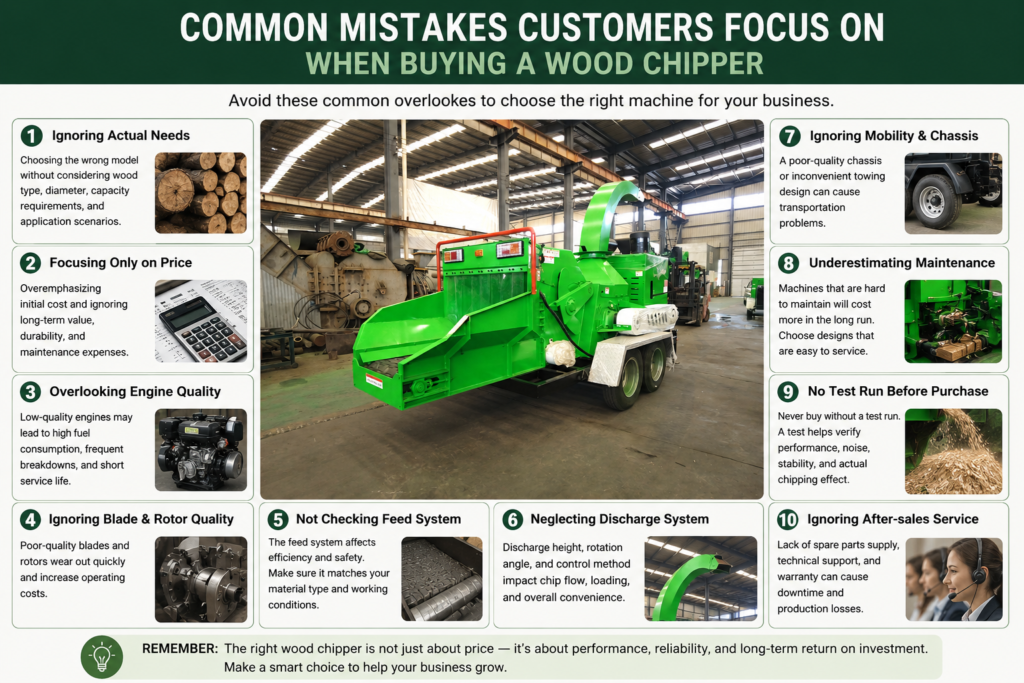
One common misunderstanding is that a small garden chipper can do commercial work if the crew feeds more slowly. This may work for occasional jobs, but it is not a stable plan for daily service. Light-duty machines usually have weaker feeding, smaller openings, lighter frames, and less tolerance for long operating hours. The cost may look lower at the start, but stoppage and slow work can become more expensive.
| Misunderstanding | Better View |
|---|---|
| “Maximum diameter is enough to choose.” | Normal diameter and daily workload matter more |
| “A cheap light machine can run all day.” | Commercial use needs stronger systems |
| “Screenless means controlled chip size.” | It allows fine tuning, not precise uniformity |
| “All green waste chips well.” | Palm leaves, vines, and fibers need caution |
| “Any waste wood can be fed.” | Metal, stones, plastics, and painted waste can damage or contaminate |
Another misunderstanding is chip size control. Screenless chippers can fine-tune chip size by changing feed speed and the gap between the blade and anvil. Sharp blades also improve chip consistency. But a screenless chipper cannot produce highly uniform chips like a screened machine or a system with downstream screening. This point is important for buyers who plan to sell chips to strict end users.
Material limits also need respect. Metal, stones, glass, plastic, fabric, drywall, and oversized wood should not enter the chipper. Palm leaves may not become fine chips and may block discharge. Vines and bamboo may wrap if feeding is not controlled. Hardwood such as oak or walnut wears blades faster, so harder blade material may be needed.
How can wood chips support the business value of tree care work?
Chips may reduce cost and create useful material, but the value depends on local demand, chip quality, and final use.
Wood chips can support business value as mulch, compost input, biomass fuel, erosion-control material, or transport-reduction material. Tree care companies should confirm local buyers and quality needs before treating chips as a fixed revenue source.
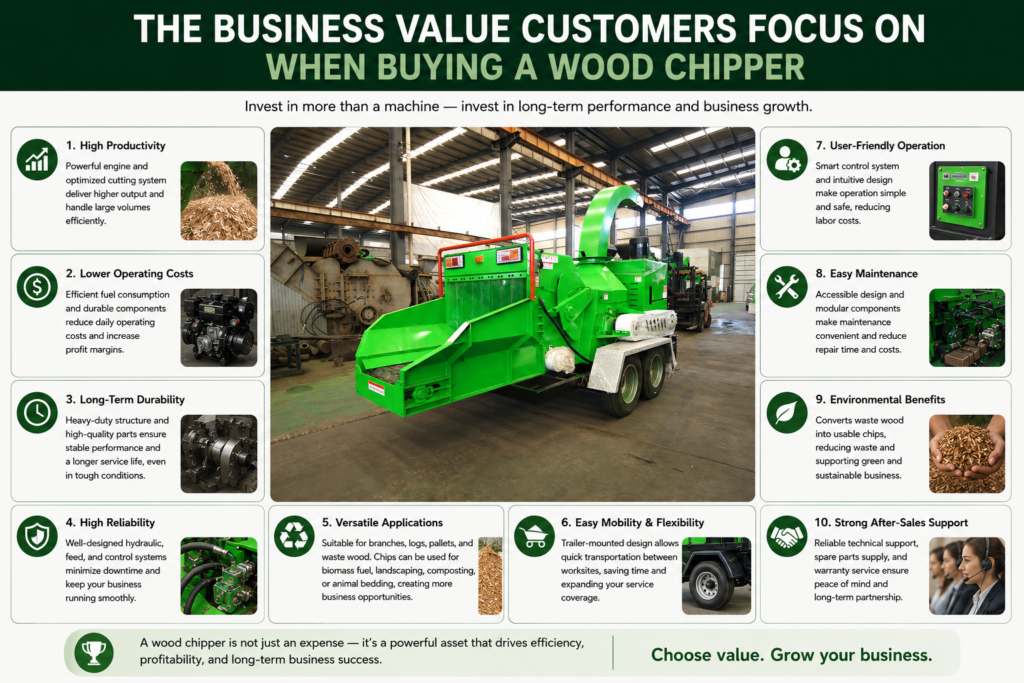
A commercial chipper gives tree care work more than waste reduction. It gives material control. Chips can be used for landscaping mulch, compost raw material, biomass fuel, soil erosion control, or playground surfacing when quality requirements are met. But we prefer careful language here. Chips do not always create direct income. Local market demand decides much of the value. Moisture, leaf content, bark content, chip size range, and contamination all affect the final use.
A commercial chipper can lower disposal costs, speed up job completion, improve green-waste handling for municipal teams, and solve common waste problems for dealers’ tree care, landscaping, and city maintenance customers.
The chipper configuration should follow the chip use. If chips only need to reduce transport volume, screenless output may be enough. If chips must meet strict biomass or mulch standards, extra sorting or screening may be needed after chipping.
| Chip Use | What Buyers Should Check |
|---|---|
| Landscaping mulch | Appearance, size range, leaf content |
| Compost input | Moisture, green-to-wood ratio |
| Biomass fuel | Clean wood, size range, moisture |
| Erosion control | Volume and site requirements |
| Transport reduction | Fast discharge and easy truck loading |
What should international buyers and dealers ask before choosing a machine?
A good purchase starts with clear work details. Choose the machine based on the real job, not just the catalog headline.
International buyers and dealers should define material diameter, daily volume, engine or emission needs, shipping plan, after-sales support, and mobility type before ordering. These details help avoid under-sized machines, excess cost, and service problems.
For export projects, we usually ask simple but important questions first. What is the normal branch diameter? What is the largest diameter that appears often, not once a year? Is the material mostly dry wood, wet branches, palm leaves, vines, bamboo, or hardwood? Will the machine work in a city, farm, forest, recycling yard, or road maintenance site? Will it be towed on public roads, moved inside a jobsite, or fitted with tracks for soft ground?
These questions are not just sales steps. They reduce future trouble. Engine emission standards may need Euro 5 or EPA options in some markets. Hot regions may need stronger hydraulic cooling or a larger hydraulic oil tank. Cold regions need correct antifreeze use. Dealers should also consider spare blades, lubrication, bearing access, and operator training. A machine that looks cheap but is hard to maintain can become difficult to support after sale.
| Buyer Detail | Why It Should Be Confirmed |
|---|---|
| Normal material diameter | Prevents under-capacity or over-buying |
| Daily working hours | Helps match power and cooling |
| Material type | Affects blade choice and clogging risk |
| Mobility need | Decides simple chassis, road chassis, or tracks |
| Emission rules | Avoids customs or registration problems |
| Chip end use | Sets realistic output expectations |
| Support plan | Reduces downtime after delivery |
Conclusion
Commercial wood chippers matter because they control waste, time, safety risk, and cost. Define material, volume, mobility, and chip use before selecting a configuration.