
horizontal grinder selection from the final use backward. Material type, target particle size, screen setup, tools, feed method, and service support matter more than horsepower alone.
A wrong grinder can look strong on paper, fail in daily work, and turn wood recycling profit into downtime.
A high-performance horizontal grinder is one that keeps stable output under real material conditions. Buyers should define the final product first, then match the screen, hammer or tool system, feed setup, mobility, wear parts, and after-sales support to that use.
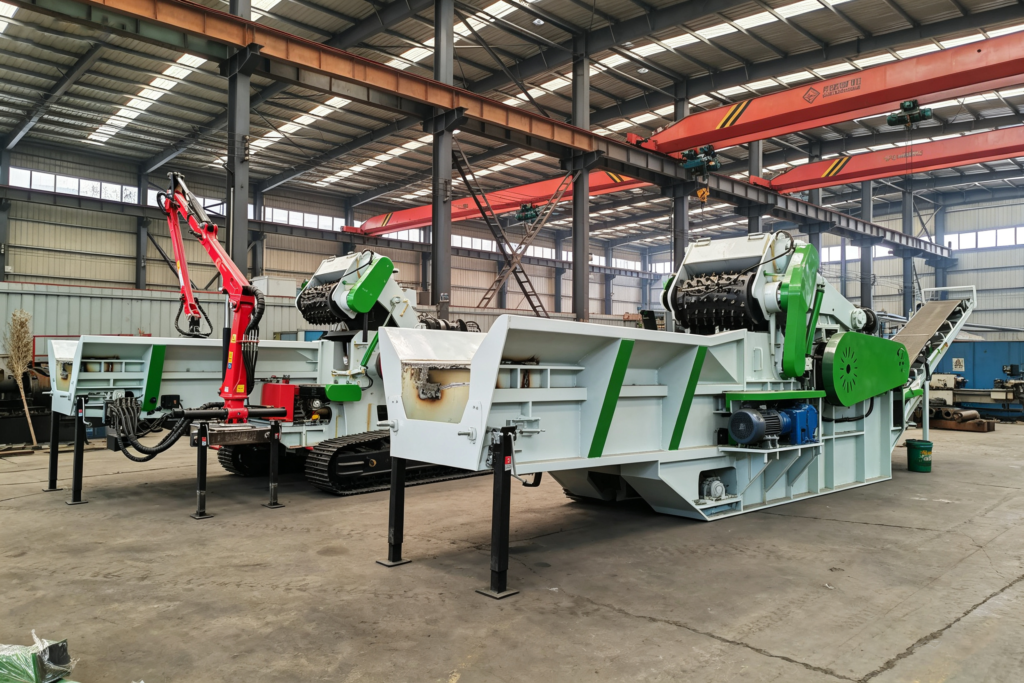
Many buyers start with one question: “How many tons per hour can it process?” That question is easy to ask, but it is not enough. A grinder processing clean dry pallets is not doing the same job as one processing wet roots, green waste, or mixed recycling wood.
In customer consultations, this issue appears again and again. A promised capacity number may sound clear, but it becomes unclear when the screen hole size changes, when moisture rises, or when the feed material includes soil and metal.
A better buying process starts with the final use. The buyer should ask what the output will become. It may become boiler fuel, mulch, compost material, pellet feedstock, or volume-reduced waste. Each use needs a different particle size, different consistency, and different cost control plan.
What Does “High Performance” Really Mean for a Horizontal Grinder?
A grinder with high power can still disappoint the buyer if the output is unstable, the chamber clogs, or wear parts fail too often.
High performance means stable grinding under the buyer’s real material conditions. It includes consistent particle size, controlled wear, smooth feeding, easy maintenance, good safety design, and reliable service support after delivery.
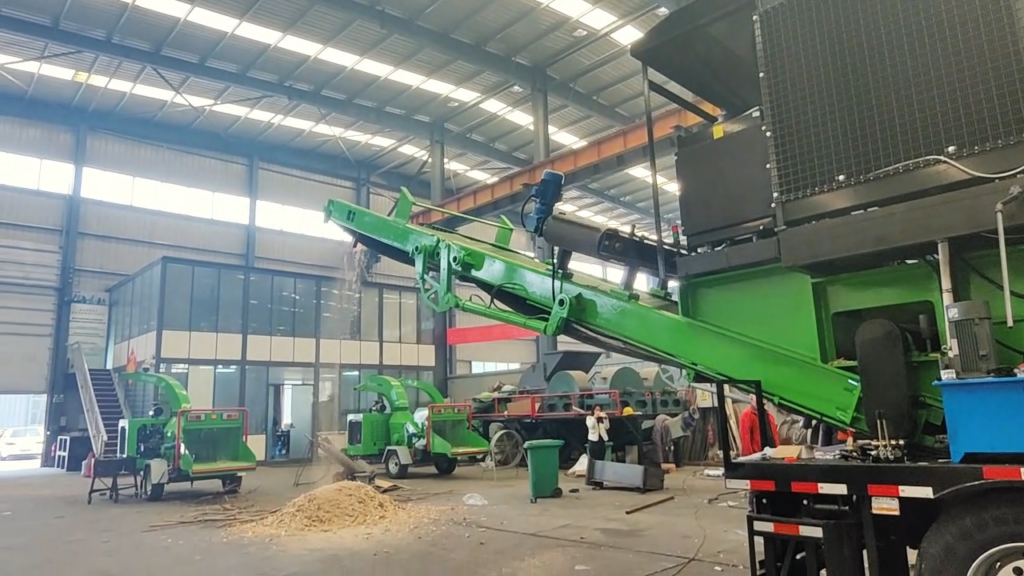
Start with real material, not brochure numbers
Horizontal grinders are built for heavy reduction work. They are often used for green waste, land clearing waste, forestry residue, pallets, demolition wood, roots, and mixed recycling wood. They are not the same as wood chippers.
A wood chipper is usually chosen when the buyer needs more uniform chips from logs or branches. A horizontal grinder is often chosen when the material is larger, dirtier, mixed, or irregular. The output is also usually more suitable for biomass fuel, mulch, compost feed, or volume reduction.
The same grinder can perform very differently in two jobs. Clean dry wood moves through the machine more easily. Wet branches can bridge in the feed system. Roots with soil can increase wear. Mixed recycling wood may need strong protection against contaminants.
| Material condition | Main risk | Selection focus |
|---|---|---|
| Clean wood | Oversizing the machine | Screen and fuel use |
| Green waste | Clogging and stringy output | Feed control and hammer choice |
| Roots and stumps | High wear | Hard-facing and wear parts |
| Mixed recycling wood | Metal and dirt damage | Magnet, protection, service access |
| Wet material | Lower output | Larger screen or pre-sorting |
Match performance to the business target
A forestry company may care about mobility and rough ground access. A biomass plant may care about stable fuel size. A recycling center may care about mixed waste handling and downtime control. A rental company may care about simple operation and fast maintenance.
TIROX has seen these differences in export-market communication. The same model discussion can change when the buyer explains the feed material better. This is why the first technical discussion should not be about price only. It should be about the worksite, the material stream, and the final output.
Avoid the “maximum capacity” trap
Maximum capacity is not the same as normal daily capacity. A machine may reach a high output with dry, clean, well-sized material and a large screen. That does not mean it will reach the same output with wet green waste and a smaller screen.
A useful capacity statement should include these points:
| Capacity question | Why it matters |
|---|---|
| What material is being ground? | Material density and shape change output |
| What is the moisture level? | Wet material slows grinding |
| What screen size is used? | Smaller holes reduce capacity |
| What tool system is fitted? | Hammers and cutters behave differently |
| How is material fed? | Steady feeding improves real output |
| What final use is required? | The process decides the true target |
How Should Target Particle Size and Screen Setup Guide the Purchase?
The wrong screen can make a strong grinder look weak, because small output size increases load, fuel use, and wear.
Target particle size should be decided before the grinder is selected. Screen hole size, hammer type, rotor speed, feed rate, and downstream process all affect output quality and real throughput.
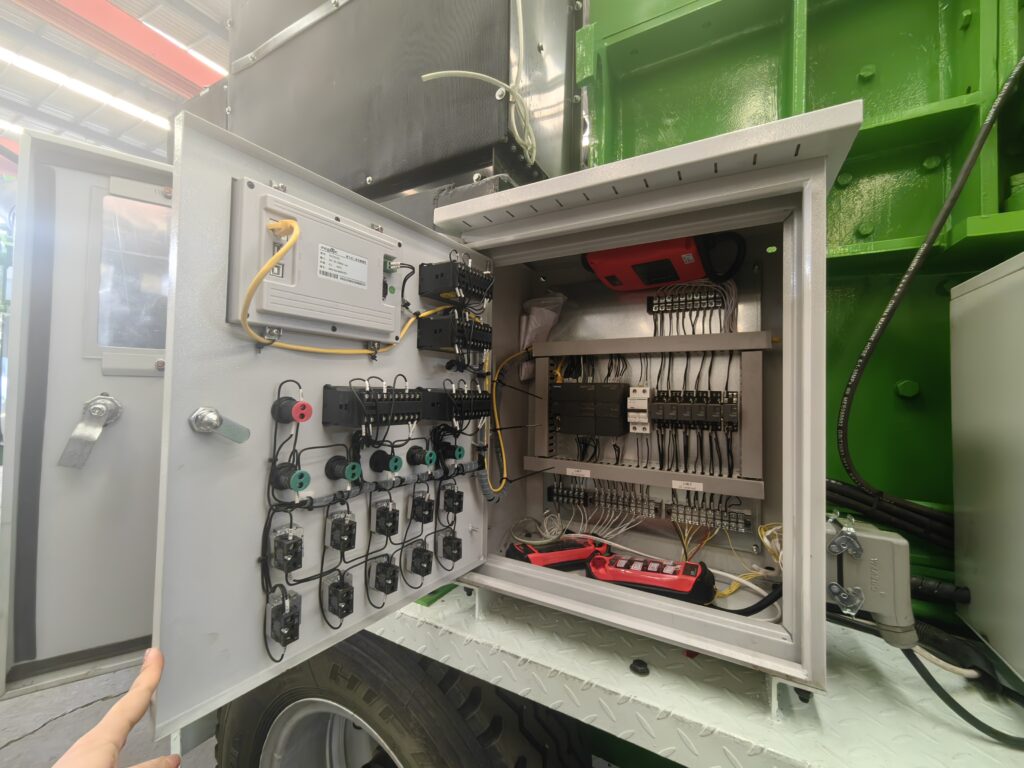
Begin from the downstream process
The final use decides the grinding target. Boiler fuel may accept a wider size range. Pellet production usually needs smaller and more even material before drying and pelletizing. Mulch often needs a cleaner look and better shape. Compost material may need open structure for air flow.
A buyer should not only say, “Need small chips.” That phrase is too general. A better statement is, “The material will enter a boiler,” or “The material will go to hammer milling before pellet production,” or “The output must be sold as landscape mulch.”
This makes the technical choice clearer. It also helps avoid a common mistake. Some buyers request a very small screen because they think smaller output is always better. In real operation, a smaller screen can reduce throughput and increase wear.
| Final use | Typical focus | Grinder selection point |
|---|---|---|
| Biomass boiler fuel | Stable feeding to boiler | Controlled size, not too fine |
| Pellet line pre-processing | Smaller raw material | Screen match with next crusher |
| Mulch | Visual quality | Tool choice and regrind plan |
| Compost | Air space and mix | Avoid too much fine dust |
| Waste volume reduction | Fast size reduction | Larger screen and strong feeding |
Understand screen size as a production decision
A screen is not only a spare part. It is a production setting. When the screen hole is smaller, material stays longer in the grinding chamber. This can improve size control, but it also increases load.
When the screen hole is larger, output usually increases. Yet particle size becomes larger and less even. This may be fine for some recycling yards. It may not be acceptable for pellet preparation or strict boiler fuel supply.
A buyer should ask the supplier to discuss screen options with material type. A single “standard screen” may not support all future jobs. Dealers and rental companies should care about this point even more, because their customers may process many types of material.
Choose tools for material behavior
The tool system affects cutting, tearing, impact, and wear. A hammer setup may be suitable for many waste reduction jobs. A cutting-style tool may help when the buyer needs a more controlled chip-like product from certain wood streams.
No tool is perfect for every case. The right choice depends on dirt level, metal risk, moisture, and output requirement. A machine that processes clean forestry residue may not need the same wear package as one working in construction wood waste.
This is where experienced manufacturing support can reduce risk. TIROX and other serious manufacturers usually ask for material photos, video, size range, and final use before giving a configuration suggestion. That step is not a delay. It is protection for the buyer.
Check particle size stability, not only average size
A buyer may hear that the average output size meets the target. That is still not enough. The output may include too many fines or too many oversize pieces. Both problems can affect the downstream process.
Too many fines may create dust, storage problems, or poor airflow. Too many oversize pieces may cause boiler feeding trouble or extra regrinding cost. So the goal should be stable particle distribution, not only a rough average number.
What Reliability and Worksite Factors Should Be Checked Before Buying?
A grinder that is hard to maintain can lose more money in downtime than it saves in purchase price.
Buyers should check maintenance access, wear part life, spare part supply, feed system design, mobility, safety systems, and after-sales response before purchase. Long-term reliability is part of grinder performance.
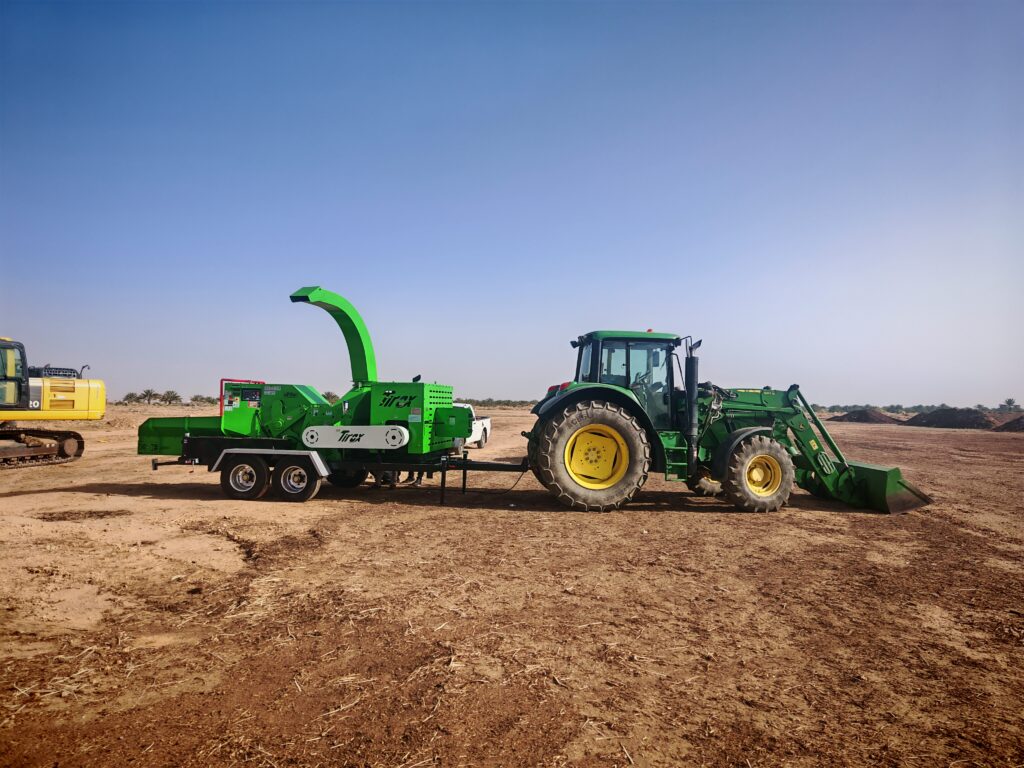
Maintenance access affects daily profit
Horizontal grinders work in harsh conditions. Dust, impact, vibration, and contaminants are normal. Because of this, wear parts are not a small detail. Hammers, teeth, screens, anvils, liners, belts, bearings, and hydraulic parts all affect operating cost.
Good maintenance access saves time. A design that allows easier screen change, safer inspection, and faster wear part replacement can reduce downtime. Operators also make fewer mistakes when service points are simple and clear.
The lowest purchase price may become expensive if spare parts are hard to get. This is very important for international buyers. The buyer should ask whether common wear parts can be stocked locally, shipped quickly, or matched through a clear parts list.
| Reliability item | Question to ask |
|---|---|
| Wear parts | Are they easy to replace and source? |
| Screen change | How long and how safe is the process? |
| Bearings and belts | Are service points easy to reach? |
| Hydraulic system | Is troubleshooting support available? |
| Control system | Can operators understand alarms clearly? |
| Spare parts | Is there a practical stocking plan? |
Mobility must match the worksite
A stationary grinder may fit a fixed recycling yard or biomass plant. A tracked horizontal grinder may fit forestry sites, land clearing jobs, and rough recycling areas. A trailer-mounted unit may suit contractors and rental fleets that move often between jobs.
The worksite should decide the mobility choice. A tracked machine can reduce the need for extra loading and towing in difficult ground. It can also help when the material pile moves across a site. Yet a fixed plant may prefer stable installation and lower movement needs.
TIROX developed tracked horizontal grinder technology early in the Chinese market, and that experience shows one important point. Mobility is not only about moving the machine. It is about reducing handling cost, improving feed flow, and keeping production stable in real site conditions.
Feeding method controls real throughput
Many buyers underestimate feeding. A grinder cannot produce steady output if feeding is uneven. Large lumps, tangled branches, long pieces, and mixed piles can all reduce real capacity. The infeed system, feed roller control, and operator skill matter.
A wheel loader, excavator, grapple, or conveyor can each change production. The machine should be selected with the available feeding equipment in mind. If the buyer plans to upgrade feeding later, the grinder choice should allow that future plan.
A grinder that is too small may require careful feeding and many passes. A grinder that is too large may waste fuel when the material supply is not steady. The correct size is the one that matches the whole operation, not the biggest unit available.
After-sales response is part of the machine
For overseas buyers, after-sales service is not a soft promise. It is a real production factor. When a machine stops, the buyer needs fast diagnosis, clear spare parts support, and people who understand the equipment.
A good supplier should provide manuals, maintenance guidance, parts drawings, video support, and practical training. English communication also matters in international projects. TIROX’s export experience has shown that technical language must be simple and direct when a site team needs fast help.
The buyer should ask these questions before signing:
| Service question | Reason |
|---|---|
| Is support available across time zones? | Downtime does not wait |
| Are engineers able to communicate clearly? | Misunderstanding causes delays |
| Are parts codes and drawings complete? | Wrong parts waste time |
| Is operator training included? | Good operation reduces damage |
| Is troubleshooting remote or on-site? | The support plan must be clear |
Separate purchase cost from operating cost
The purchase price is visible. Operating cost is often hidden. Fuel use, wear parts, service time, regrinding, screen changes, and missed output all become part of the real cost.
A cheaper grinder may be suitable for light and simple work. It may not be suitable for dirty material, strict output size, or long daily shifts. A more costly unit may still be the better choice when it reduces downtime and keeps the downstream process stable.
The best purchase decision is not always the largest machine or the lowest price. It is the machine that fits the material, target product, daily schedule, operator level, site layout, and service plan.
Conclusion
Select a horizontal grinder by final output, real material, screen setup, reliability, and service support. Capacity only matters when these conditions are clear.