
Many buyers lose money before the machine arrives. They choose power first, then discover the output is wrong, dirty, or too costly to sell.
I choose a chipper when I need clean, controlled chips for fuel, pulp, mulch, or resale. I choose a tub grinder when I need bulk reduction of stumps, roots, and dirty yard waste. The best machine depends on feedstock, output value, site safety, and fuel cost.
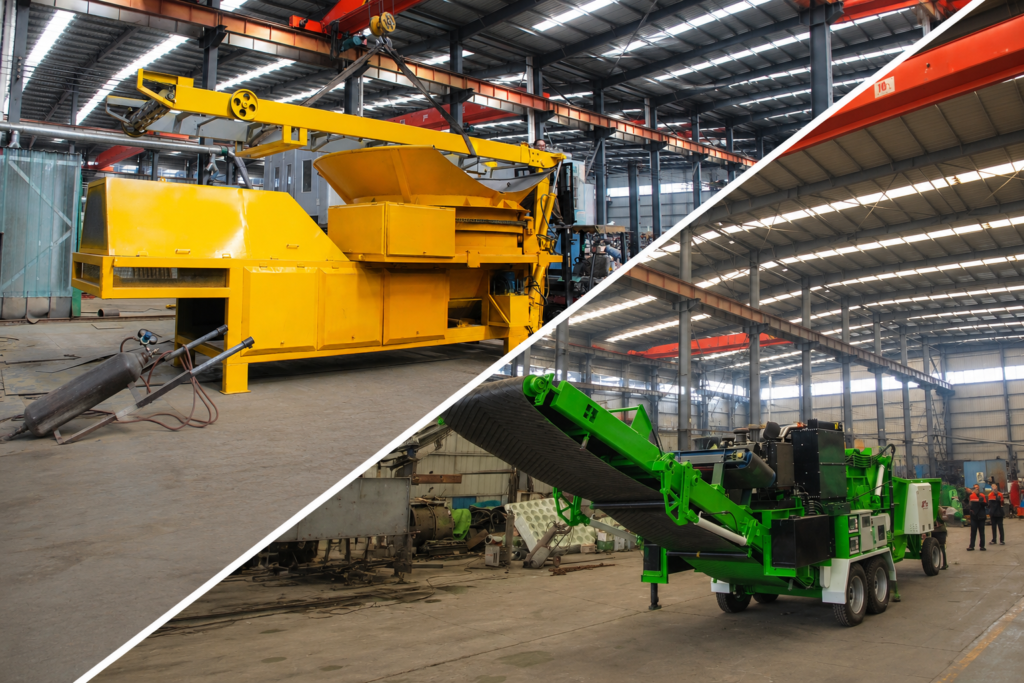
I have worked with wood recycling equipment for 22 years. I have seen buyers compare machines only by engine power. That is the wrong starting point. I start with one question: “What do you want to sell or use after processing?” If the answer is clean chips, I look at a chipper such as the TIROX YL1063 or YL1585. If the answer is volume reduction of mixed waste, I look at a grinder. If the buyer asks for a tub grinder, I also explain why many modern yards now prefer a horizontal grinder for safer and more controlled feeding.
Is a chipper better when chip quality matters?
Many projects fail because the buyer makes “something small” instead of “something useful.” The output looks processed, but the market refuses it.
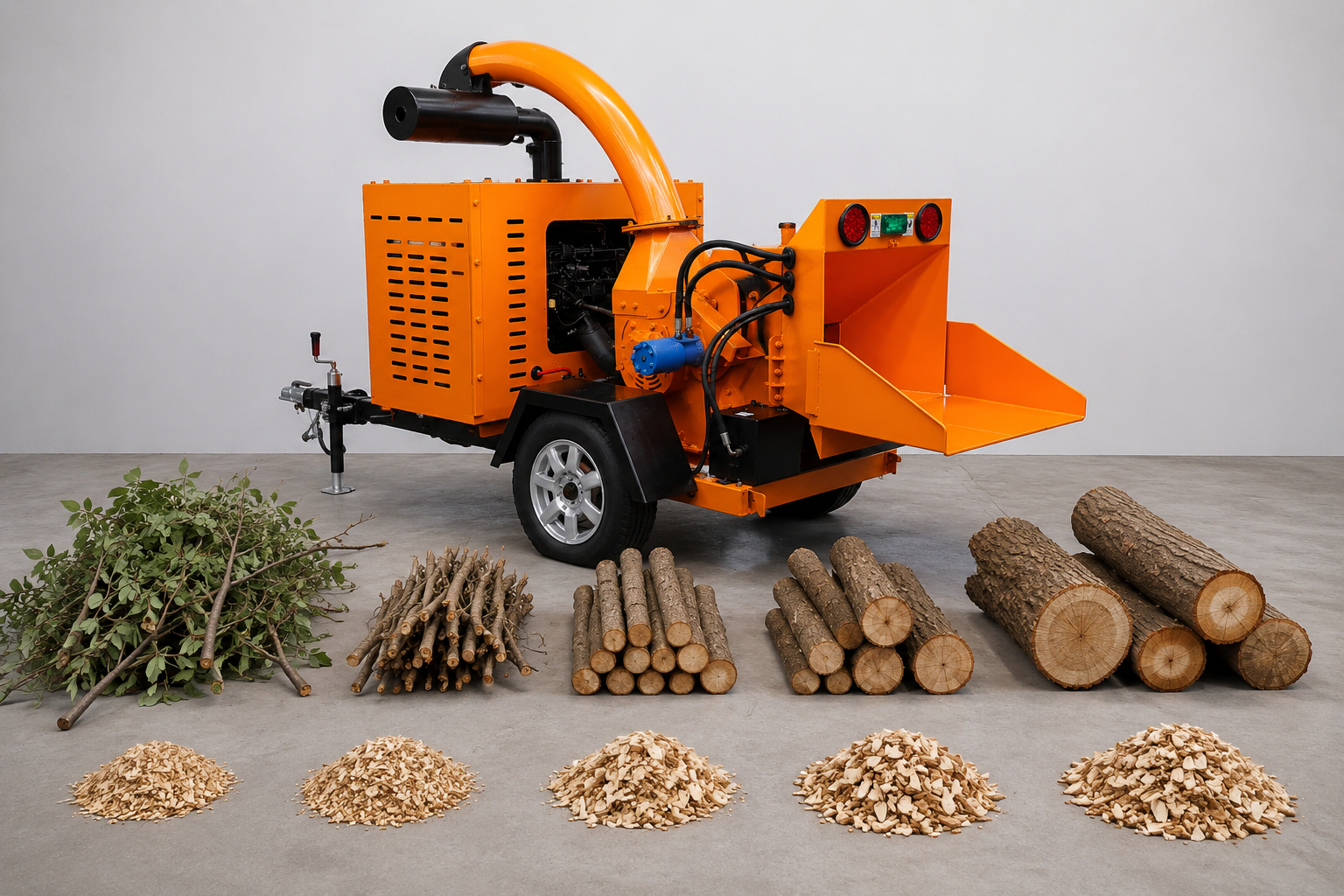
A chipper cuts with knives. This matters. A knife makes a clean chip face and a more regular chip shape. I often explain it like kitchen work. A sharp knife cuts a carrot. A hammer breaks it. Both make it smaller, but the result is not the same. In our garden branch chipper range, models like YL1053, YL1063, YL1263, and YL1585 use drum cutting systems. They are screenless, so they do not make perfect screened chips. But they can fine-tune chip size by feed speed and the blade-to-anvil gap.
| If my priority is… | I normally choose… | Why I choose it |
|---|---|---|
| Biomass fuel chips | Chipper | Cleaner size and better fuel handling |
| Pulp raw material | Chipper | Knife-cut chips are more useful |
| Landscaping mulch | Chipper | Better appearance and easier resale |
| Stumps and dirty roots | Grinder | Dirt will damage chipper knives |
| Mixed land-clearing waste | Grinder or horizontal grinder | More tolerant of rough feedstock |
| Roadside tree care | Chipper | Directional chute and smaller safety zone |
I often recommend the YL1063 for customers who need up to a 30 cm maximum diameter and want a strong commercial machine, while I recommend the YL1585 for buyers with larger tree-care work who need higher capacity and a standard feed conveyor; I still remind every buyer that stones, metal, glass, and nails are not “small problems.” They can destroy chipper blade life very fast.
Is a tub grinder better for dirty and mixed material?
I have seen clean brochures hide dirty feedstock. Roots carry soil. Pallets carry nails. Yard waste carries stones. A chipper hates these surprises.
I choose a tub grinder when the material is mixed, bulky, dirty, or hard to control. I choose a horizontal grinder when I want similar grinding ability with better feeding control and safer operation.
A tub grinder uses heavy hammers. The hammers do not slice wood like chipper knives. They beat, tear, and break material down. This makes a grinder better for rough land-clearing debris, stumps, roots, and storm cleanup piles. The output is usually less uniform. It can still be useful for mulch, compost, boiler fuel after screening, or volume reduction. But it is not the same as clean chipper output.
In my factory work, I often hear this sentence from new buyers: “The wood is only from land clearing.” I then ask if the roots have soil. The room becomes quiet. I have seen customers buy chippers for this job and lose blade sharpness before noon. The machine was not weak. The application was wrong.
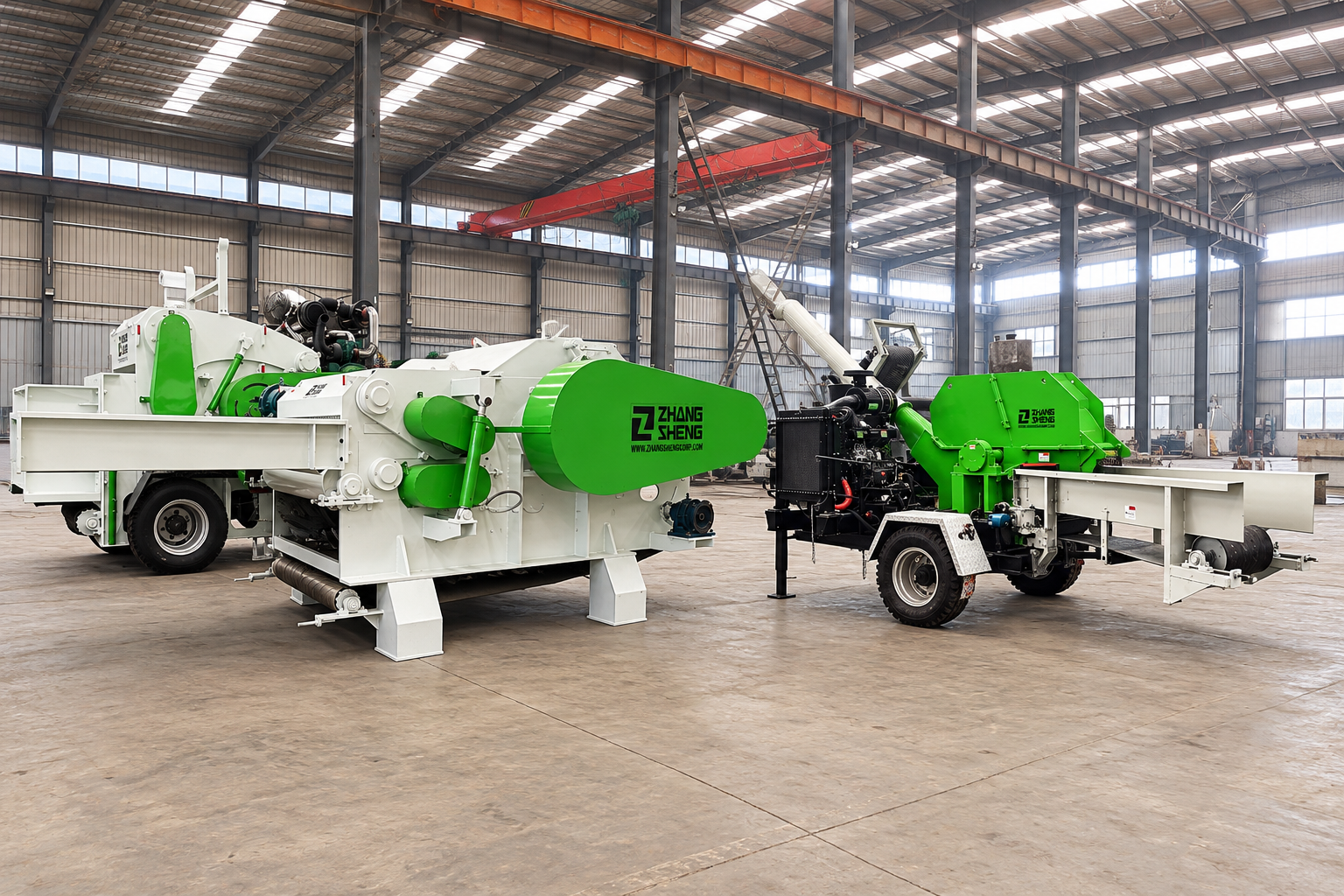
This is also where I bring up TIROX horizontal grinders. The title of this article says tub grinder, and many buyers still use that name. But in many professional yards, horizontal grinders have become the safer and more controlled choice. They feed material from the side with a conveyor. They can be tracked for rough ground. TIROX developed tracked horizontal grinder technology early in China, and I use that experience when I advise forestry, recycling, and municipal customers.
Which machine is safer on a restricted jobsite?
A wrong safety plan can stop a profitable job. It can also injure people. I never treat discharge and throw distance as small details.
I choose a chipper for roadside work, tight municipal sites, and tree-care crews because its directional discharge chute improves debris control, and I avoid tub grinders where flying debris cannot be safely controlled.
Tub grinders have one safety issue that buyers often underestimate. They are open at the top. When a hammer hits a stone, steel part, or hard knot, material can fly upward or outward. This “throw” zone can be large. It needs a serious safety buffer. In a remote land-clearing site, that may be possible. In a city park, road shoulder, or recycling yard near workers, it may not be acceptable.
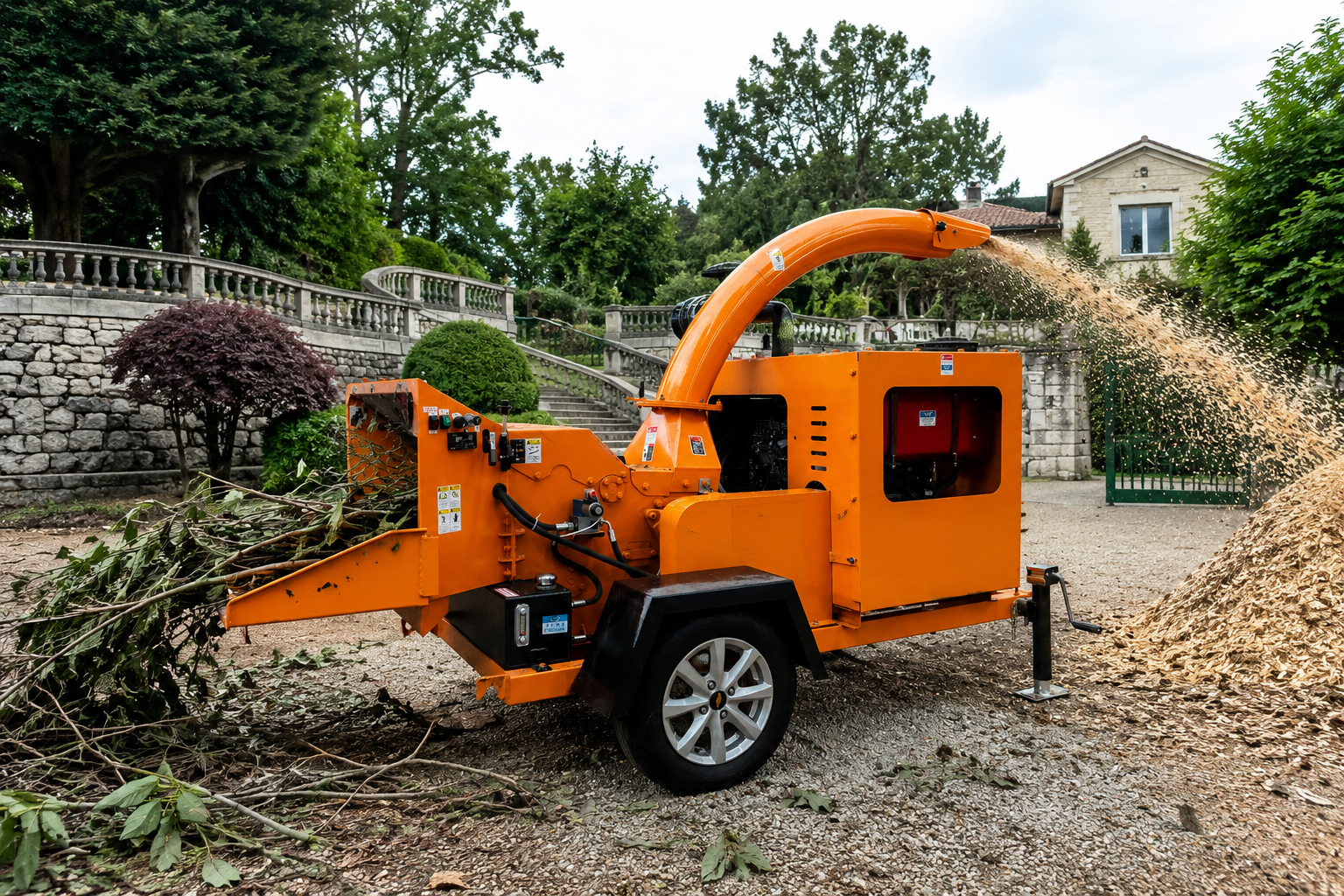
A chipper has its own dangers. I never say a chipper is harmless. The feed inlet, feed rollers, and knives demand strict operation. But the discharge is more predictable. Our garden branch chippers use air-blown discharge. The chute can rotate 360 degrees, so the operator can direct chips into a truck hopper or a sanitation truck. This reduces handling and keeps the work area cleaner.
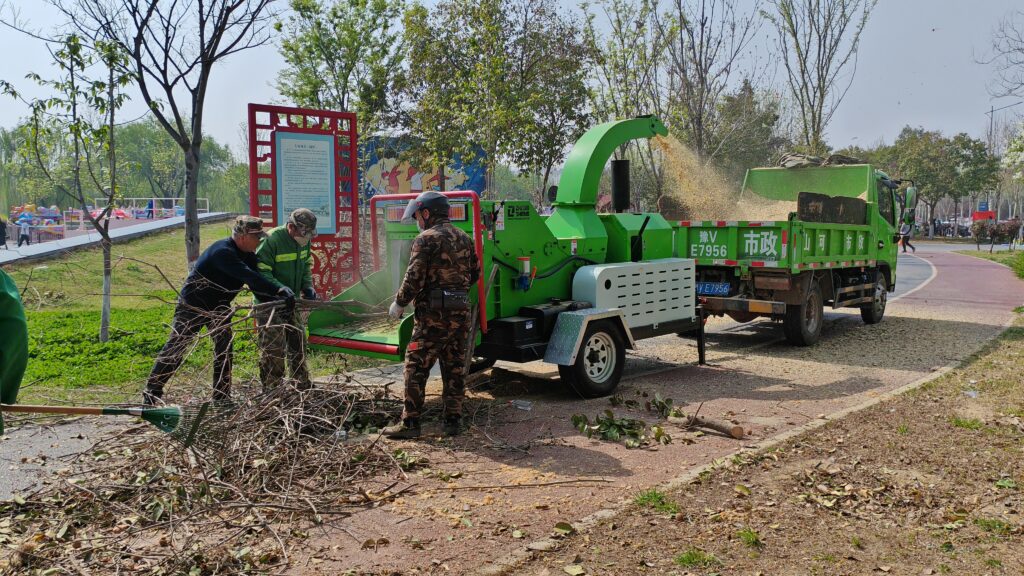
I also look at mobility. A simple chassis is enough for short site movement. A road chassis is better for cross-region service teams. Tracks are useful in soft or rough ground. TIROX models such as YL1053, YL1063, YL1585, and YL1585X can use track options. For grinder work, I usually suggest a tracked horizontal grinder when the site is uneven or muddy. Safety is not only a guard or a warning sticker. Safety is the full match between machine design, jobsite layout, operator training, and material risk.
Which machine has lower operating cost over time?
A cheap machine can become expensive after the first month. Fuel, blades, hammers, downtime, and rejected output decide the real cost.
I compare cost by cost per useful ton, not by purchase price only. A chipper can be cheaper when clean chips are sold. A grinder can be cheaper when dirty material would destroy knives.
The main cost logic is simple. A chipper cuts. Cutting is efficient when the wood is clean and the knives are sharp. A grinder bruises and breaks. Grinding uses more energy per ton, but it can survive rougher feedstock. This is why one machine may look expensive in fuel, but still be correct for dirty material. The wrong chipper on dirty roots can become more expensive because of knife damage, downtime, and poor output.
| Cost item I check | Chipper | Tub grinder / horizontal grinder |
|---|---|---|
| Wear parts | Knives and anvil | Hammers, screens, liners |
| Best wear condition | Clean logs and branches | Mixed woody debris |
| Fuel logic | Lower when knives stay sharp | Higher because breaking needs force |
| Output value | Higher for clean chips | Better for volume reduction |
| Downtime risk | High if dirt or metal enters | High if screens clog or hammers wear |
| Best ROI case | Sellable chips | Large waste reduction jobs |
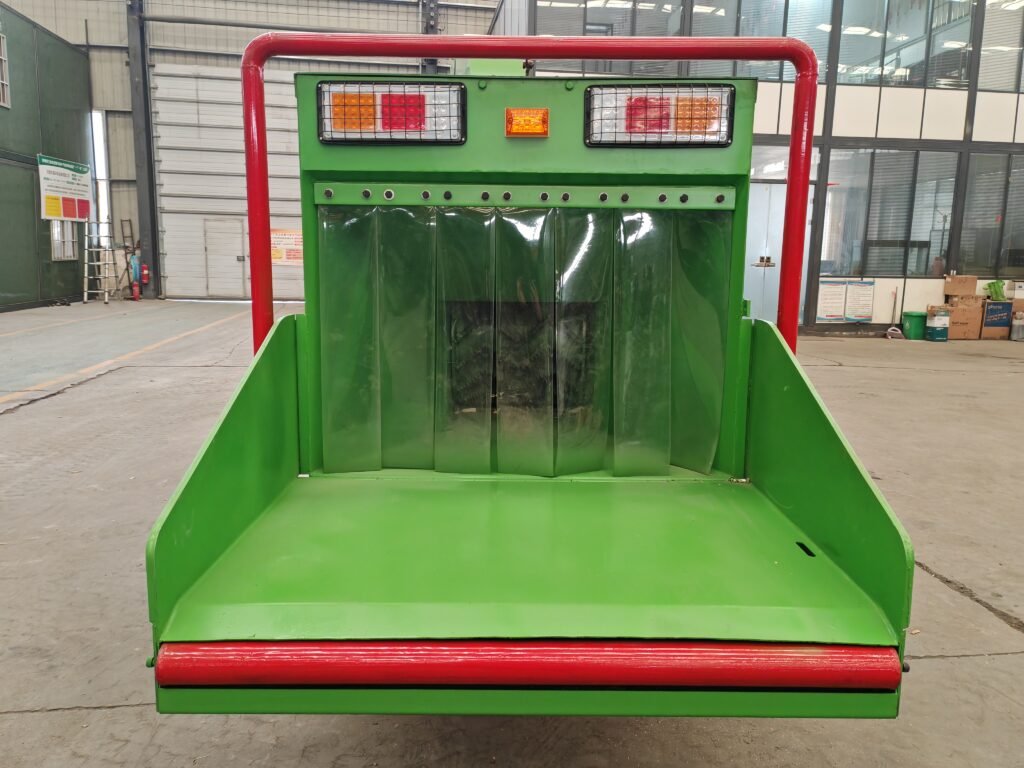
For TIROX chippers, I remind buyers that blade care is daily business. Standard H12 carbide blades work well for normal chipping. A8B blades are better for hardwood like oak or walnut. Double-edged blades can be flipped and reused, which helps cost control. I also value semi-automatic lubrication pumps because rotor bearings need steady care.
Fuel also depends on proper sizing. A ZSYL-600 is good for small branches, but it is not a land-clearing machine. A ZSYL-1063 can work well for commercial tree-care and biomass jobs. A ZSYL-1585 is stronger for larger material and higher output. If a buyer undersizes the machine, the engine works under heavy load and fuel cost rises. If the buyer oversizes too much, idle fuel and capital cost rise. I try to match diameter, hourly volume, transport plan, and chip market before I talk about price.
How do I choose between a chipper, tub grinder, and horizontal grinder?
A buyer can ask ten suppliers and get ten confident answers. I prefer a simple decision path because the wrong machine is hard to return.
I choose by four questions: What material enters the machine? What output earns money, what safety space is available, and what operating cost can the project accept?
My first question is about feedstock. Clean branches, trunks, boards, and untreated wood usually point me toward a chipper. Mixed piles, roots, stumps, and soil-covered material point me toward a grinder. My second question is about the output market. If the buyer sells to a biomass plant, pulp user, or mulch buyer who wants cleaner chips, I stay with a chipper. If the buyer is paid mainly to reduce volume or clear land, I consider a grinder.
My third question is about the site. Roadside crews, landscaping companies, and municipal teams often work near people, trucks, buildings, or roads. I normally suggest a chipper for these jobs. Large recycling centers and forestry sites may have enough space for grinder operation. My fourth question is about long-term service. I ask who will sharpen knives, replace hammers, stock parts, and answer the phone when the machine stops.
This is where TIROX experience matters to me. We are a factory and exporter, not only a trader. We have worked with customers in many countries, and we built after-sales support around real site problems. More than half of our engineers can communicate in English. That helps when a buyer needs help with feed speed, blade gap, hydraulic cooling, or emission options like Euro 5 and EPA.
Conclusion
I choose a chipper for clean, valuable chips, a grinder for dirty volume reduction, and a horizontal grinder when safety and control matter more.