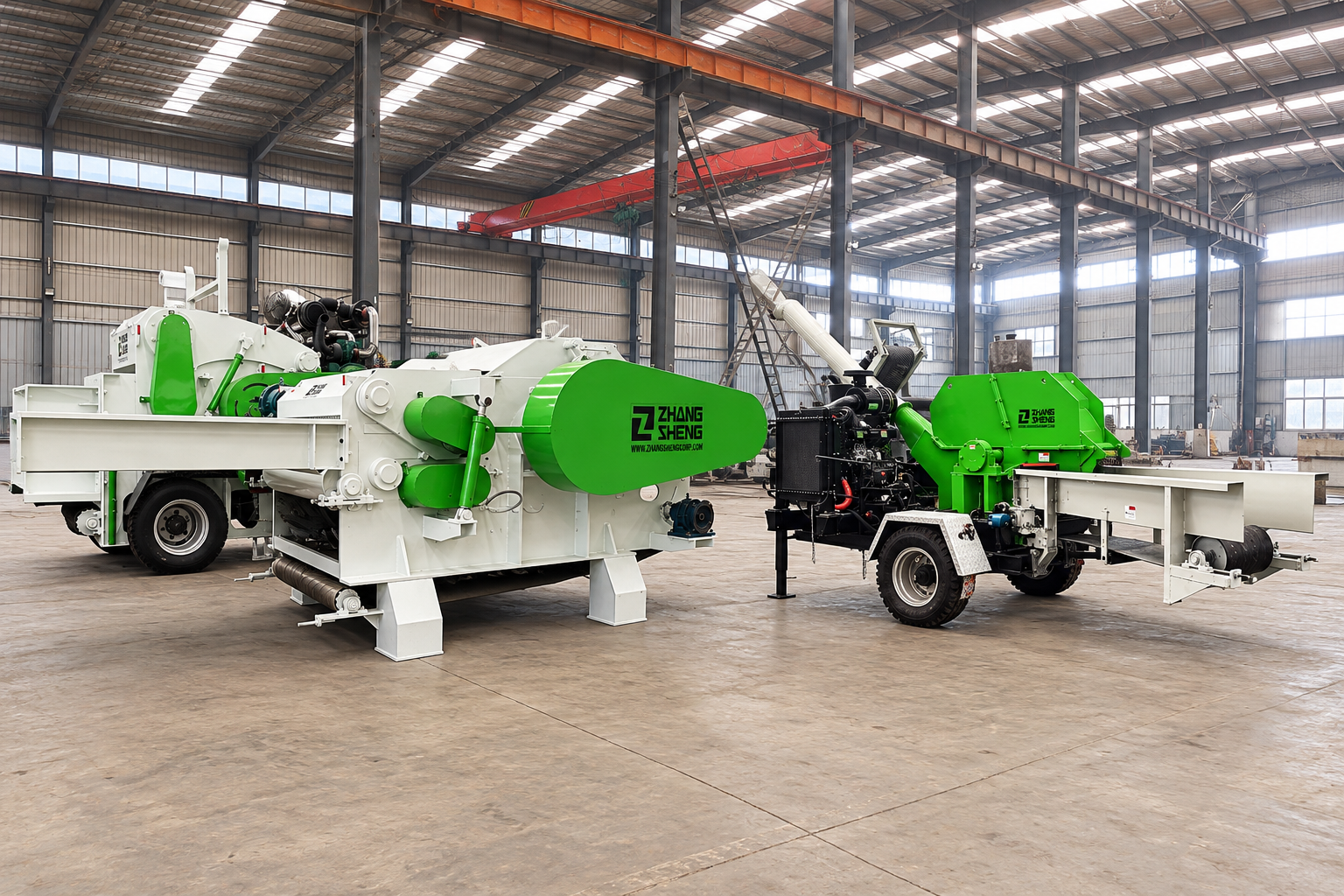
A wrong chipper size wastes fuel, time, and money. The real problem starts when buyers judge a machine by branch diameter alone.
The best wood chipper size depends on material type, work volume, use frequency, feed opening, power, mobility, and moisture condition. Homeowners often need small units for yard cleanup. Professionals need larger hydraulic-feed machines. Heavy mixed waste may need a horizontal grinder instead of a chipper.
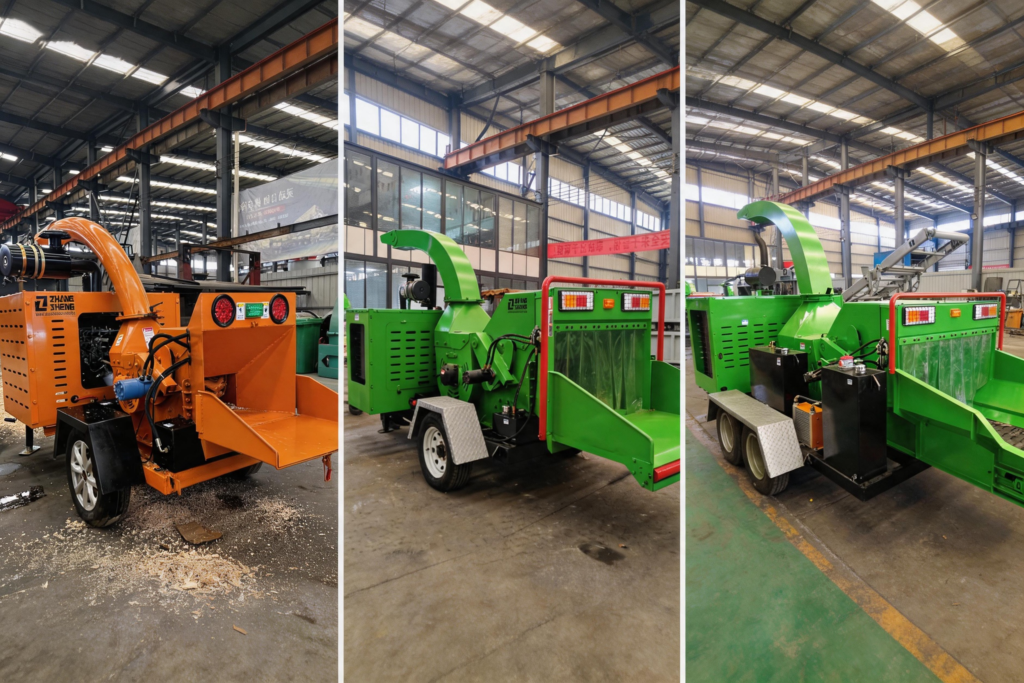
Many overseas buyers begin with one simple question: “What is the largest branch diameter this chipper can take?” That question is useful, but it is not enough. A straight dry branch, a crooked green limb, and leafy pruning waste do not behave the same way inside a chipper. A good size choice should start with the job, not only the number on the brochure.
Why Is Maximum Branch Diameter the Wrong Starting Point?
A chipper that matches the largest branch may still fail the daily job. Slow feeding, jams, and knife wear can turn a simple cleanup task into a long shift.
Maximum branch diameter only shows the upper limit for ideal material. Real sizing should also check daily volume, wood hardness, branch shape, moisture, feed opening, hydraulic feed, knife system, and how often the machine works.
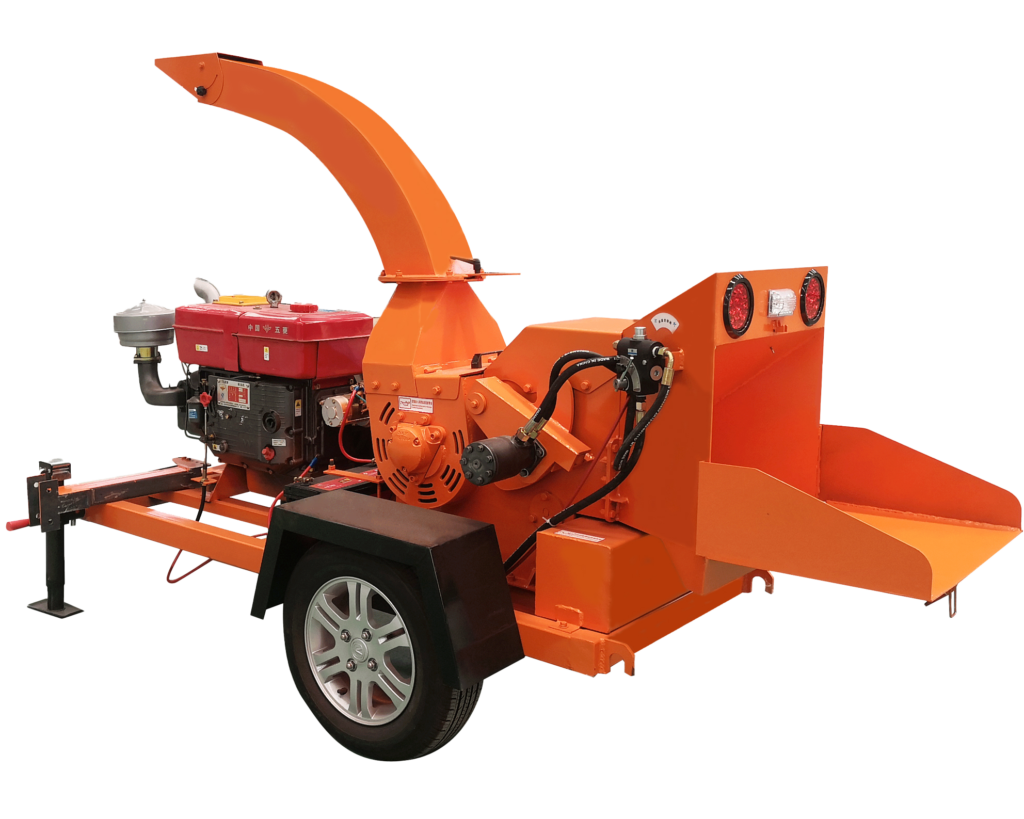
Diameter Is Only One Part of the Job
Many buyers compare machines by a 4-inch, 6-inch, 8-inch, or 12-inch rating. This rating is easy to understand. It is also easy to misuse. A chipper may handle one straight branch near its rated size. It may not process a pile of curved, wet, leafy branches at the same speed.
A better question is simple: how much material must be processed, how often, and in what condition? A homeowner may process storm branches twice a year. A tree care company may feed branches all day. A farm may need to process orchard pruning after each season. These are different workloads.
| Sizing factor | Why it matters | Common mistake |
|---|---|---|
| Feed opening | It controls how easily branches enter | Buyers only check branch diameter |
| Hydraulic feeding | It improves steady feeding | Buyers expect manual feed to handle commercial volume |
| Knife or drum design | It affects chip size and cutting force | Buyers compare horsepower only |
| Moisture and leaves | They reduce real throughput | Buyers test only dry straight wood |
| Work frequency | It changes durability needs | Buyers buy a light unit for daily work |
A correctly sized chipper should process the normal material smoothly. It should not be selected only for the rare largest branch. Oversizing is also a risk. A larger chipper costs more to buy, move, store, fuel, and maintain. Undersizing creates slow operation and more downtime. The right machine sits between these two risks.
What Wood Chipper Size Fits Homeowners, Farms, and Landscaping Crews?
A homeowner, a farm owner, and a tree care crew should not use the same sizing standard. Their material, work hours, and transport needs are different.
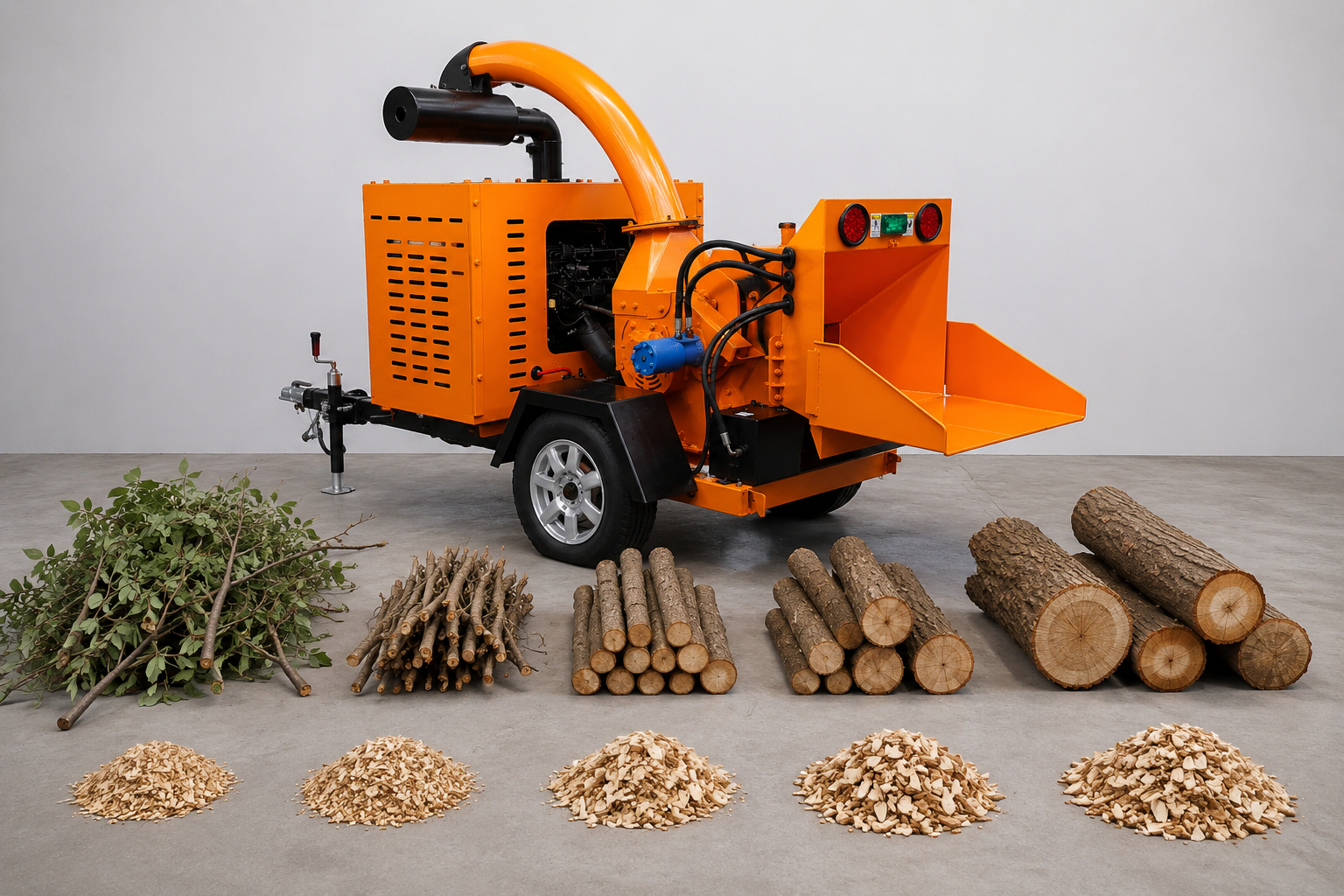
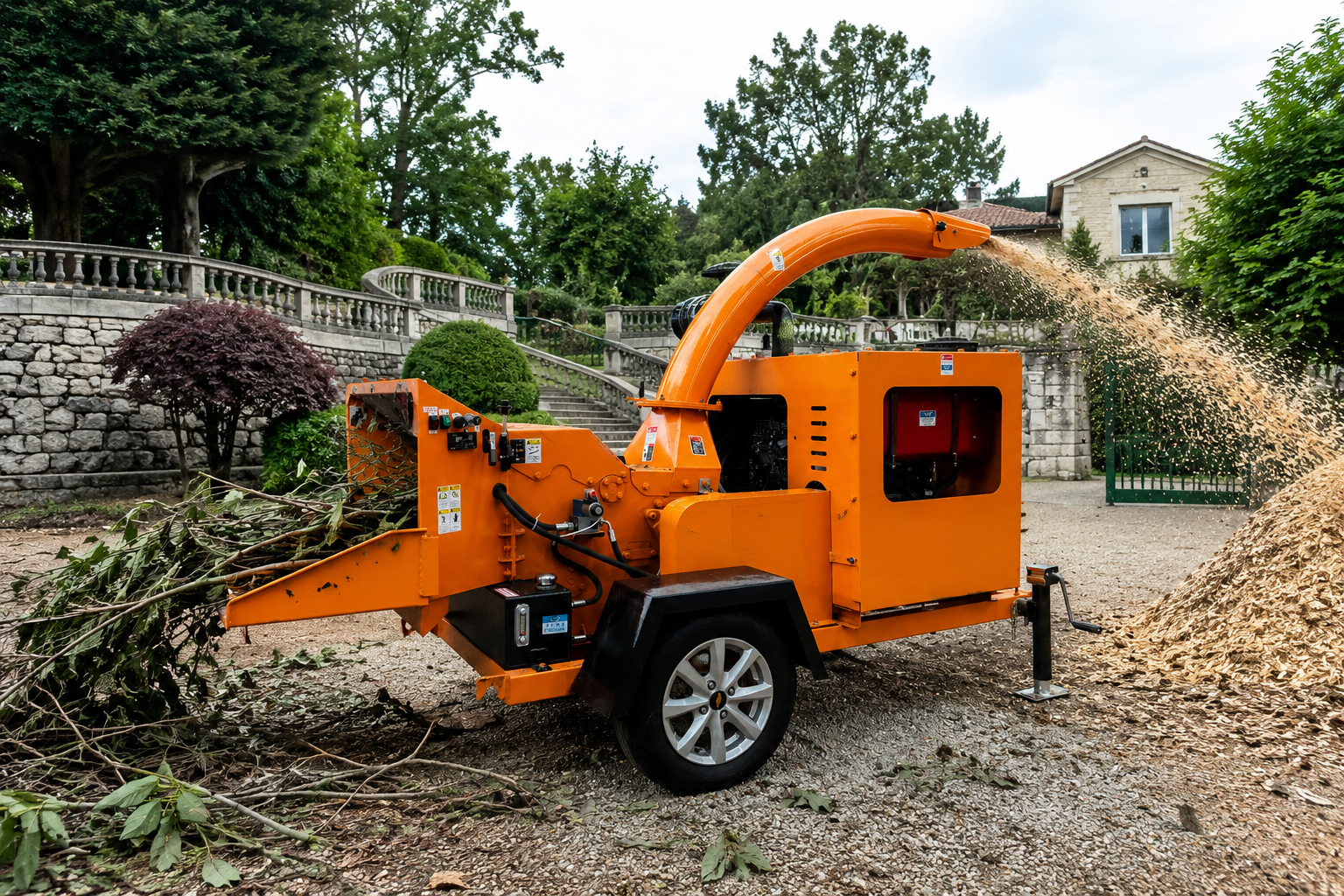
Homeowners often start with small chippers for occasional branches. Farms may need mid-size units for seasonal pruning. Landscaping and tree care companies usually need hydraulic-feed chippers with stronger engines, wider openings, and better continuous-duty parts.
-1024x683.jpg "homeowner and professional wood chipper")
Typical Starting Points by User Type
A size range can help buyers begin the selection process. It should never replace a real workload check. A small electric or compact gasoline chipper may suit a homeowner who handles small garden branches. A farm may need a towable chipper if branches are thicker and work happens across wide land. A landscaping company often needs a professional machine because time and labor cost are part of the decision.
| User type | Typical material | Common starting range | Key check before buying |
|---|---|---|---|
| Homeowner | Garden branches, storm cleanup, small limbs | 2–4 inch chipper | Storage, noise, easy feeding |
| Small farm or orchard | Pruned branches, fruit tree waste, mixed green wood | 4–6 inch chipper | Seasonal volume and branch shape |
| Landscaping crew | Daily pruning and tree care waste | 6–10 inch hydraulic-feed chipper | Feeding speed and transport |
| Forestry or land clearing | Logs, tops, heavy branches, high volume | 10–15 inch or larger chipper | Jobsite access and output demand |
| Recycling yard | Mixed wood, pallets, green waste, dirty material | Grinder may be better | Contamination and material mix |
Horsepower Does Not Tell the Whole Story
Horsepower is important, but horsepower alone is not a sizing guide. A machine with higher power can still feed poorly if the opening is small or if the feeding system cannot grip curved branches. A lower-power machine with a good feed system may feel more useful for normal pruning waste.
The cutting structure also matters. Drum chippers often suit higher throughput and strong pulling force. Disc chippers can produce clean chips for many common jobs. Knife access, anvil adjustment, and maintenance space affect real working time. A buyer should also check chip size needs. Boiler fuel, mulch, compost support, and transport reduction may require different output.
TIROX wood chippers are often discussed with international buyers by matching branch size, feed structure, mobility, and working hours. A small towable unit may be enough for a contractor who clears gardens. A larger hydraulic-feed model may be better for daily tree care. The better choice is the machine that keeps a stable working rhythm, not the machine with the most impressive number.
When Is a Horizontal Grinder Better Than a Wood Chipper?
Some jobs look like chipper jobs, but they are not. Mixed waste, dirty wood, and bulky green waste can damage productivity and increase wear.
A horizontal grinder is often better for large mixed wood waste, demolition wood, pallets, stumps, heavy green waste, and recycling yard material. A wood chipper is better for relatively clean logs, branches, and tree waste where chip size and clean cutting matter.
-1024x683.jpg "horizontal grinder versus wood chipper")
Chipper and Grinder Are Not the Same Machine
A wood chipper cuts clean wood with knives. It is mainly built for branches, logs, and tree waste, and works best when the material is clean and free of stones, soil, metal, or other heavy contamination, making it ideal for producing chips for mulch, fuel, or volume reduction.
A horizontal grinder is built for rougher, larger, and more mixed material. It uses a grinding system instead of a clean knife-cutting process and is often used in recycling yards, land clearing, biomass fuel preparation, and construction wood processing, handling bulkier material while producing a different output than a chipper.
| Job condition | Better starting choice | Reason |
|---|---|---|
| Clean branches and logs | Wood chipper | Clean cutting and uniform chips |
| Daily tree care waste | Hydraulic-feed chipper | Good feeding speed and mobility |
| Pallets and mixed waste wood | Horizontal grinder | Better for bulk and rough material |
| Demolition wood | Horizontal grinder | Chipper knives face higher risk |
| Heavy green waste piles | Horizontal grinder | Better for high-volume reduction |
| Biomass chip production from clean logs | Wood chipper | More controlled chip output |
Mobility Also Changes the Size Choice
Mobility is part of sizing. A large machine that cannot enter the jobsite may be the wrong machine. A small machine that must run all day to finish a short job may also be wrong. Buyers should check road towing, track movement, trailer limits, site space, and loading method.
Tracked machines are useful when ground conditions are poor. Forest trails, recycling yards, and land clearing sites may need stable movement on uneven ground. People usually consider TIROX tracked horizontal grinders when the job involves high volume, complex terrain, and rough material. A towable chipper may fit better when crews move between urban tree care jobs.
The correct boundary is simple. Clean branch and log material points toward a chipper. Mixed, bulky, and dirty waste points toward a grinder. When the material sits between the two, the buyer should describe the waste honestly before selecting the machine.
How Should Buyers Confirm the Final Wood Chipper Size?
A wrong final choice often happens when the buyer hides real material conditions. The machine then looks correct on paper, but work becomes slow on site.
The final chipper size should be confirmed by material diameter range, branch shape, moisture, weekly volume, use frequency, chip output need, power source, mobility, operator skill, and maintenance ability.
A Practical Pre-Purchase Checklist
A buyer should collect basic job data before asking for a model. This data does not need to be complex. It should describe the real work clearly. A seller or manufacturer can then compare the workload with feed opening, cutting system, power, and machine structure.
| Question | Why it matters |
|---|---|
| What is the normal branch diameter? | Normal size matters more than rare maximum size |
| What is the largest branch diameter? | It shows the upper limit needed |
| Is the wood dry, green, wet, or leafy? | Moisture affects feeding and cutting |
| Are branches straight or curved? | Curved branches need a wider opening |
| How many hours will it work per day? | Continuous work needs a stronger build |
| How often will it be used? | Occasional and daily work require different machines |
| What output is needed? | Mulch, fuel chips, and volume reduction are different |
| How will the machine move? | Towable, PTO, electric, and tracked units serve different sites |
| Is the material clean or mixed? | Dirty waste may point to a grinder |
Avoid Both Oversizing and Undersizing
Undersizing creates obvious pain. The operator must cut branches smaller before feeding. The machine runs near its limit. Knives wear faster. Work takes longer. Downtime grows. A low purchase price may become expensive after labor and delays are counted.
Oversizing creates a quieter problem. A large chipper may need a stronger towing vehicle, more storage space, more fuel, and higher maintenance cost. It may also be harder to use in narrow gardens or urban jobs. Some buyers buy a large machine for rare heavy branches, then use it most of the time for light material. This is not always a good investment.
The best decision uses the normal workload as the center. The machine should have some safety margin for harder days. It should not be chosen only for the biggest possible branch. For buyers comparing TIROX wood chippers or horizontal grinders, a useful request should include material type, diameter range, daily or weekly volume, moisture condition, mobility needs, and budget. This gives a much better sizing answer than a single diameter number.
Conclusion
The best wood chipper size comes from real workload, not brochure diameter. Share material, volume, moisture, mobility, and budget before choosing.