
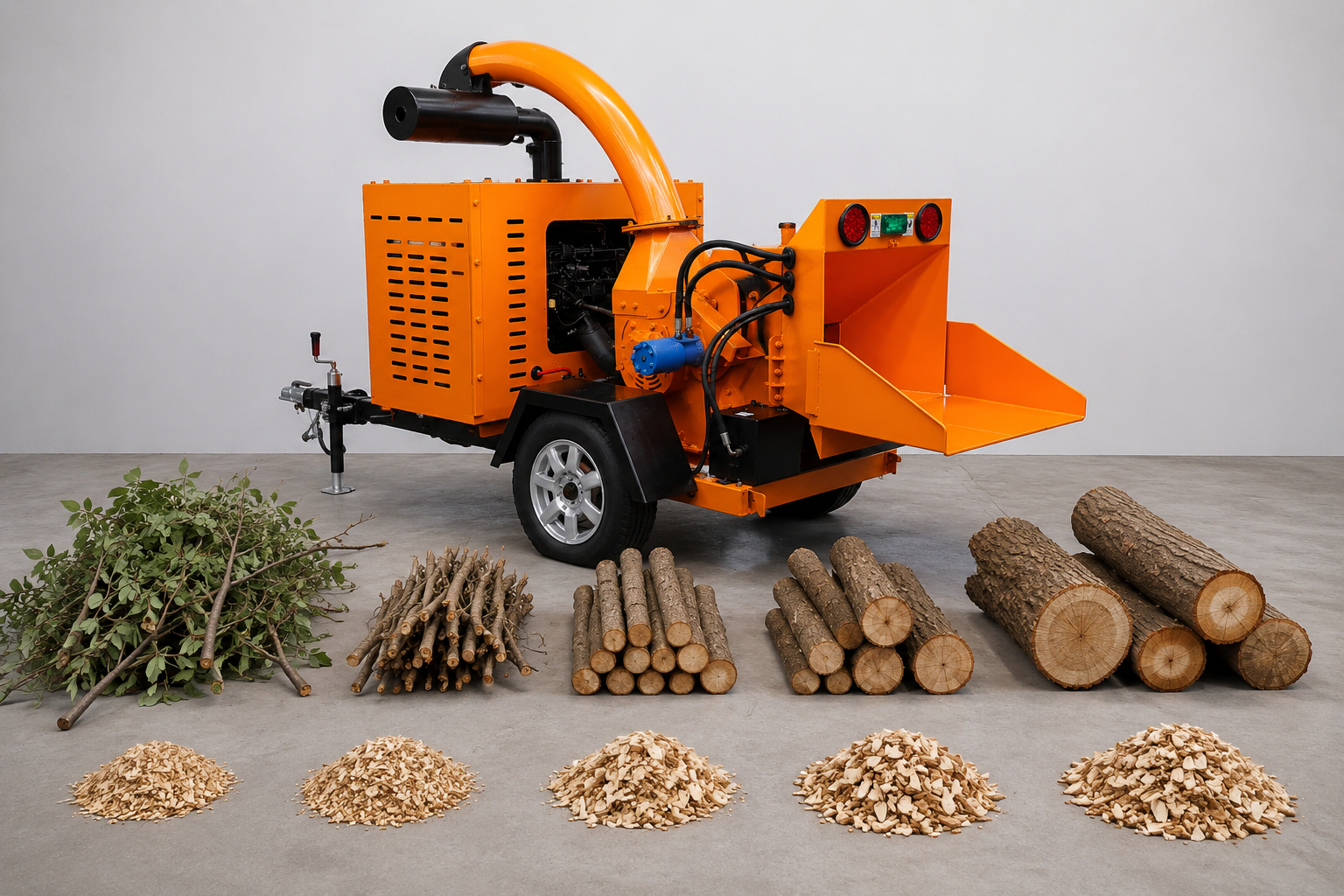
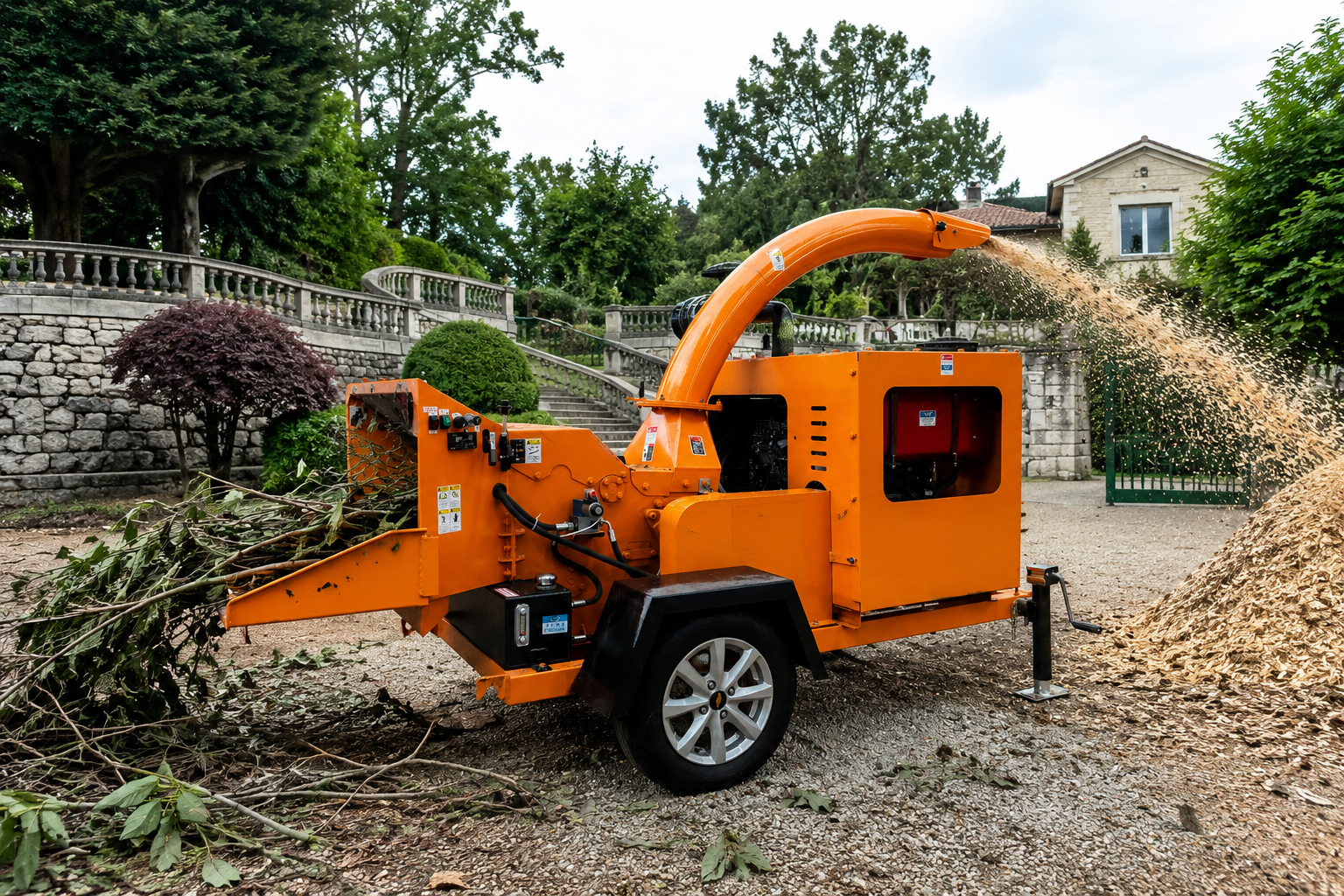
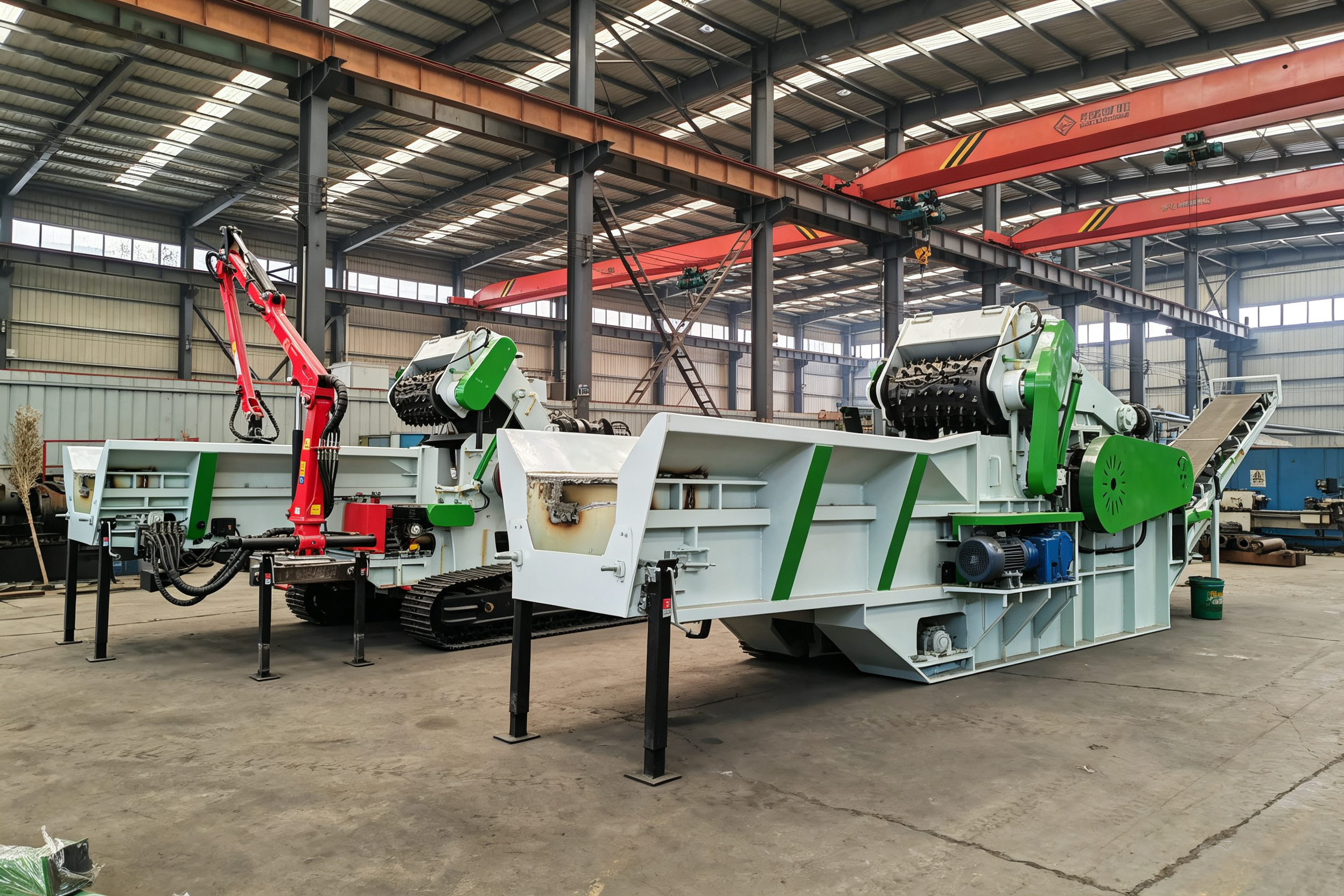
Wood chippers work by feeding raw material through controlled infeed parts, where it is cut by rotating knives and discharged as uniform chips. Based on this principle, the Tirox product line offers a range of equipment for different applications: from mobile machines for landscaping and green waste, to drum chippers for industrial chip production, hammer mills for finer material processing, and high-performance shredders for mixed waste or contaminated wood. In this way, Tirox provides complete solutions from primary size reduction to final material refinement.
Facing mixed branches, rising labor costs, and uneven chip output? Wrong machine assumptions quickly turn into clogging, wasted fuel, and costly downtime.
Wood chippers work by moving wood through a hopper into powered feed rollers, then into a rotating drum or disc where knives cut chips against an anvil. The machine then throws the chips through a discharge chute for collection or downstream use.
A buyer once assumed every industrial wood chipper worked the same. However, after comparing feed control, knife layout, and discharge design, the real gap became obvious: output quality, fuel use, and blockage risk were completely different. After 22 years in this sector, that pattern still appears in arborist, biomass, and recycling projects.
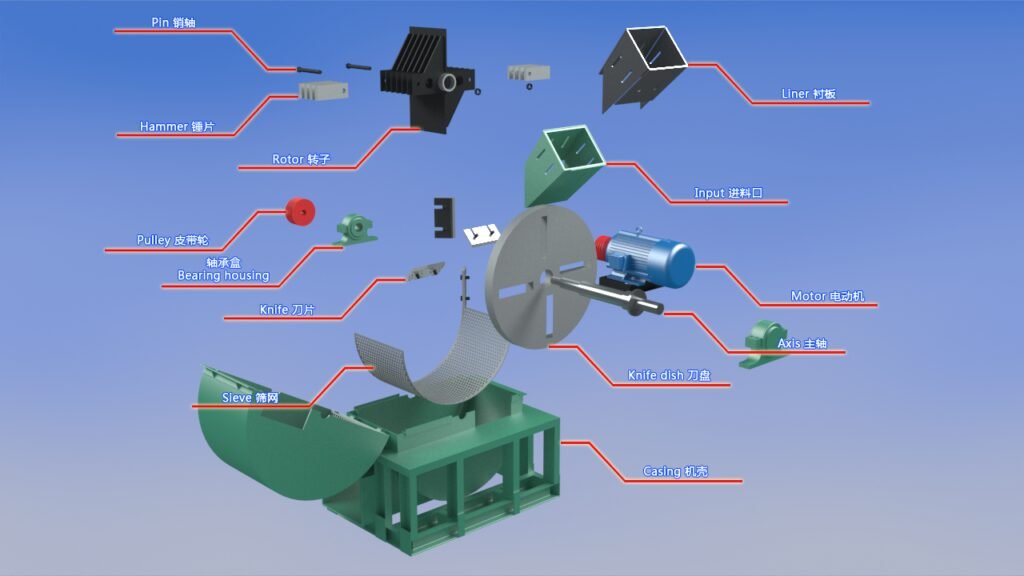
What Are the Main Components and Working Stages of a Wood Chipper?
Poor chip quality often starts with poor feeding. If components are mismatched, the machine may still run, yet output, safety, and uptime quickly suffer.
A wood chipper works through feeding, gripping, cutting, and discharging. Real performance depends on how the hopper, infeed rollers, knives, rotor, anvil, power source, and chute perform together under load.
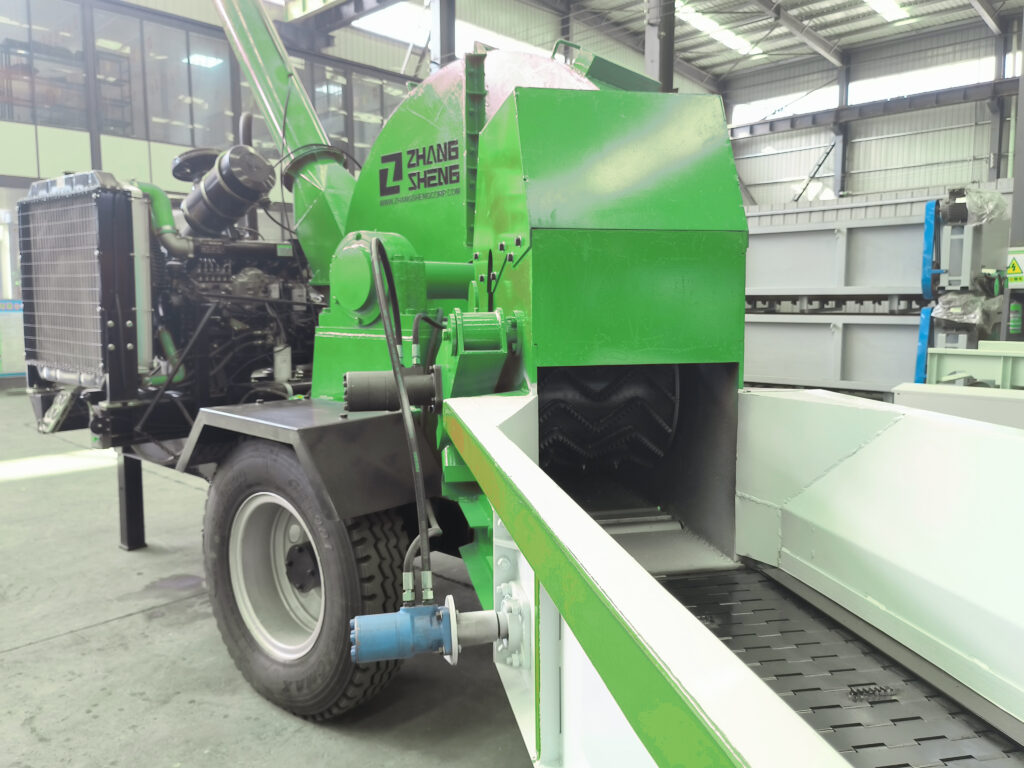
Step-by-step material flow
A chipper begins at the hopper. This zone controls how branches, slabs, or logs enter the machine. In commercial units, the hopper is not just an opening. It is a safety and flow-control area designed to reduce kickback and guide material toward the infeed. Then, hydraulic feed rollers grip the wood and pull it forward at a controlled rate. That matters because gravity feed alone often struggles with forked branches, leafy bundles, or wet wood.
Next comes the cutting chamber. Here, a rotating drum or disc carries sharp knives past a fixed anvil. The knife-to-anvil clearance, rotor speed, and knife angle determine whether the machine produces clean chips or stringy waste. In practice, tighter control usually improves chip consistency and lowers reprocessing. Finally, chips are blown or thrown through the discharge chute into a truck, stockpile, or conveyor.
| Component | Function | If undersized or poorly matched |
|---|---|---|
| Hopper | Guides material safely into feed zone | More kickback, slower loading |
| Infeed rollers | Grip and meter wood | Slippage, bridging, uneven throughput |
| Drum or disc rotor | Carries knives and creates cutting action | Low output, unstable chip shape |
| Knives | Slice wood fibers into chips | More fines, higher fuel use, rough chips |
| Anvil | Creates counter-cutting edge | Tearing instead of clean cutting |
| Power source | Drives rotor and feeding system | Stalls under dense or wet feedstock |
| Discharge chute | Moves chips away from chamber | Clogging and pile management issues |
Why settings change actual performance
Catalog numbers never tell the whole story. According to Tirox internal selection standards, dry and clean softwood can lift output by about 20%, while wet branches, leafy bundles, and tangled vines can cut throughput by 15% to 35%. Therefore, the same chipper may perform very differently across forestry residue, arborist pruning waste, and pallet offcuts.
For example, Tirox mobile diesel branch chippers are often the first recommendation in early discussions because they fit many outdoor jobs well. Yet final selection should still depend on raw material and duty cycle. Meanwhile, larger BX-series drum chippers and fixed disc chippers become the stronger fit for paper mills, biomass plants, and continuous industrial production. Buyers seeking more technical guidance can review the wood processing blog and related application articles.
How Do Different Wood Chipper Designs Work for Different Materials and Applications?
Using the wrong machine type creates poor chips, low output, and hard maintenance. Many buyers compare only diameter capacity, but machine architecture matters far more.
Different wood chipper designs use different feeding and cutting logic. Mobile arborist units, PTO models, drum chippers, disc chippers, and industrial systems each fit specific materials, mobility needs, and chip quality targets.
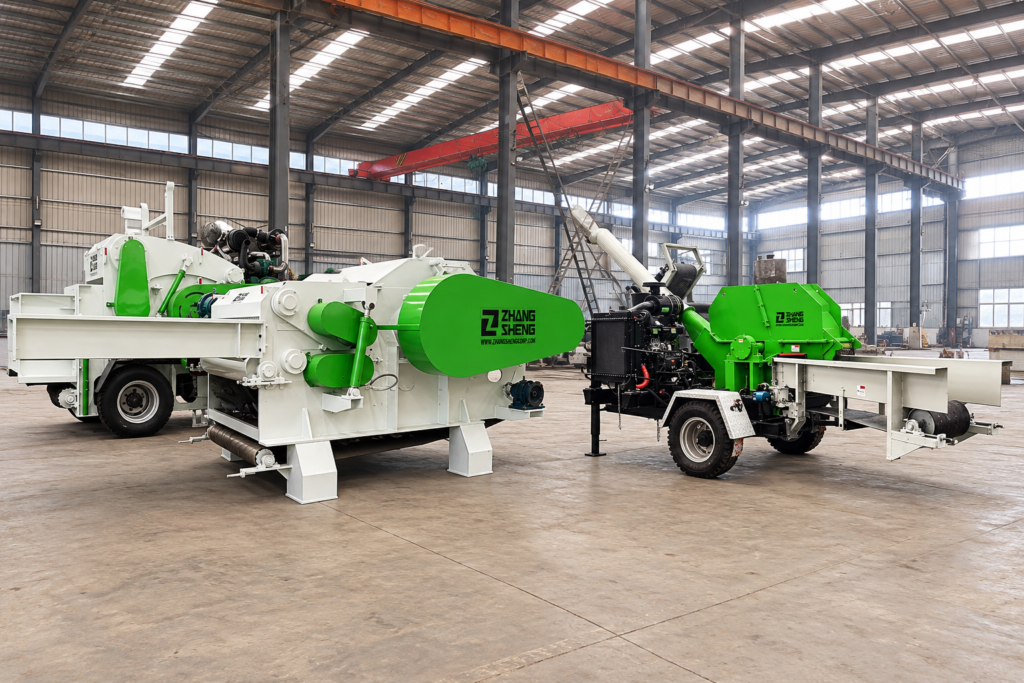
Machine type comparison
Not every machine cuts wood in the same way. A true chipper slices solid wood with knives. By contrast, a shredder tears mixed material with hammers or flails. That difference directly affects chip geometry, contamination tolerance, and downstream value. Tirox explains this clearly in its guide on wood chipper vs wood shredder.
| Type | Power source | Ideal material | Output quality | Best-fit industry |
|---|---|---|---|---|
| Mobile branch chipper | Diesel engine | Pruning branches, roadside wood | Medium, practical field chips | Arborists, landscaping, municipalities |
| PTO chipper | Tractor PTO | Farm wood waste, seasonal use | Moderate | Farms, estates |
| Drum chipper | Engine or motor | High-volume logs, slabs, branches | Strong throughput, broader chip spread | Biomass, sawmills, recycling |
| Disc chipper | Engine or motor | Clean wood, regular feedstock | Cleaner, more uniform chips | Pulp, panel, industrial fuel |
| Horizontal grinder | Diesel/hydraulic | Mixed woody waste, contamination risk | Less uniform | Land clearing, waste recycling |
Drum vs disc
A drum chipper usually handles continuous, heavier feeding well. Because the drum presents more cutting contact, it often suits bulk processing and industrial tonnage. On the other hand, a disc chipper is often selected when cleaner and more regular chips matter. That is why disc units remain common in pulp and board applications, where chip size consistency supports downstream process stability.
Chipper vs shredder
A chipper cuts. A shredder tears. That sounds simple, yet many purchase mistakes begin here. If the feedstock is mostly solid branches, logs, or clean slabs, a chipper is usually the correct route. If the stream contains softer green waste, mixed organics, or irregular waste with lower chip uniformity requirements, shredder or grinder logic may be better. For definitions of wood chipping and broader biomass handling, external references can also help buyers verify process terms.[^1]
Tirox product planning reflects this separation. The company offers mobile branch chippers for flexible field work, BX drum chippers for industrial feed volume, and larger fixed systems when 24/7 closed-loop production is the goal. In short, design should follow application, not headline horsepower.
What Should B2B Buyers Evaluate Beyond the Basic Working Principle?
Knowing the mechanism is useful, but buying on principle alone can still lead to overload, unstable output, and weak ROI.
B2B buyers should evaluate feedstock variability, chip specification, throughput reality, maintenance access, uptime, and support. The best machine is the one whose design matches the real operating condition, not the boldest catalog claim.
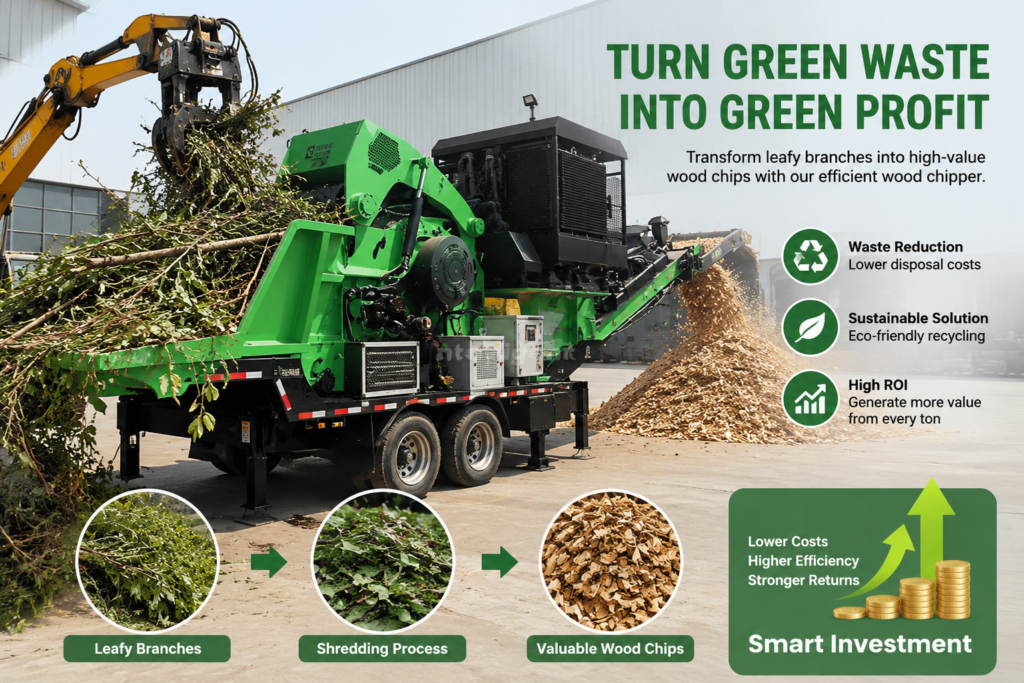
A factory review once started with a request for a general mobile branch chipper. However, once raw material, moisture, target chip size, and daily operating hours were checked, the better answer became a larger industrial configuration. As a result, the customer reduced blockages and stabilized return on investment.
What to check before choosing
Selection should begin with real material, not only maximum diameter. Dense logs behave differently from forked orchard branches. Wet biomass behaves differently from dry pallet scrap. Leaf content, contamination risk, and required chip uniformity all change the answer. For intermittent field work, a mobile machine may be the right fit. For a biomass plant, a fixed drum wood chipper or disc line may deliver better control and lower unit cost.
Throughput reality vs brochure numbers
Throughput claims should always be tested against conditions. Tirox internal standards show that dry, clean, non-entangled wood can raise output, while high-moisture branches and leafy feed can significantly reduce it. Therefore, buyers should ask for capacity under comparable material conditions, not only ideal lab-style figures. This is especially important for procurement teams comparing multiple suppliers.
| Evaluation factor | Why it matters | Typical buying impact |
|---|---|---|
| Max log diameter | Sets hard feed limit | Avoid under-sizing |
| Moisture and leaf content | Changes feeding and discharge stability | Impacts true hourly output |
| Target chip size | Affects rotor and knife choice | Supports fuel, mulch, or pulp needs |
| Duty cycle | Field use differs from 24/7 plants | Determines machine class |
| Knife wear and anvil access | Drives maintenance cost | Impacts uptime |
| Spare parts and service | Reduces downtime risk | Protects lifecycle value |
Ownership value, not just purchase price
Low price can become expensive if knives wear fast, anvils are hard to adjust, or spare parts arrive slowly. Accordingly, serious B2B buyers should review hydraulic feed control, maintenance access, safety certifications, and support depth. Tirox exports to more than 60 countries, keeps stocked models with short lead times, and offers one-year warranty plus lifetime parts support. For many projects, that support matters as much as the cutting chamber itself.
Teams comparing options should also study application-specific resources on the Tirox blog. In addition, process buyers in biomass and recycling often benefit from external guidance on biomass fuel and industrial material handling.[^2]
Conclusion
Wood chippers work through controlled feeding, knife-based cutting, and efficient discharge. Yet the best buying decision depends on material, output target, duty cycle, and service support. When machine design matches the real job, chip quality, uptime, and ROI improve together.