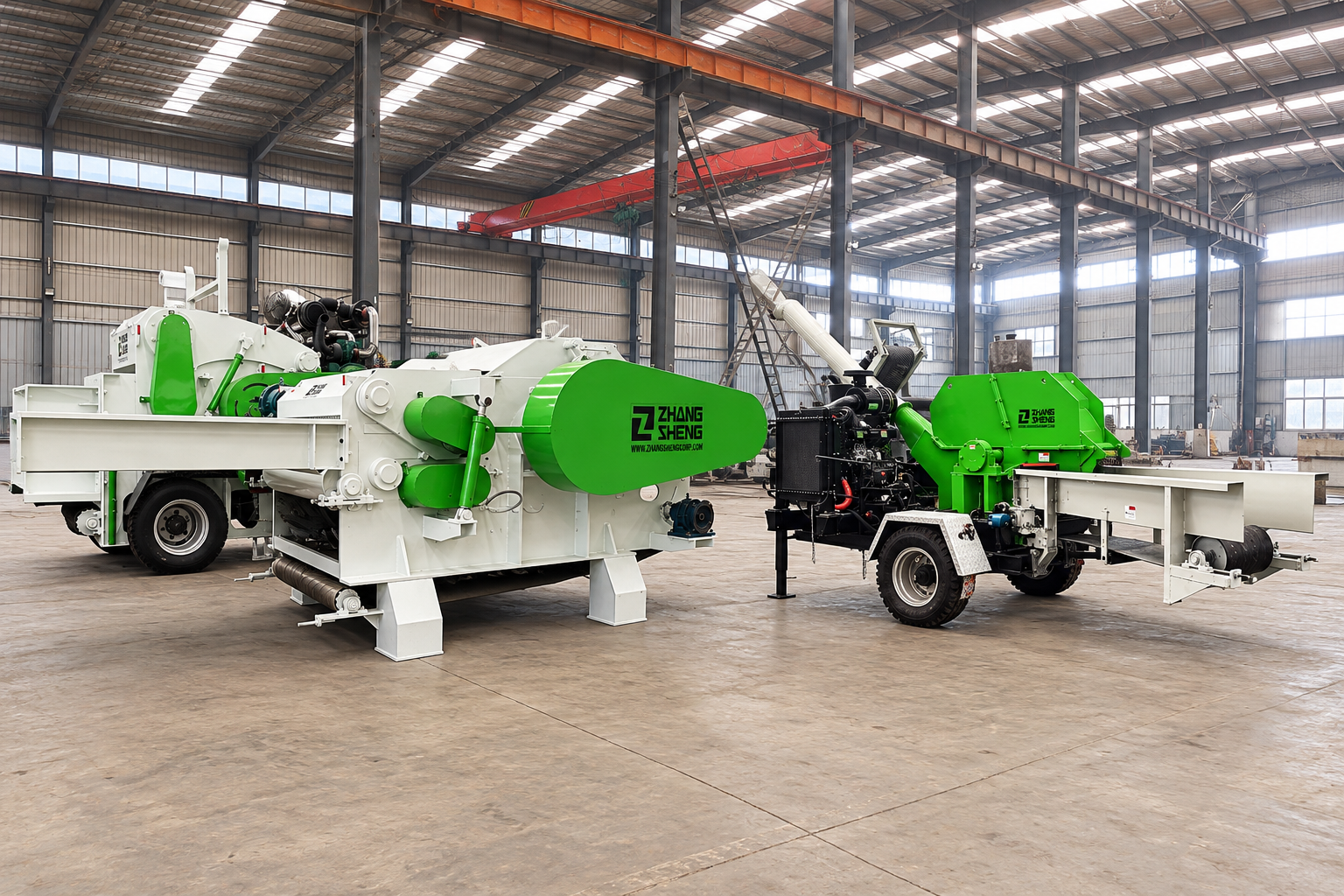
Rubber should not be intentionally fed into a standard wood chipper. A small accidental piece is different from planning a rubber-processing job.
Rubber looks harmless, but it can turn a normal chipping job into a repair problem. The wrong material can cause wrapping, clogging, blade wear, and downtime.
Manufacturers generally design a standard wood chipper for wood, not rubber. Remove rubber before chipping when possible. If the waste stream includes rubber, tires, belts, hoses, or mixed debris, check the material before choosing the machine.
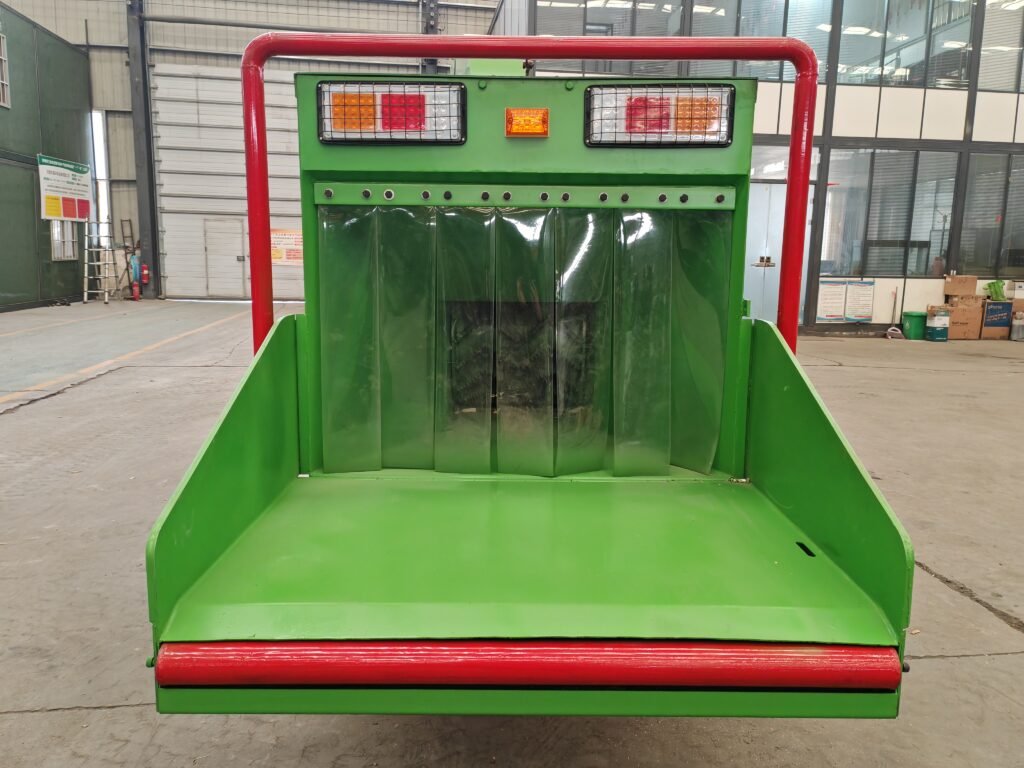
Many buyers ask this question because rubber often appears in real job sites. It may come from straps, hoses, mats, tire pieces, conveyor belts, or garden waste contamination.
The better question is not “Can it fit into the infeed?” The better question is “Does the machine, cutter system, and final output match this material mix?” That question can prevent a wrong purchase and a costly stop.
Why is rubber a bad match for a standard wood chipper?
Rubber may look softer than wood, so it can seem easier to process. That idea is risky. Soft material can still be hard on a wood chipper.
Rubber is a bad match because a wood chipper cuts wood fiber with sharp knives or blades. Rubber can stretch, rebound, wrap around parts, block the infeed, dull blades, and contaminate the final chips.
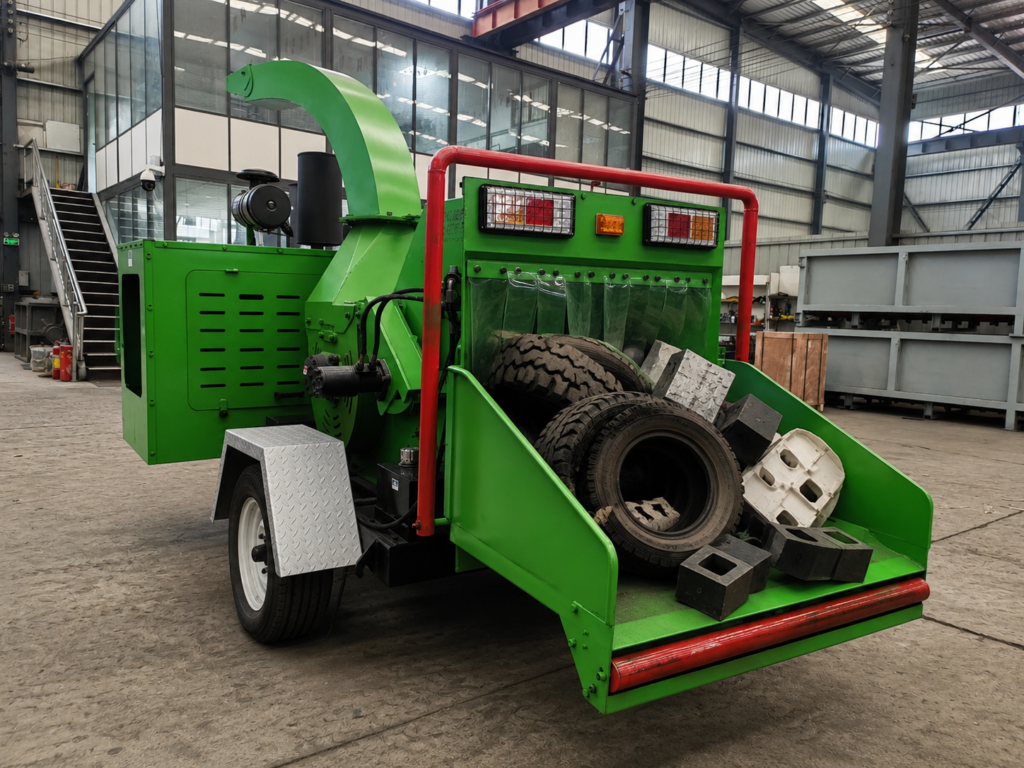
Wood and rubber behave in different ways
Wood breaks along grain and fiber. A chipper uses this behavior. The knife cuts into the wood, and the machine creates chips with a controlled size.
Rubber does not split like wood. It may bend, pull, stretch instead of cutting cleanly, or spring back. This creates unstable feeding and uneven contact with the knife.
A branch has a firm body. A hose or belt may fold in the feed system. A rubber mat may flap. A strap may wrap. These actions can cause a jam before the material reaches the cutting area.
| Material behavior | Wood in a chipper | Rubber in a chipper |
|---|---|---|
| Cutting action | Cuts along fiber | Stretches or tears |
| Feeding | Usually grips and moves | May bounce or fold |
| Output | Chips or flakes | Ragged pieces or strips |
| Risk | Normal wear | Wrapping, clogging, stress |
| Contamination | Usually acceptable wood chips | Rubber mixed into product |
Soft does not mean easy
A common mistake is simple. If a machine can chip hard branches, then it should also handle soft rubber. This is not how cutting systems work.
A knife can cut a hard stick because the stick holds shape. A soft belt may move away from the blade. It may also pull between parts and create heat or friction.
This is why rubber can create more trouble than a hard piece of clean wood. The issue is not only hardness. Shape, elasticity, reinforcement, and feeding behavior matter.
The final product also matters
Many B2B users need clean wood chips for mulch, biomass fuel, compost bulking, or boiler feed. Rubber pieces can reduce product value.
If the buyer needs clean chips, the operator should separate rubber contamination before chipping. If the buyer only wants volume reduction, the machine choice may be different.
Users should not treat a standard wood chipper as a general waste shredder. It is a wood-processing machine first.
What problems can rubber cause inside the chipper?
A small rubber piece may pass through some machines without an obvious issue. That does not mean rubber is safe as a planned feed material.
Rubber can cause wrapping, rebound, clogging, faster blade wear, extra load on the disc or drum, lower output quality, and more downtime. Reinforced rubber can create even higher risk because it may contain steel wire or metal.
Main risks to check before feeding
The risk depends on the rubber type, size, shape, and amount. A thin rubber band is not the same as a tire sidewall. A hose is not the same as a conveyor belt.
Manufacturers usually design a standard chipper for branches, logs, slabs, and similar wood, not elastic waste.
| Rubber type | Common source | Main concern |
|---|---|---|
| Rubber strap | Bundled green waste | Wrapping and jamming |
| Hose | Farm or landscape waste | Folding and bouncing |
| Rubber mat | Yard or site cleanup | Flapping and clogging |
| Tire piece | Mixed debris | Steel wire and high wear |
| Conveyor belt | Industrial waste | Reinforcement and machine stress |
Wrapping is a real selection issue
Long and flexible rubber can wrap around shafts, rollers, and moving parts. This can stop feeding. It can also force workers to clean the machine more often.
This is not only a production problem. It can become a safety concern during clearing work. Any jam-clearing process must follow lockout and safety rules.
Rebound and unstable feeding create stress
Wood usually enters the chipper in a more predictable way. Rubber may bounce back, twist, or feed at a strange angle.
That action can raise impact loads. It can also make the operator think the machine is underpowered, when the real issue is material mismatch.
Blade wear and output contamination cost money
Rubber may not chip cleanly. It can tear into strips. These strips may stay in the machine longer than expected.
If the rubber contains grit, metal, wire, or fabric, it may wear knives faster. It may also leave unwanted pieces in the output pile.For landscaping companies, biomass users, and recycling yards, this can hurt mulch quality, affect fuel preparation, and create extra sorting work after processing.
Is accidental rubber contamination different from intentional rubber processing?
Yes. A small accidental contaminant is a different situation from planning to feed rubber every day. The machine decision must match the real material stream.
Accidental rubber contamination should be removed when possible, but it may happen in field work. Intentional rubber processing needs a material review and may need different equipment, cutter design, screening, and safety planning.
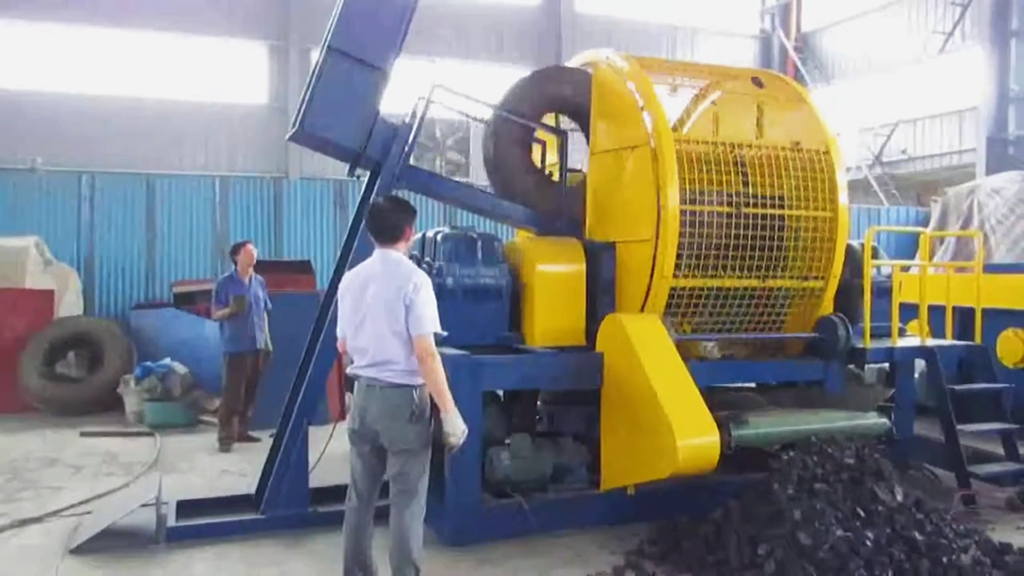
Contamination is a control problem
Green waste is rarely perfect. A municipal yard may receive branches with rope, plastic, fabric, or small rubber parts. A plantation may collect pruned branches with old hoses nearby.
The best practice is simple. Separate visible rubber before feeding. Train the operator to check the pile. Use a pre-sorting area when the material source is mixed.
This does not mean the chipper will fail from one small piece. It means the operation should not be designed around rubber going through the chipper.
| Situation | Better action |
|---|---|
| One small rubber item found in green waste | Remove it before feeding |
| Rubber appears often in the pile | Improve sorting and source control |
| Rubber is a large part of the feed | Do not use a standard chipper as the main machine |
| Rubber contains steel wire | Request a machine assessment before processing |
| Output must be clean wood chips | Separate rubber before size reduction |
Intentional processing needs another level of review
When rubber is a planned feed material, the machine supplier needs more information. The word “rubber” is too general.
A supplier must know if the material is soft, hard, reinforced, dirty, wet, long, flat, or mixed with metal. The supplier also needs to know the expected output size.
A wood chipper may not be the right choice. A horizontal grinder or another reducer may be discussed. Still, that does not mean any grinder can process any rubber.
Do not use infeed size as the only test
Many buyers ask, “The opening is large enough, so can it go in?” This test is too simple.
The material may fit into the infeed and still be wrong for the machine. The cutter system, motor load, discharge, screen, and final use all matter.
A machine that is excellent for logs may be poor for belts. A machine that handles pallets may still need caution with tires. The full material picture matters more than the opening size.
When should a horizontal grinder be considered instead?
A horizontal grinder can be better for some mixed wood waste jobs. It is often used when the material is bulky, uneven, or mixed with green waste.
Consider a horizontal grinder when the stream includes mixed wood, bulky green waste, or some non-wood contamination. But assess rubber, tires, belts, hoses, and metal-reinforced items before you recommend any equipment.
Chipper and grinder are not the same machine
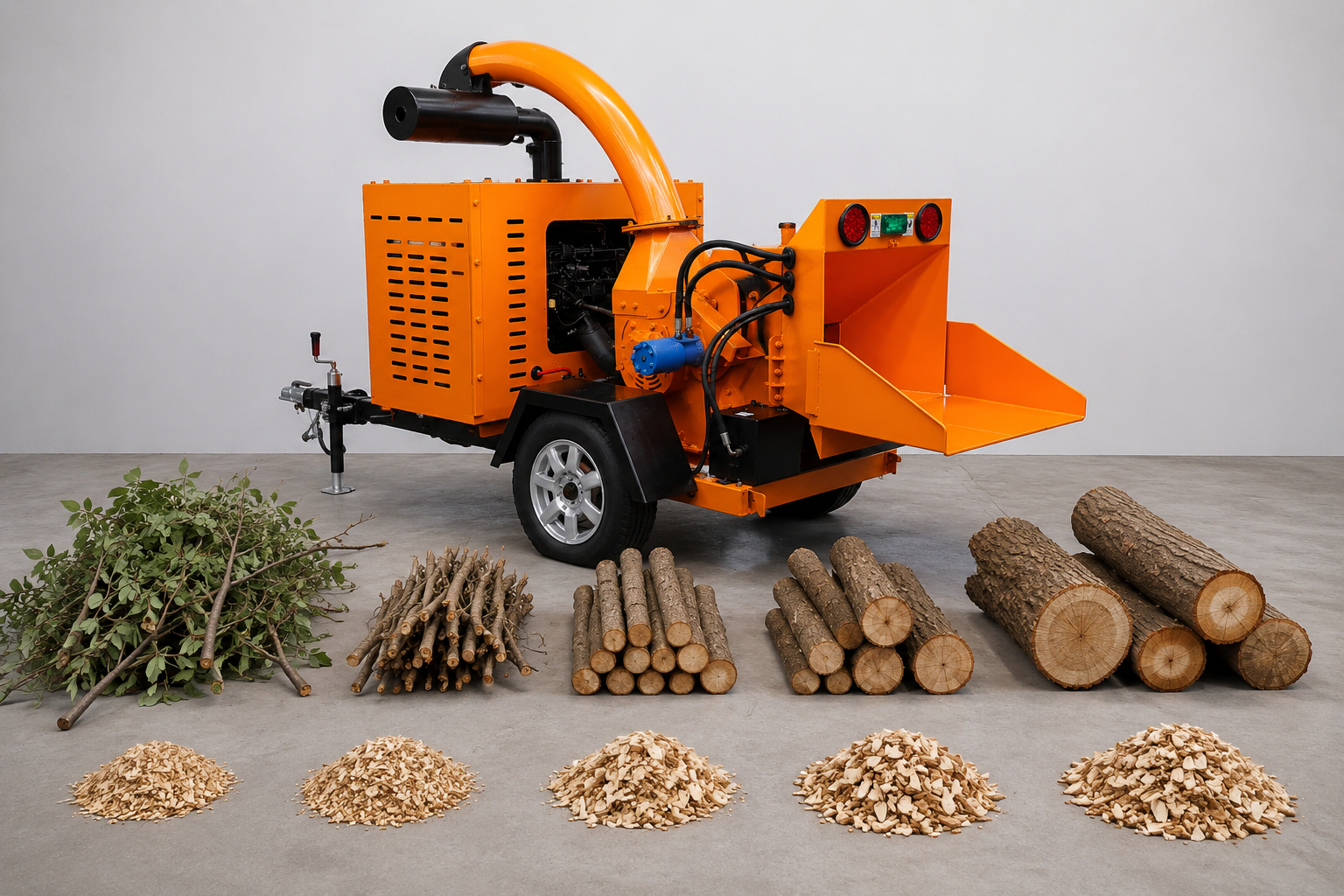
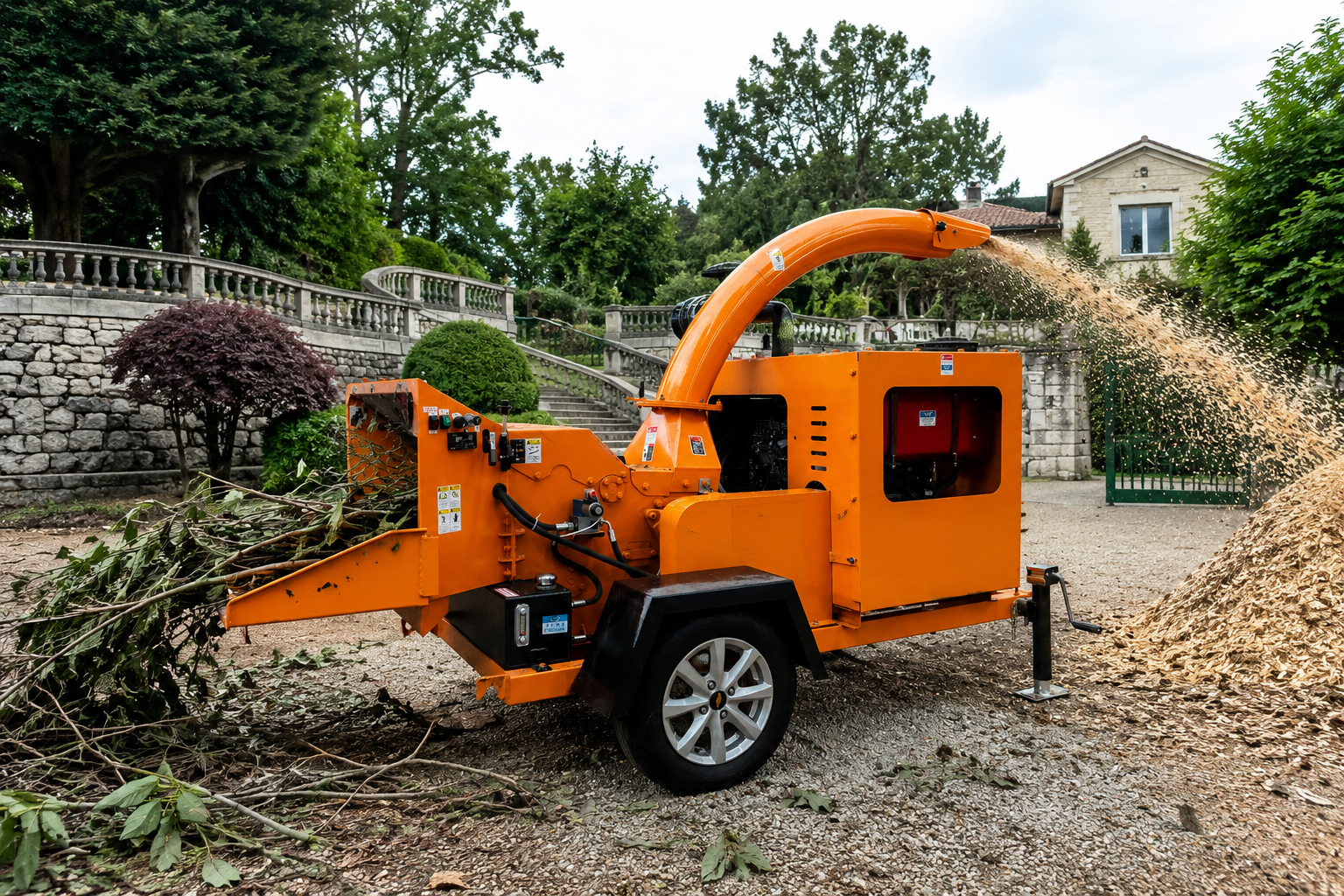
A wood chipper is built to make chips from wood. It usually uses knives or blades to cut cleaner material. It works well for logs, branches, and slabs when the feed is suitable.
A horizontal grinder is often used for volume reduction. It can handle wider and messier wood streams in many cases. It may use hammers, teeth, screens, and feed systems made for heavier reduction work.
TIROX supplies wood chippers and horizontal grinders for different markets. The choice is not based on which machine looks stronger. It is based on the waste stream and the output target.
| Job need | Wood chipper may fit | Horizontal grinder may fit |
|---|---|---|
| Clean branch chipping | Yes | Sometimes |
| Uniform wood chips | Yes | Depends on setup |
| Mixed green waste | Limited | Often better |
| Bulky wood waste | Limited by model | Often better |
| Rubber-heavy material | Not recommended | Needs assessment |
| Tires or steel wire | Not suitable | Needs special review |
A grinder is not a magic rubber machine
Some users move from “Can a chipper handle rubber?” to “Then a grinder can handle it.” This jump can also be wrong.
Rubber can still wrap, heat, rebound, and wear parts in a grinder. Tires may contain steel wire. Belts may contain fabric or metal reinforcement. Hoses may include wire coils.
The machine configuration matters. Feed method, rotor type, tooth design, screen size, discharge system, magnet option, and protection system may all affect the result.
Tracked equipment can help job movement
For forest sites, land clearing, and recycling yards, tracked mobility can be useful. TIROX developed tracked horizontal grinder technology for difficult operating areas and heavy field movement.
This mobility helps the machine reach the material. It does not change the material rules. Rubber and mixed debris still need to be described before a recommendation is made.
A supplier can only choose the right setup after the feed list is clear. A strong machine can still be the wrong machine when the material is misunderstood.
What information should be prepared before asking a manufacturer?
A short material list can save many days of wrong discussion. It helps the supplier understand the job, not only the machine size.
Before asking for a wood chipper or grinder recommendation, prepare the wood percentage, rubber type, size, hardness, reinforcement, metal content, target output, capacity need, and final use or disposal plan.
Build the material list first
The best equipment selection starts with the feed. A buyer should describe the waste pile in plain language.
For example, “70% branches, 20% pallets, 10% rubber hoses” is more useful than “mixed waste.” A photo or video also helps. It shows size, moisture, shape, and contamination.
The supplier should ask direct questions. If those questions are not asked, the recommendation may be too general.
| Question | Why it matters |
|---|---|
| What percent is clean wood? | Confirms if a chipper is suitable |
| What type of rubber is present? | Shows wrapping and wear risk |
| Is there steel wire or metal? | Affects safety and cutter damage |
| What is the max size? | Checks feed and rotor limits |
| What output size is needed? | Decides chipper, grinder, or screen |
| What will the output be used for? | Checks contamination tolerance |
| What capacity is required? | Matches power and machine class |
Photos, videos, and samples improve the answer
Clear photos of the material pile can prevent misunderstanding. A close photo of the rubber part is useful. A video of how the material is collected can also help.
If tires, conveyor belts, wire hoses, or metal parts appear, the supplier should be told early. Hidden reinforcement is one of the main reasons a simple answer becomes unsafe.
Ask for a machine recommendation, not only a price
Price is important, but a wrong low price can become expensive after downtime. The buyer should ask what machine type is suitable and what material is not allowed.
For TIROX equipment discussions, the goal is to match the working site, feed material, and output target. A wood chipper, horizontal grinder, forestry mulcher, or pellet solution may each fit a different step.
The key is direct cooperation with a manufacturer that understands export markets and field questions. The machine should match the job before shipping, because later changes cost time and money.
Conclusion
A standard wood chipper should not be used as a rubber processor. Define the material first, then choose the machine, cutter system, and output plan.