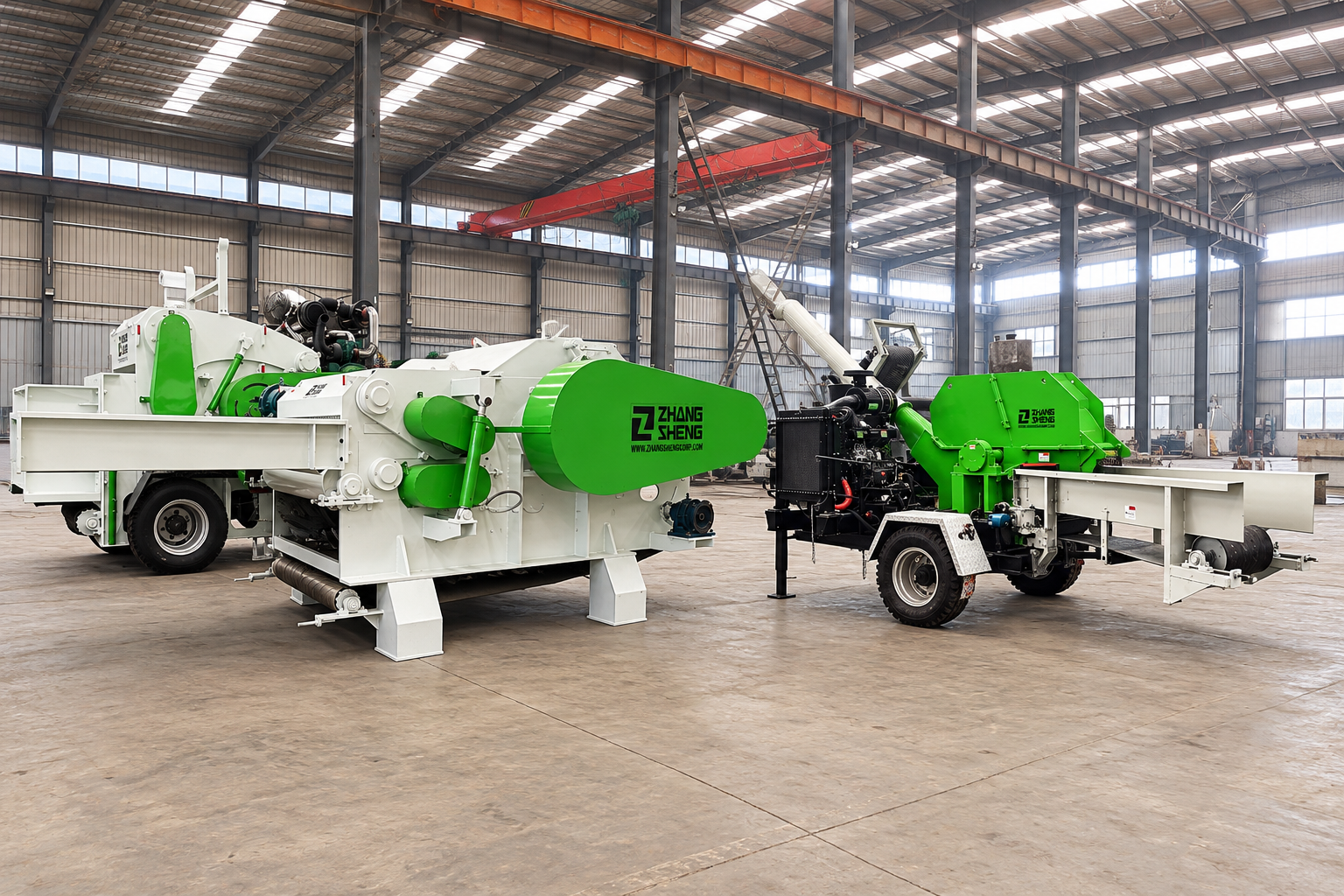
We hear this question all the time. New land clearing contractors ask us: “Should I buy a wood chipper, shredder, or mulchers?” I understand the confusion. When you are starting out, every piece of equipment looks essential.
Here is what 22 years in this industry taught me: Most land clearing businesses only need one core machine to start – an industrial wood chipper. It has the lowest rental cost, the widest application range, and the best return on investment.

Many new contractors make the same mistake. They think they need to buy everything at once – cutters, grinders, cranes, tractors. The result? Equipment sits idle. Maintenance costs pile up. Cash flow dies. I have seen this happen dozens of times. Let me show you a smarter way.
What Are the Working Principles of Chippers, Shredders, and Mulchers?
You need to understand how each machine works. This knowledge will save you thousands of dollars in wrong purchases.
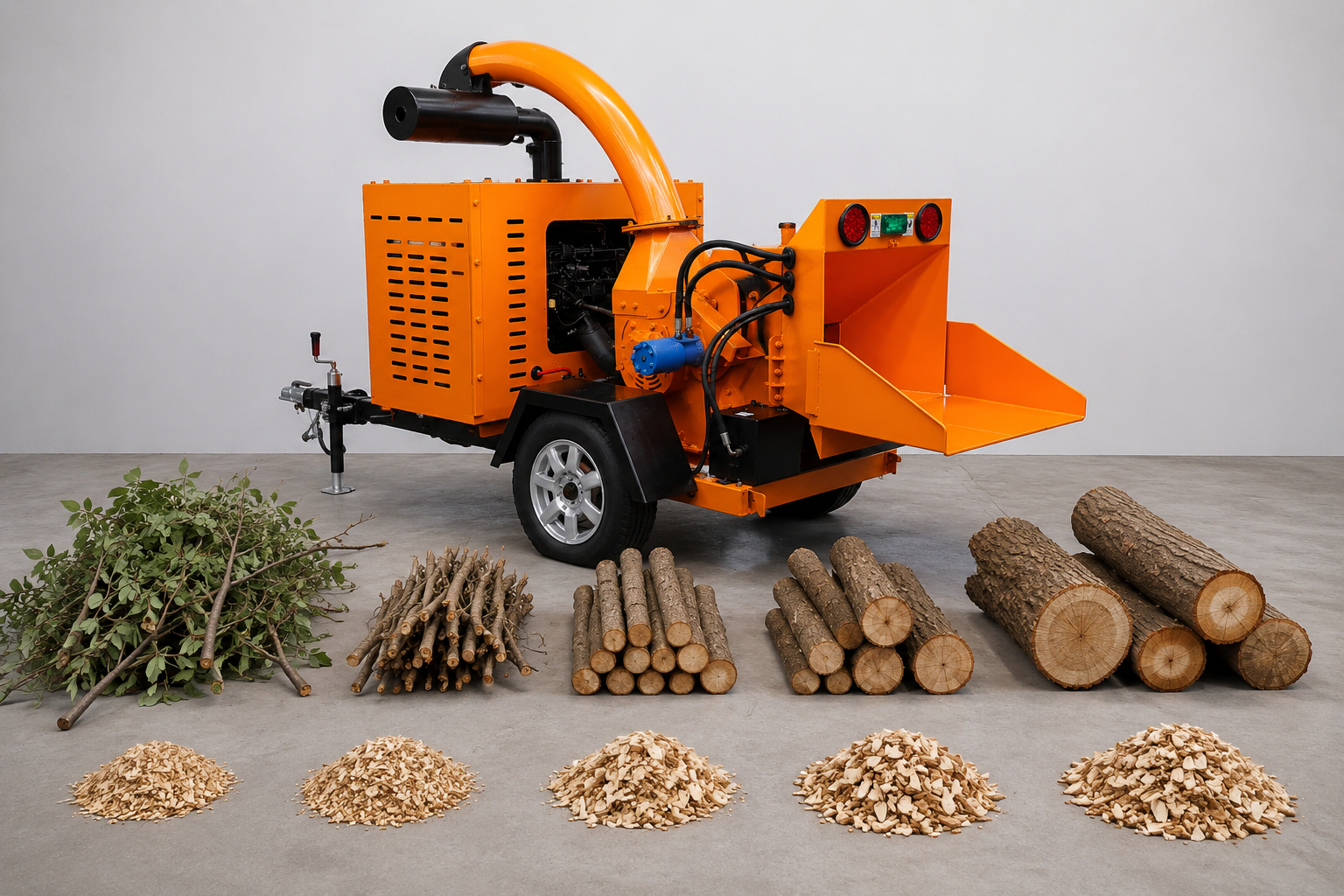
Wood chippers use rotating blades to cut wood into uniform chips. Shredders use hammers or flails to tear material into irregular pieces. Mulchers grind everything – wood, leaves, roots – into fine particles on the ground.
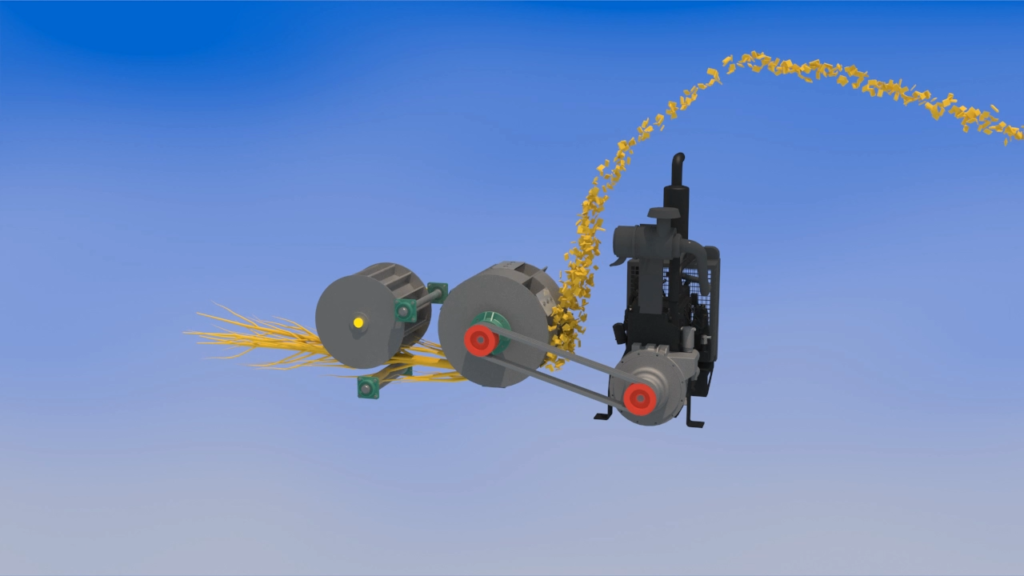
How Wood Chippers Work
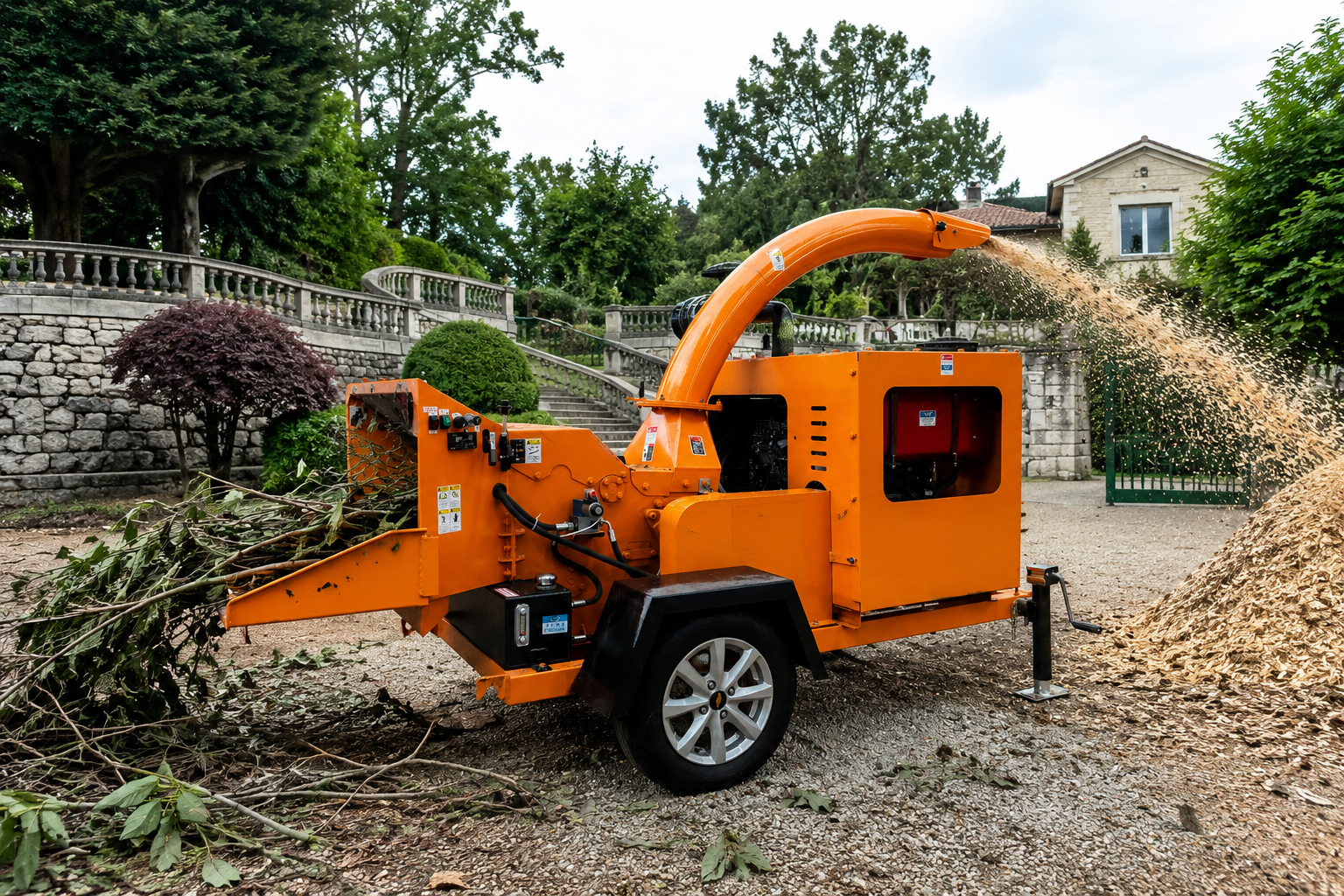
A wood chipper pulls branches and logs through a feed system. Sharp blades mounted on a rotating drum slice the wood into chips. The chips are uniform in size. This happens because the blade angle and drum speed are precisely calibrated.
I remember visiting a customer in Oregon last year. He showed me his chipper processing 12-inch diameter oak logs. The machine produced perfect chips every time. He said: “This consistency is why my biomass plant loves working with me.”
The key components are:
| Component | Function | Why It Matters |
|---|---|---|
| Feed Roller | Grabs and pulls material | Controls processing speed safely |
| Cutting Drum | Houses the blades | Determines chip size and quality |
| Blades | Slice the wood | Must stay sharp for efficiency |
| Discharge Chute | Ejects chips | Directs material where you need it |
How Shredders Operate
Shredders work differently. They use rotating hammers or heavy flails. These hammers beat the material apart. The wood passes through a screen. Only pieces small enough can exit.
The output is not uniform. You get a mix of sizes. This works fine for some applications. But it is not good when you need consistent fuel chips.
How Mulchers Function
Mulchers are ground-based machines. They have a rotating drum with teeth or hammers. The drum contacts the ground. It pulverizes everything in its path – stumps, brush, small trees, rocks.
A forestry mulcher is different from a chipper or shredder. It does not collect material. It leaves a layer of mulch on the ground. This is perfect for land clearing. But it is not suitable when you need to collect and sell the wood.
What Are the Best Applications for Each Machine?
Each machine serves different business needs. Choosing wrong costs you money and time.
Wood chippers excel at processing clean wood into valuable chips for biomass, landscaping, or animal bedding. Shredders handle mixed waste and demolition debris. Mulchers clear land quickly by grinding everything in place.
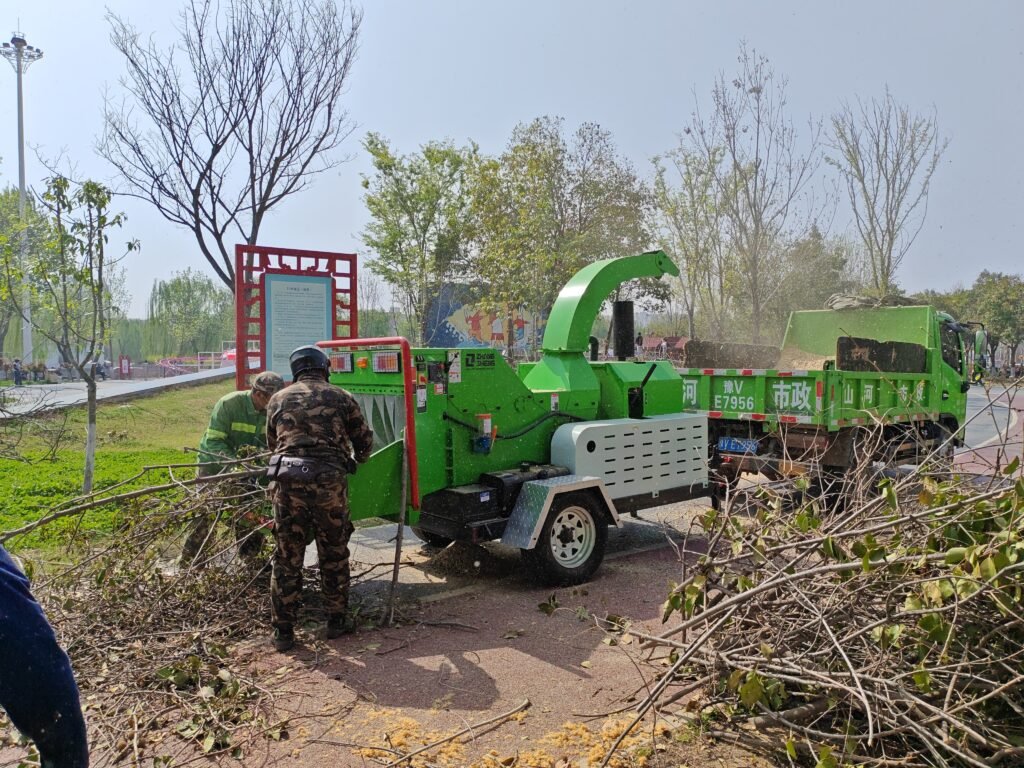
When You Need a Wood Chipper
Wood chippers are your workhorse for revenue generation. You use them when:
Processing clean wood for sale. Biomass plants, landscaping suppliers, and animal farms pay good money for quality chips. A chipper gives you the consistent size they demand.
Handling tree service waste. If you run a tree care company, you generate branches daily. A chipper turns this waste into a product you can sell or use as mulch.
Creating landscape mulch. Many of our customers chip wood and dye it for decorative mulch. The uniform chips look professional. Customers pay premium prices.
I worked with a customer in Germany who processes 50 tons of wood daily. He feeds his wood chipper with forestry residue. The chips go to a power plant. He told me: “This machine pays for itself every three months.”
The key advantages are:
| Advantage | Impact on Your Business |
|---|---|
| Uniform output | Higher selling price, easier to market |
| High efficiency | Process more material per hour |
| Multiple revenue streams | Sell to power plants, landscapers, farms |
| Lower maintenance | Fewer moving parts than shredders |
When You Need a Shredder
Shredders work best for waste management operations. You need one when:
Processing mixed wood waste. Construction sites generate wood mixed with nails, metal, and other debris. A shredder can handle this. A chipper cannot.
Reducing volume for landfill. Some waste has no resale value. You just need to make it smaller for cheaper disposal. Shredders excel at this.
Handling pallets and crates. These often contain nails and staples. A horizontal grinder (a type of shredder) processes them safely.
The output quality is lower. But for waste reduction, that does not matter.
When You Need a Mulcher
Mulchers are for land clearing contractors. You need one when:
Clearing large forest areas. A forestry mulcher can process acres per day. It grinds stumps, brush, and small trees without stopping.
Preparing land for construction. Developers need land cleared fast. A mulcher leaves a clean, level surface ready for building.
Maintaining power line rights-of-way. Utility companies use mulchers to keep vegetation away from power lines.
But remember: A mulcher does not generate revenue from the wood. It just clears land. You cannot sell the mulched material.
How to Choose the Right Equipment Based on Your Business?
This is where most new contractors waste money. They buy based on what looks impressive. Not on what makes business sense.
Start with one industrial wood chipper if you want to generate revenue from wood waste. Add a shredder only if you handle construction debris regularly. Buy a mulcher only when land clearing becomes your main service.
For New Land Clearing Businesses
I tell every new contractor the same thing. Start simple. Buy or rent one good wood chipper.
Here is why this strategy works:
Lower initial investment. A quality wood chipper costs less than buying multiple machines. You can start generating income immediately.
Immediate revenue generation. You process wood and sell chips from day one. This cash flow funds your business growth.
Easier to master. Learning one machine well beats operating three machines poorly. Your team becomes efficient faster.
Flexible rental options. You can rent specialized equipment like mulchers for specific projects. This keeps your costs variable instead of fixed.
One of our customers in Texas started with a single tracked wood chipper. He rented it first. After six months, he had enough profit to buy it. Now he owns three chippers and subcontracts mulcher work when needed.
His advice? “Do not buy equipment to look busy. Buy equipment that makes you money.”
For Established Tree Service Companies
You already have steady work. Your decision is different. You need to maximize profit from existing material streams.
Assess your waste volume. How many tons of branches do you generate monthly? If it is over 20 tons, a chipper pays for itself quickly.
Check local markets. Call biomass plants, landscaping suppliers, and farms. Ask what they pay for chips. Calculate your potential revenue.
Consider a tracked model. If you work in challenging terrain, a tracked wood chipper goes where trucks cannot. This expands your service area.
I remember a customer in Scotland. He runs a tree service company. He was burning all his waste. We calculated he was burning $3,000 worth of chips every month. He bought a chipper. Now that waste generates $36,000 annually.
For Waste Management Operations
Your needs are different. You handle mixed materials. Quality matters less than volume reduction.
A horizontal grinder makes sense for you. It processes pallets, construction wood, and mixed debris. The irregular output is fine for your purposes.
But start with one machine. Many waste operations buy too much capacity too soon. Start with a mid-sized grinder. Scale up when you consistently run at full capacity.
Factor in maintenance. Shredders and grinders need more maintenance than chippers. They process harder materials. Budget accordingly.
For Biomass Operations
You need consistent quality. Your customers (power plants, pellet mills) have strict specifications.
A wood chipper is essential. It produces the uniform chips you need. Invest in a high-quality model with adjustable settings.
Consider a complete solution. We offer pellet production lines that include chippers, dryers, and pellet mills. This gives you control over the entire process.
Think long-term. Biomass is growing. Invest in durable equipment that can run 10-12 hours daily. Cheap machines break down and cost you customers.
The Cost-Benefit Reality Check
Let me give you real numbers. These are based on our customers’ actual experiences:
| Equipment Type | Typical Cost | Revenue Potential/Month | Payback Period |
|---|---|---|---|
| Industrial Wood Chipper | $25,000-$80,000 | $3,000-$8,000 | 8-18 months |
| Horizontal Grinder | $80,000-$300,000 | $5,000-$15,000 | 12-24 months |
| Forestry Mulcher | $100,000-$400,000 | Indirect (service fees) | 24-36 months |
These numbers assume you have consistent material supply and established markets.
My Personal Recommendation
I have been in this industry for 22 years. I have seen every mistake contractors make. Here is what I tell people:
Buy a wood chipper first. Rent everything else until you have proven demand.
Why? Because a chipper:
✅ Has the lowest entry cost
✅ Generates revenue immediately
✅ Requires less maintenance
✅ Has the broadest market for output
✅ Provides the fastest return on investment
Once you master the chipper and build steady revenue, then consider adding specialized equipment. Maybe a small forestry mulcher for land clearing projects. Maybe a grinder for construction waste contracts.
But start with the machine that makes you money from day one.
Common Mistakes to Avoid
I see these mistakes repeatedly:
Buying based on what competitors own. Your business is different. Your material streams are different. Your markets are different. Buy what you need, not what looks impressive.
Overestimating capacity needs. A machine running at 70% capacity makes more money than one running at 30%. Start smaller. Scale up when demand proves it.
Ignoring maintenance costs. A cheap machine that breaks down costs more than a quality machine that runs reliably. Factor in total cost of ownership.
Forgetting about markets. Equipment is worthless if you cannot sell the output. Secure buyers before buying equipment.
Conclusion
Choose your equipment based on revenue potential, not impressiveness. For most contractors, an industrial wood chipper is the smartest first investment. It generates income, has broad applications, and pays for itself fastest.