
Downtime hurts profit. Panic often makes it worse. I guide crews to pause, sort the fault, and act in order. Most “broken” chippers recover fast with simple triage.
Fix a wood chipper by running a simple triage: safety lockout, debris check, blade–anvil gap check, feed roller pressure, belt tension, hydraulics at idle. If you cannot restore function in 30 minutes without disassembly, stop and call factory support.
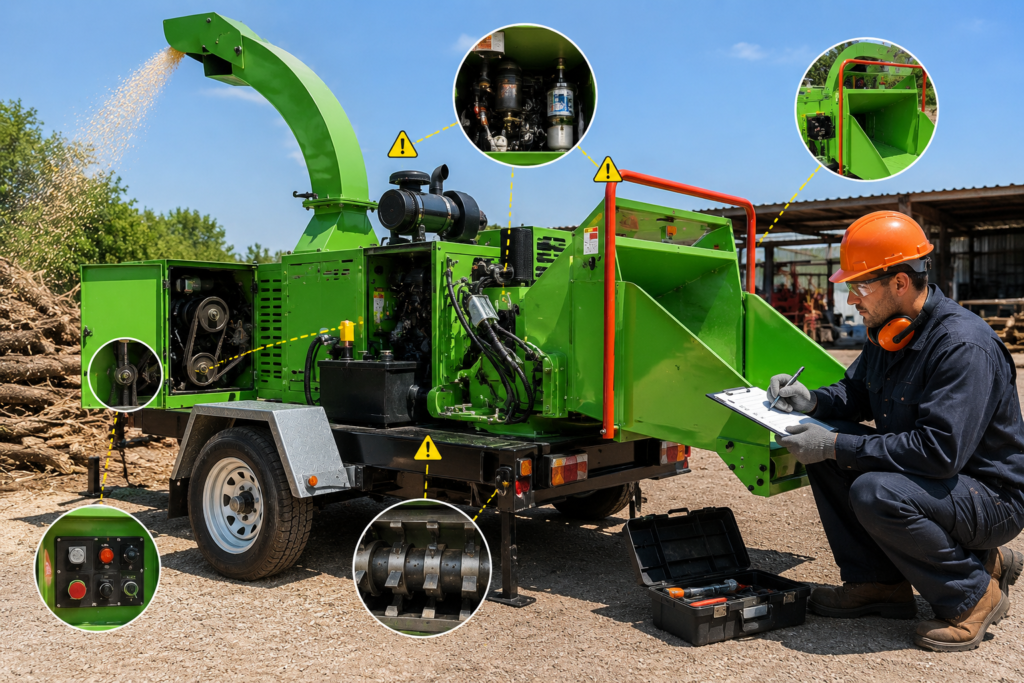
I manage technical support for international fleets. I see one pattern. Many issues are misclassified as “repairs” when they are “adjustments.” I will show the difference, and I will keep you safe while you decide.
What triage restores most “broken” chippers within 30 minutes?
Pain hits when downtime starts. Panic narrows thinking. A clear plan opens options. I carry one plan. It sorts faults by risk and time. It works in the field.
Start safe. Remove key. Wait for rotor to stop. Clear visible jams. Check belts, hoses, and connectors. Verify blade–anvil gap. Test feed and discharge. If performance returns, document. If not, move to parts or escalate.
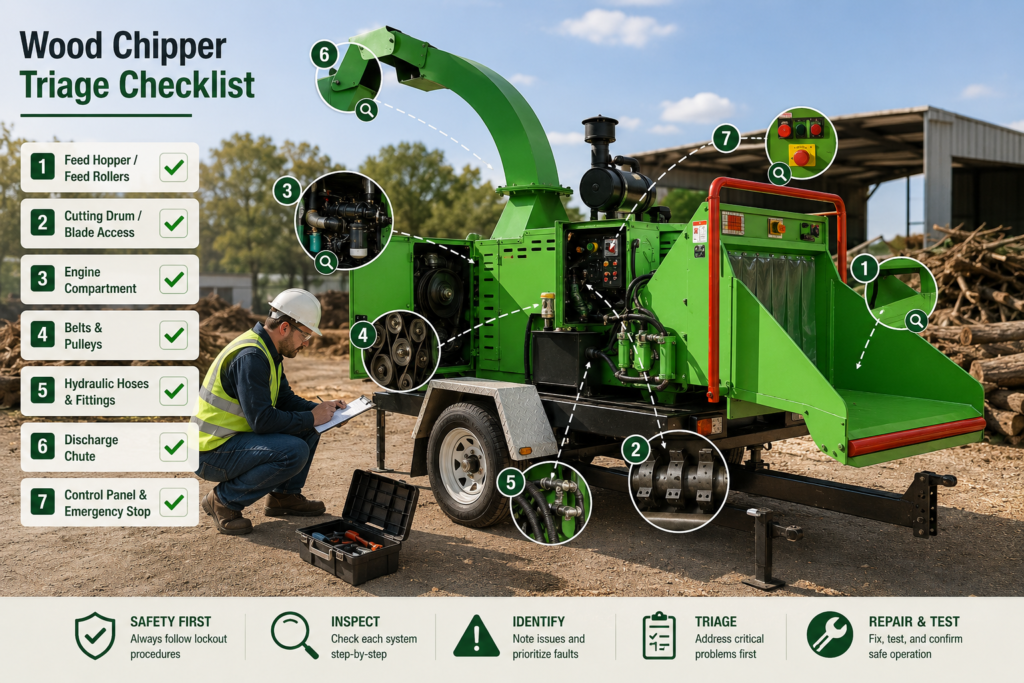
Safety first
I use the same opening steps every time. I stop the engine. I pull the key. I wait for the rotor to stop. I chock wheels if needed. I open guards with care. I wear gloves and eye protection. I never reach near the infeed without full lockout. These steps are simple. They prevent injury. They also clear my head before I touch anything else.
The triage map
I sort problems into three lanes. I do not jump lanes without a reason. This keeps me from turning a small adjustment into a big repair.
| Category | Common symptoms | First checks | Tools | Decision limit |
|---|---|---|---|---|
| Field-adjustable | Low output, uneven chips, slow feed, light vibration | Debris, blade–anvil gap, feed roller pressure, belt tension, discharge chute | Feeler gauge, spanners, torque wrench, flashlight | 30 minutes total time |
| Parts replacement | Dull blades, cracked belt, clogged filters, blown fuse | Inspect wear surfaces and consumables | Spare blades, anvil edge, V-belts, air/fuel filters, fuses | Replace only accessible consumables |
| Must escalate | Metal-on-metal noise, hot bearings, cracked rotor, bent shaft | Visual check, heat check (hand back-of-hand near housings), run at idle only | None beyond inspection | Stop. Call factory support |
Field kit: tools and spares
I keep a simple kit. It saves hours. It includes:
- Feeler gauges for blade–anvil gap
- Torque wrench and socket set
- Belt tension gauge or a simple deflection rule
- Spare double-edged blades and an anvil edge
- V-belts matched set
- Air and fuel filters
- Fuses and a 12V test light
- Grease and a hand pump
Operators who carry this kit report faster restarts and fewer callbacks. This is true for landscaping crews, rental teams, and forestry sites.
Chipper will not start or stalls under load?
No start creates panic. Phones light up. Jobs slip. I slow it down. I check simple interlocks and consumables first. The cause is often small and fast.
Confirm neutral, brake, and safety bar position. Reset emergency stop. Check battery, fuses, and connectors. Inspect air and fuel filters. Look for engine error lights. If it still stalls under load, test belts and hydraulic relief settings.
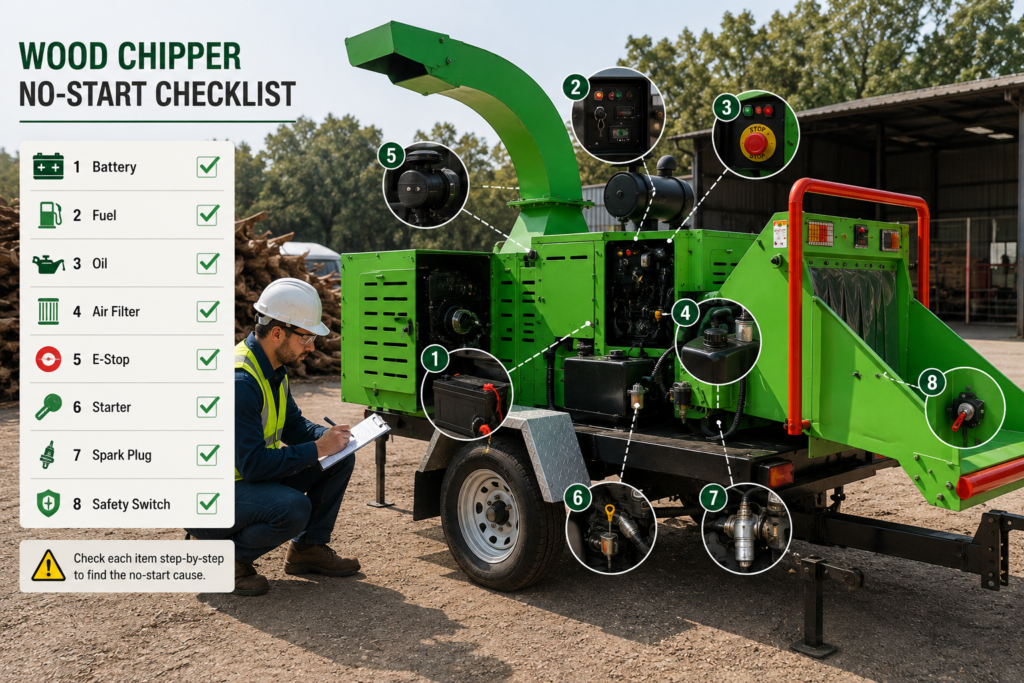
Electrical and interlocks
Many no-start calls end at a switch. I verify the feed safety bar is in “neutral.” I reset the emergency stop. I ensure the infeed safety switch is not stuck. I check the key switch and harness plugs for looseness. I measure battery voltage at the posts. I look for blown fuses or a tripped breaker. For electric-drive options, I confirm supply power, overloads, and the main contactor status. I have seen rental units with loose battery grounds cause random stalls. A simple clean and tighten fixed them.
Fuel, air, and engine protection
I open the air filter and tap out heavy dust. I replace it if it looks soaked or caked. I drain any water from the fuel separator. I check the fuel level and the fuel shutoff solenoid click. I look for error lamps or codes on the engine panel. Many engines protect themselves. A low oil or overheat signal will shut down or derate. I clean the radiator and screens. I confirm the cooling fan runs.
Drive load and belts
If the engine starts but stalls under load, I reduce load. I set the feed to slow. I watch belt behavior at idle. I listen for belt squeal. I inspect for cracks or glazing. I check belt tension against the deflection method in the model spec. I do not over-tighten. That harms bearings. If the stall only occurs at high feed, I suspect hydraulic relief or a jam. I compare hydraulic pressure at the test port to the service chart for the model. If I do not have a gauge, I watch system behavior. The feed rollers should stop when a heavy piece hits, then auto-recover. If I see jerky feed with no recovery, I escalate.
| Symptom | Likely cause | Field action | Escalate when |
|---|---|---|---|
| No crank | Dead battery, bad ground, tripped interlock | Clean/tighten terminals, reset E-stop, set safety bar, replace fuse | Starter smokes or makes grinding noise |
| Cranks, no start | Air/fuel restriction, fuel shutoff | Replace air/fuel filters, check shutoff solenoid | Fuel pump noisy or lines leaking |
| Stalls at load | Belt slip, clogged radiator, hydraulic overload | Adjust belts, clean radiator, slow feed | Pressure way off chart or engine alarms continue |
I avoid disassembly here. I draw a line. Heat, leaks, or repeating alarms mean stop.
Output is low, chips are uneven, or it clogs?
Poor output feels vague. Crews chase ghosts. I break it into three checks. Cutting edges. Feeding force. Discharge path. This removes guesswork and saves time.
Inspect blade sharpness and the anvil edge. Verify blade–anvil gap and feed roller pressure. Slow the feed. Clear discharge chute. Match material to screenless design limits. If chips stay uneven, replace blades or escalate.
Cutting system reality
Our TIROX drum chippers use a screenless design. Chip size comes from blade condition, blade–anvil gap, feed speed, and material. I check blade edges first. If they feel rounded or chipped, I flip or replace. I inspect the anvil for nicks. I set the blade–anvil gap with a feeler gauge per the model chart. I never change blade angle. That harms the rotor. In sandy regions, I see faster dulling. Landscaping crews who mulch near beaches flip blades more often. Hardwood also wears faster. I use A8B blades for that case.
Feed system setup
I look at feed roller pressure and speed. Too fast feed creates long, stringy chips. Too slow feed wastes time. I adjust within the recommended range for the model. I run a test branch and watch chip throw. I also check that the infeed rollers grab well. If they slip, I clean roller teeth. I verify the hydraulic cooling fan is running. Hot oil reduces feed force.
Discharge and material limits
I open the discharge path. I clear compacted chips at the elbow. I confirm the chute rotates freely and is not narrowed by dents. I match material to the design. Screenless chippers do not make uniform fine chips from palm fronds or long-fiber material. Palm leaves can block the outlet. Bamboo can wrap if the feed is too fast. I slow feed and cut pieces shorter. If output stays low after these steps, I look at belts next.
| Symptom | Likely cause | Field action | Notes |
|---|---|---|---|
| Uneven chips | Dull blades, wide gap, fast feed | Flip/replace blades, set gap, slow feed | Do not change blade angle |
| Frequent clog | Dull blades, wet fibrous feed, blocked elbow | Flip blades, slow feed, clear discharge, shorten pieces | Palm leaves and vines need caution |
| Slow throughput | Low roller pressure, hot hydraulics, belt slip | Adjust roller pressure, clean radiator, set belt tension | Check hydraulic fan operation |
Customers who follow this approach report steadier output and fewer jams. The change is discipline, not force.
Do you hear unusual noise or feel vibration?
Noise changes mean risk. Vibration means risk. I stop first. I look and listen. I never keep running to see if it clears. That choice breaks machines.
Shut down. Remove key. Open guards. Remove debris. Check blades, bolts, belts, and infeed teeth. Spin rotor by hand only when locked out. If noise remains at idle, escalate to support immediately.
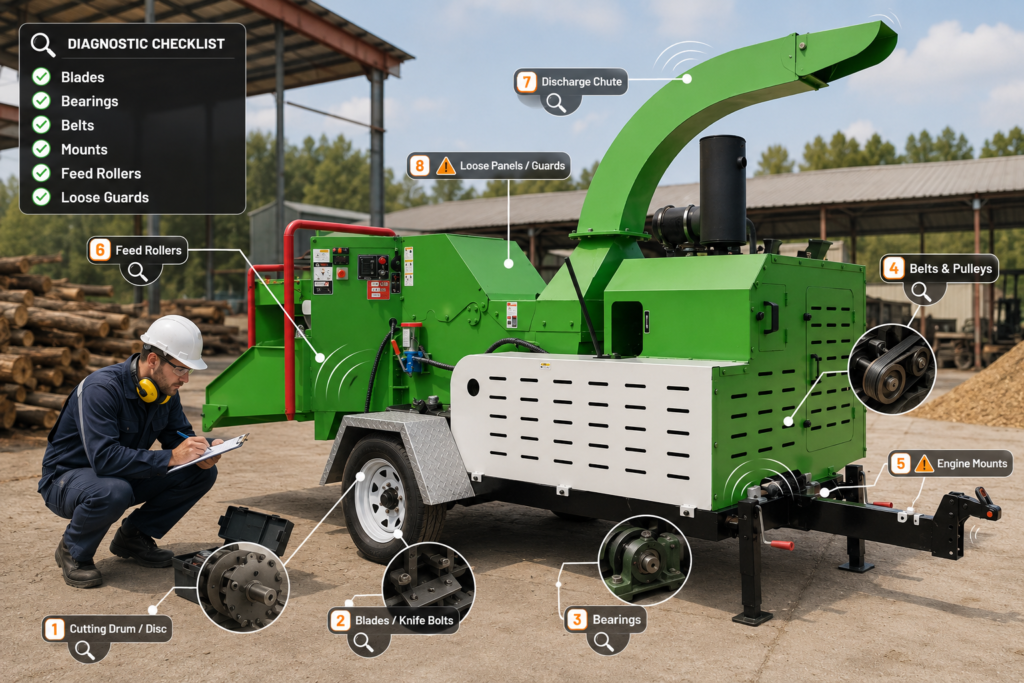
What is normal
A healthy chipper has steady engine note and smooth rotor sound. There is a soft whoosh at discharge. Infeed rollers hum, not chatter. Belts run true. There is no squeal. Bearings run warm, not hot. Once you know this baseline, the bad sounds stand out.
Noise and vibration map
I remove sticks and stones first. I look for a forgotten wrench. I check blade bolts for torque. I inspect the anvil fastening. I look for rub marks inside the housing. I check belts for missing chunks. I re-seat guards. Then I start and idle. If the noise appears only with feed, I suspect a feed roller issue or a hidden piece in the rotor pocket. I lock out again and clear it. I have pulled a socket from a rental rotor pocket. The noise vanished.
| Sound/feel | Likely cause | Field action | Escalate when |
|---|---|---|---|
| Screech at load | Belt slip | Set belt tension, replace glazed belts | Screech continues at idle |
| Rhythmic knock | Loose blade or debris impact | Torque blades, clear rotor pockets | Knock persists with clean rotor |
| Harsh grind | Blade hitting anvil | Stop, set gap, inspect anvil | Any visible rotor damage |
| Strong vibration | Unbalanced rotor, missing bolt | Stop, inspect blades/bolts | Vibration at idle with no visible fault |
Clear stop lines
I do not run a chipper with metal-on-metal noise. I do not run with strong vibration at idle. I do not run if a bearing housing feels too hot to touch for more than a second. These signs point to bearing failure, rotor damage, or structural cracks. These need factory service. Continued running turns a repair into a rebuild.
Conclusion
Use the triage. Fix the simple. Replace the right parts. Escalate when risk rises. This protects people, schedules, and budgets. My team is here when you need help.