

Ever wondered what makes industrial wood chipper blades so durable and efficient? Let’s delve into the materials that constitute these crucial components.
Wood chipper blades are primarily made from high-grade steel alloys, designed for strength, durability, and resistance to wear. The choice of material directly impacts their performance and longevity.
Industrial wood chipper blades must withstand extreme conditions, including constant contact with hard materials. The most common materials used for these blades include carbon steel and tool steel, both known for their hardness and durability. Carbon steel blades are prized for their sharpness and strength, making them ideal for cutting through wood and other fibrous materials. Tool steel, on the other hand, offers high resistance to abrasion and deformation, making it suitable for heavy-duty applications where longevity is crucial.
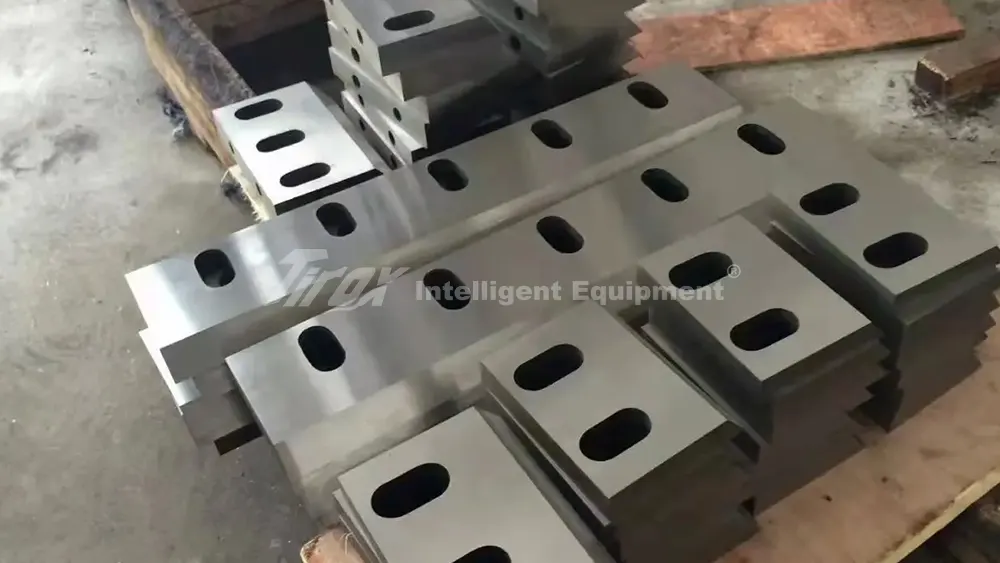
How Do Steel Types Affect the Manufacturing and Performance of Wood Chipper Blades?
Steel type plays a pivotal role in the efficiency and output of wood chippers. But what impact does it have on the manufacturing process and overall blade performance?
Different steel types, such as carbon steel and tool steel, influence the cutting efficiency, durability, and maintenance needs of wood chipper blades, affecting their performance and operational cost.
The choice of steel affects everything from the manufacturing process to the operational efficiency of wood chippers. Carbon steel, often used for its sharpness and durability, must be treated to achieve the desired hardness and resistance to wear. This involves heat treatments that can complicate the manufacturing process but result in a much more durable blade. Tool steel, known for its toughness, requires even more rigorous processing to enhance its wear-resistant properties. These manufacturing complexities inevitably affect the blade’s performance in the field, dictating how well it can handle different types of wood and debris and its overall lifespan.
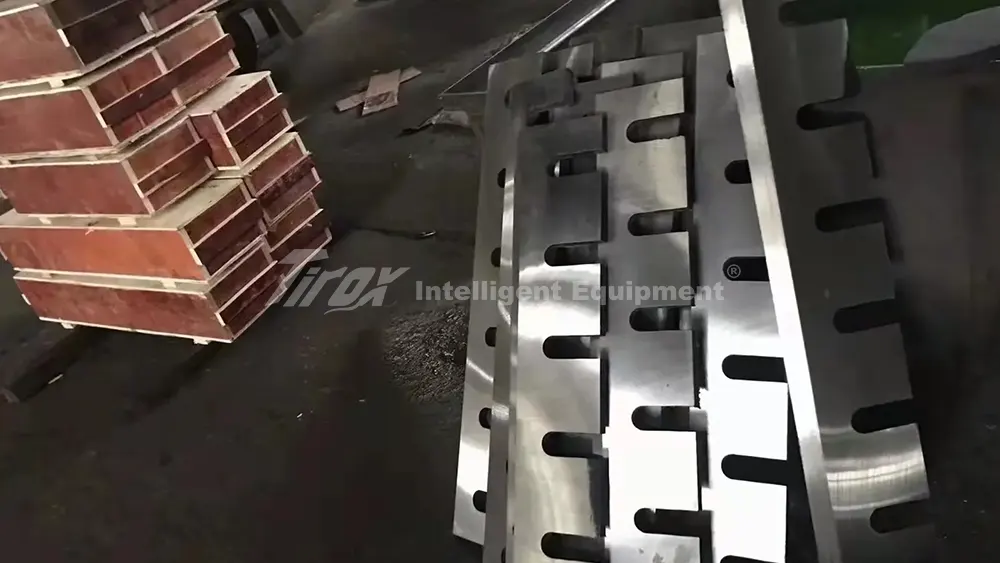
What Are the Long-Term Benefits of Selecting the Right Wood Chipper Blade Material?
Selecting the optimal material for wood chipper blades isn’t just about immediate performance—it also influences long-term operational efficiency and cost-effectiveness. How so?
Choosing the right material for wood chipper blades ensures optimal performance, reduces downtime due to maintenance, and can significantly decrease long-term operational costs by extending the lifespan of the blades.
Using the correct blade material can minimize the frequency of blade replacements and maintenance checks, which are critical for operational efficiency. For instance, blades made from high-quality tool steel, although initially more costly, can handle higher loads and resist wear better than those made from less durable materials. This means fewer interruptions for blade changes and maintenance, leading to increased productivity. Additionally, the right material choice can prevent premature blade failure, which can cause costly repairs and downtime. Ultimately, investing in the right blade material can lead to significant savings and increased efficiency for businesses relying on wood processing equipment.
Conclusion
Understanding and choosing the right material for wood chipper blades significantly enhances performance and operational efficiency.