
A cheap quote can look safe. Then the machine meets wet branches, hard wood, or long transport, and the real cost starts to grow fast.
The cost of a wood chipper is not one number. I always treat it as a total job cost. That means the base price, the power setup, the mobility option, the blade type, shipping, and the cost of downtime.
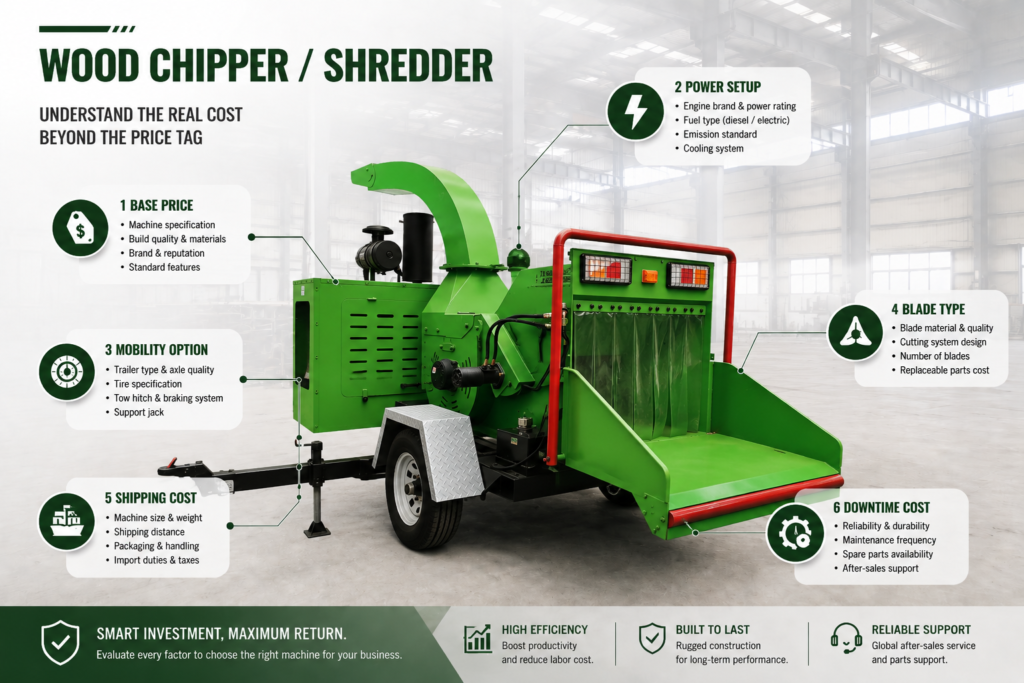
When I talk with buyers, I hear the same question again and again. They ask, “What is the price?” But I ask a different question first. I ask, “What will the machine cut, where will it work, and how often will it move?” That is because a wood chipper that looks cheap on paper can become expensive in daily use. I have seen buyers save money at the start and lose more later through poor fuel use, slow feeding, clogged discharge, and more repairs. So I never discuss cost as a sticker only. I discuss cost as a working system.
Why does one wood chipper price look low, but the real cost feels high?
A low quote can hide a weak setup. Then the buyer pays more in fuel, repairs, transport, and lost time.
The real price depends on how the machine matches the job. A wood chipper that fits the material, the site, and the power source will usually cost less over time, even if the first payment is higher.
I have learned that many buyers compare only the headline number. They see one machine at a lower price and assume it is the better deal. But the job site does not care about the headline number. The job site cares about feed opening size, engine strength, blade wear, chassis type, and service access. If a buyer uses a small chipper on dense hardwood, the machine works under stress all day. Fuel use goes up. Output drops. The blades wear faster. The operator gets frustrated. The machine may still run, but the total cost gets worse.
I also tell buyers to look at mobility. A simple towable frame is fine for short moves. A road chassis can add cost, but it may save much more when cross-site travel matters. Tracks can also raise the price, but they can protect the machine’s value when the site is muddy or rough. In other words, the low quote is often only the start of the bill.
| Cost Item | What Buyers Often See | What I Ask Buyers to Check | Cost Impact |
|---|---|---|---|
| Base machine price | First quote | Material fit and job duty | High if mismatch exists |
| Power option | Diesel or motor | Load level and fuel use | High if under-powered |
| Mobility option | Frame, wheels, tracks | Site distance and ground condition | Medium to high |
| Blade system | Standard blades | Hardwood or green waste use | High if wear is fast |
| Shipping | Freight quote | CBM, LCL, port charges | High for importers |
| Downtime | Often ignored | Service access and parts | Very high if delays happen |
What hidden costs do buyers miss most often?
Buyers miss the cost of mismatch, and that mistake usually shows up in fuel, blade wear, and downtime.
The hidden cost is usually not hidden in the factory. It appears after delivery, when the machine meets the real material, the real site, and the real operator.
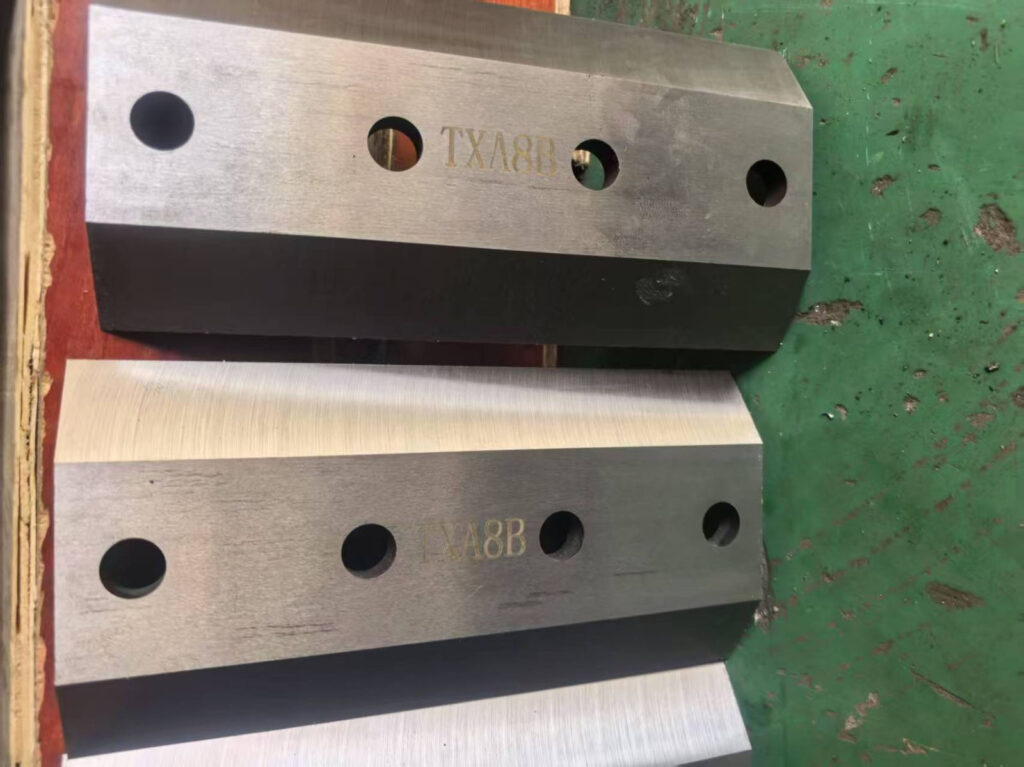
I often hear one sentence in sales calls: “I want one machine that can handle everything.” I understand the wish, but I do not agree with the idea. No machine handles everything well. If a buyer needs to chip soft branches, wet green waste, bamboo, and hardwood, then the buyer must think about the worst material first. For example, palm leaves are a common problem. They can clog the outlet, do not make fine chips, and can slow the job down. Hardwood like oak or walnut also creates more blade wear. In that case, I prefer stronger blade material such as A8B for those harder jobs.
The screenless design also matters. Some buyers think a screen is always better because it seems more precise. But in real work, especially with wet material, a screen can clog fast. That means more stops. A screenless rotor often gives better flow and less blockage. The output size is less exact, but the daily work is smoother. For many B2B users, smooth work is more valuable than perfect chip size. That is a cost decision, not just a technical one.
How do power choices change the total cost?
Power choice changes fuel use, output, and stress on the whole machine.
A stronger engine is not always wasteful. A weak engine can be more expensive because it runs under heavy load, uses more fuel in practice, and wears out faster.
I tell buyers to think in simple terms. If the machine is always working too hard, the operator pays for that every day. If the power is matched well, the machine stays stable and the cut stays cleaner. For example, some models in the TIROX range use diesel engines in different power levels, and the fuel consumption changes with the load and the engine size. That is normal. What matters is not the number alone. What matters is whether the power fits the material and the duty cycle.
For international buyers, the power choice can also affect compliance. Some markets ask for Euro 5 or EPA emissions standards. That can change the price and the delivery time. I also remind buyers that electric motor setups can work well in some fixed sites, but they do not fit every project. A buyer who works in forests or far from stable power often needs diesel. A buyer who works in a fixed yard may choose electric to reduce running cost. The right answer depends on the site, not on the brochure.
How much does shipping and import cost add to the final price?
For importers, factory price is only part of the cost. Shipping, port fees, and local rules can add a lot more.
The landed cost is the number that matters. It includes the machine price, freight, handling, customs, and any needed local changes.
I see many buyers make a simple mistake. They compare only the ex-factory price from two suppliers. Then they choose the lower one. After that, they discover that the machine takes more space, needs more freight, or needs extra compliance work. The final bill rises. So I always ask buyers to request the CBM first. That helps them estimate the shipping plan. Some machines can move by LCL shipment, and that means freight and port charges become part of the decision. A compact model may be cheaper to ship, while a larger machine may need more space and a higher freight cost.
Here is a simple way I explain it to buyers:
| Import Cost Factor | Why It Matters | Buyer Risk If Ignored |
|---|---|---|
| CBM volume | Affects freight space | Freight estimate becomes wrong |
| LCL charges | Affects small shipments | Port cost grows fast |
| Local compliance | Affects registration and use | Delay or extra modification cost |
| Emissions standard | Affects market access | Machine may not be legal for use |
| Spare parts plan | Affects uptime | Long stoppage if parts are missing |
I also tell buyers that a road chassis is not just a comfort feature. It can change how the machine moves between sites. A tracked version may be better on rough land. A road-legal setup may be better for longer travel. Each option changes the price, but each one also changes the cost of operation.
What should buyers check before they compare supplier quotes?
Buyers should check structure, service, and maintenance access, not only horsepower.
A high horsepower claim means little if the internal design is weak. A lower quote can become the more expensive machine if it stops too often.
I prefer to ask practical questions. Can the feed system handle the material without constant jamming? Does the machine have a semi-automatic lubrication pump? Can the operator reach key parts without long downtime? Is the hydraulic system easy to service? These questions matter because they affect labor time and repair time. They also affect how many people you need on the team.
TIROX machines, for example, often focus on structure and service access as much as on power. I say this from a buyer-support point of view, not as a sales slogan. A modular design helps parts replacement. A strong welded body helps the machine work in hard environments. A good control system helps the operator stay safe and work faster. These points do not sound exciting in a quote sheet, but they are very important in daily work. I always advise buyers to ask the supplier for the feeding system, blade configuration, chassis type, and service plan in writing. Then the buyer can compare real cost, not just market language.
How do I think about cost when I recommend a model?
I think about the size of the raw material, the working scene, and the result the buyer wants.
The best machine is not the cheapest one. The best machine is the one that keeps the job moving with the least waste.
-1024x683.jpg "title")
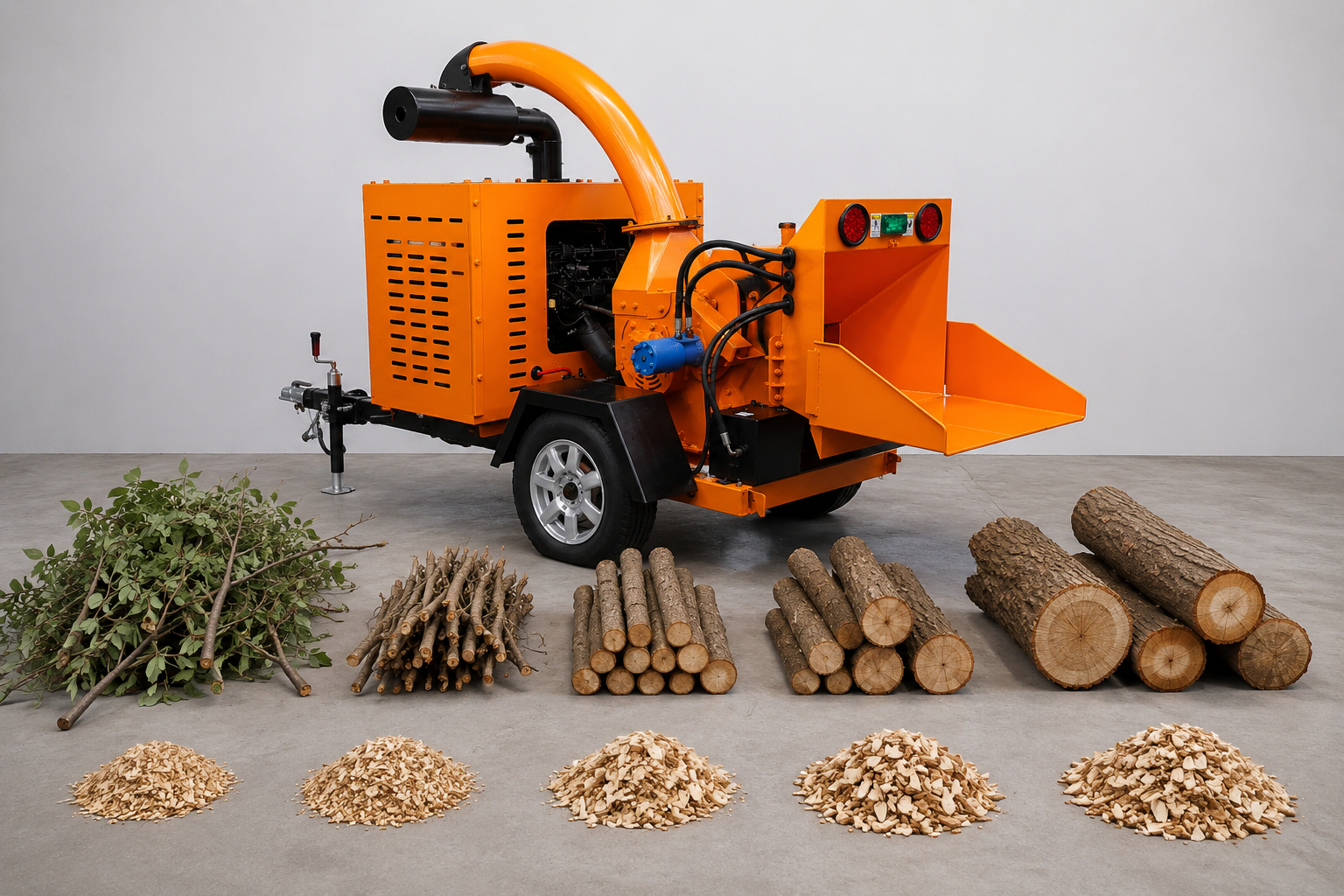
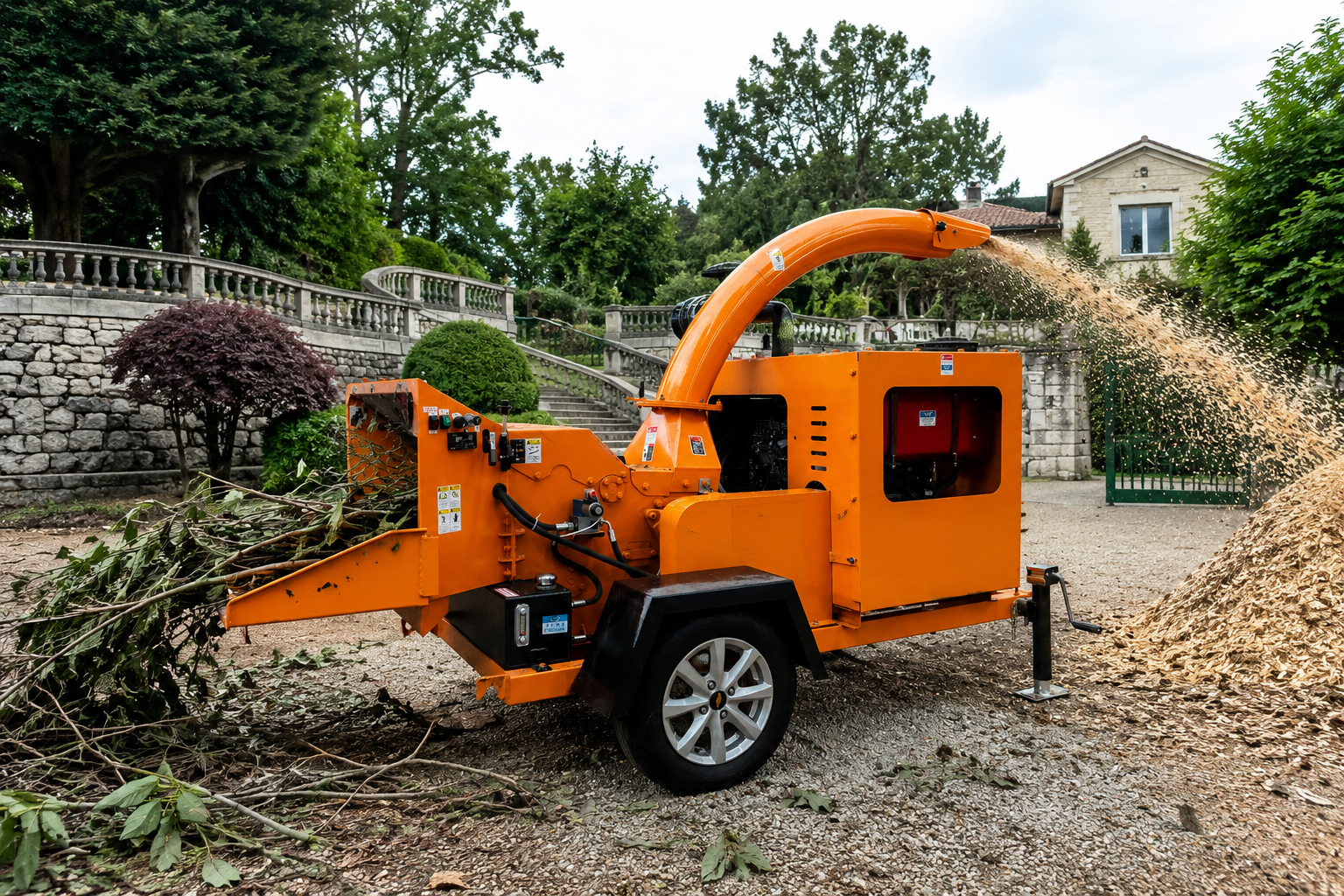
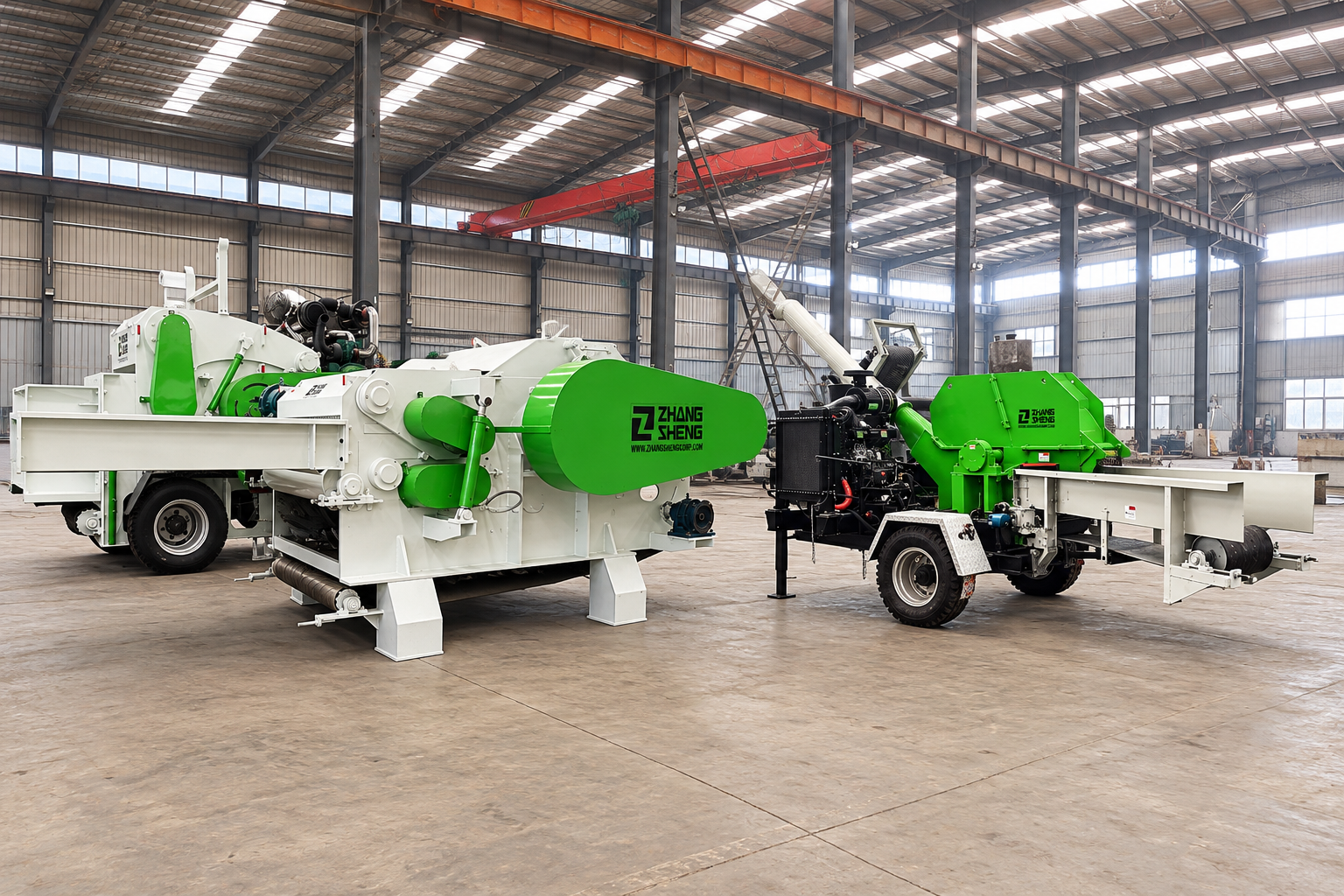
For small landscaping work, a compact machine can make sense if the material is light and the travel distance is short. For larger forestry or recycling work, the buyer needs more feed capacity and stronger output. In the TIROX model range, smaller machines like TIROX 5 Inch Mobile Wood Chipper (600) fit lighter work and smaller logs or branches. Larger models like TIROX 1063 Professional Wood Chipper (1063) and TIROX 1585 Industrial-Grade Shredder (1585) fit bigger diameter material and harder daily work. I do not say this to push a specific model. I say it because a buyer who chooses too small a machine usually pays more in overtime, extra passes, and lost output. A buyer who chooses too large a machine can also waste money by paying for unused capacity.
I also remind buyers that blade choice affects cost. Standard H12 blades work for common chipping. Hard woods may justify stronger blade material. If the buyer processes mixed yard waste, the machine must also cope with green material and moisture. So the true decision is not “How cheap is it?” The true decision is “How much will it cost me to finish the job, every day, without surprises?”
Conclusion
The real cost of a wood chipper includes purchase price, shipping, matching, fuel, wear, and downtime. I always advise buyers to compare total working cost, not just the first quote.