
Struggling with piles of wood waste slowing down your operations? Industrial wood chippers offer a fast, efficient solution for high-volume material reduction, boosting productivity instantly.
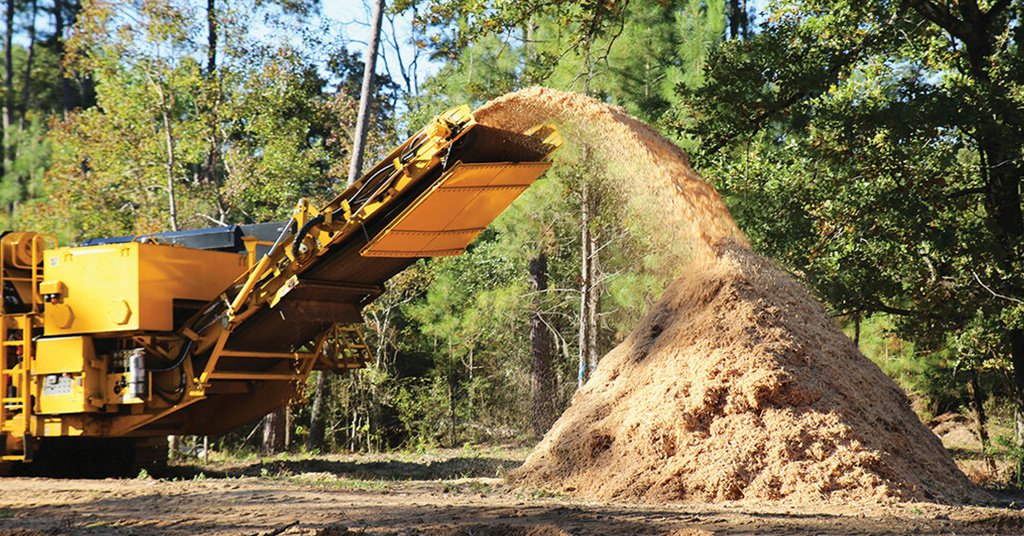
Industrial wood chippers shred tree branches and timber into uniform chips by pulling material through hydraulic feed rollers into hardened steel blades, then ejecting finished chips via conveyor or blower, maximizing throughput for forestry and biomass operations.
Many B2B clients face growing demands for efficient land clearing and biomass production. Industrial chippers deliver the speed and reliability needed for large-scale projects. Their robust feeding systems and powerful engines handle even irregular, oversized branches—something smaller machines struggle with. ★ Read on to learn how our chipper technology drives results.
Understanding the Core Mechanism of Industrial Chipping?
Is your team losing time on manual wood processing? Our hydraulic auto-feed system tackles tough, uneven branches without constant monitoring, making big jobs easier.
Industrial chippers use automated hydraulic feed rollers to pull branches and logs into the chipping chamber, where drum or disc blades slice wood efficiently; smart discharge systems keep chips flowing for nonstop production.
The Feeding System
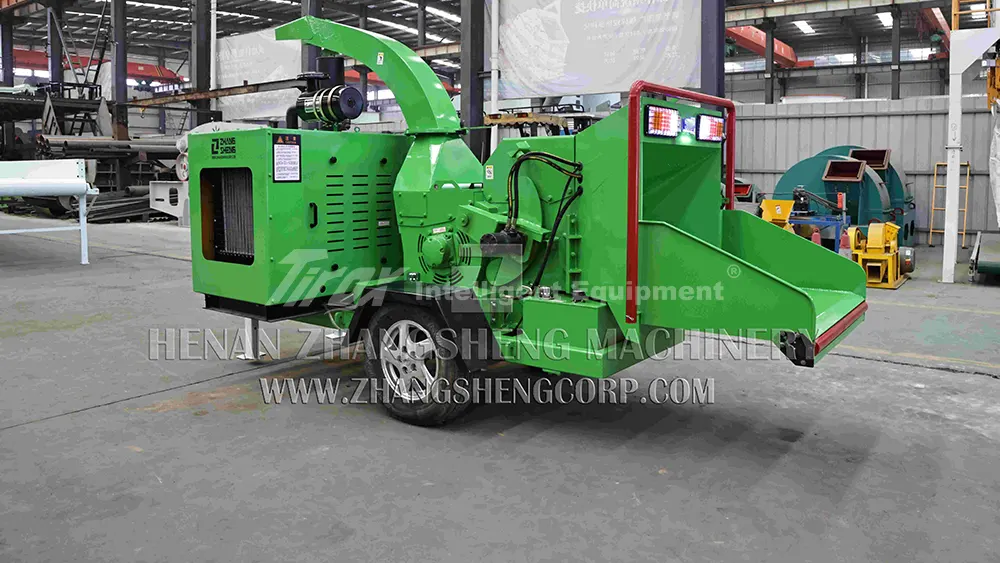
Industrial hoppers and hydraulic auto-feed rollers simplify how workers process large, knotted wood. These systems adjust to various diameters, speeding up feeding and preventing jams. The process starts by placing material onto the wide infeed table. The rollers grip and pull wood automatically, regulating speed for steady throughput. This reduces manual labor and keeps the machine working smoothly, even with rough materials. ★
The Chipping Chamber: Drum vs. Disc Designs
| Type | Main Advantage | Best Use |
|---|---|---|
| Drum Chipper | High volume, uniform chips | Biomass, general forestry |
| Disc Chipper | Consistent, smaller chips | Pulp, paper, landscaping |
Drum chippers excel in processing whole trees or mixed debris. Disc chippers focus on producing precise chip sizes for specialty markets. ★
Blade Technology and Discharge Systems
Our chipper blades use proprietary hardened steel alloys for longer sharpness and lower maintenance. Blade configuration matters—more blades mean faster cutting but require more power. Chips exit the chamber via blower or conveyor, ensuring continuous output and clean work areas. ★
Key Components and Their Industrial Significance?
Does downtime worry you? Heavy-duty engines and intelligent controls mean you spend less time fixing problems and more time working.
Industrial wood chippers feature high-horsepower engines, durable frames, and PLC-integrated control panels for reliable, safe, and efficient performance in demanding B2B environments.
Engine Power
Diesel or electric engines (often 300 HP+) power heavy-duty chipping. Our models include options for global brands like Cummins and Perkins, ensuring easy part sourcing and maintenance. Strong engines keep throughput high and downtime low.
Robust Chassis and Frame
Industrial chippers need stability for safe operation. Reinforced steel frames withstand vibration and harsh site conditions. Mobility options allow easy relocation across large projects. ★
Advanced Control Systems
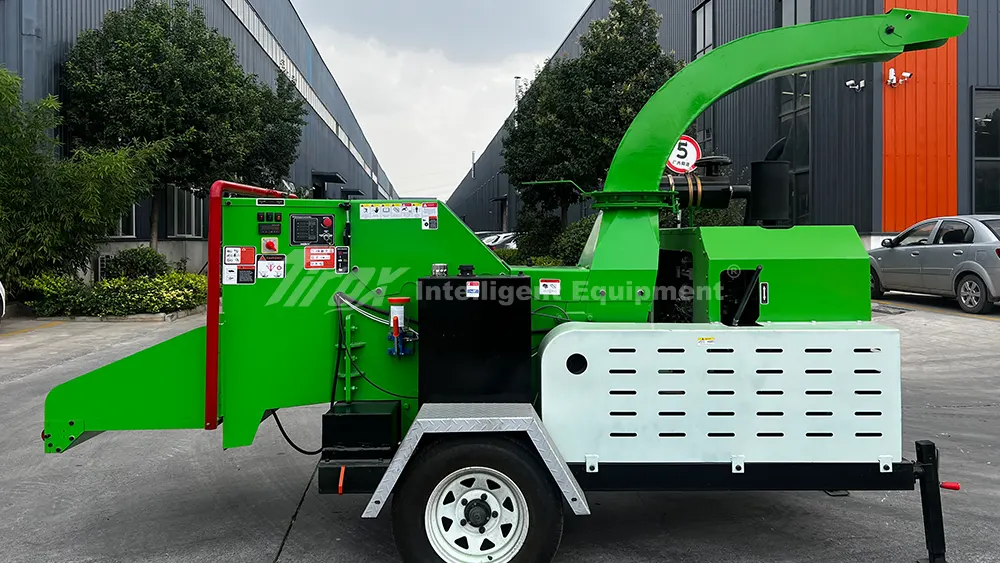
PLC panels provide real-time data on engine status, hydraulic pressure, and maintenance alerts. Operators use intuitive controls for forward, reverse, and stop functions, reducing training time and mistakes. Smart systems help prevent jams and overloads automatically. ★
The Industrial Chipping Process in Action?
Want uniform chips for fuel, mulch, or pulp? Follow these steps to get consistent results every time.
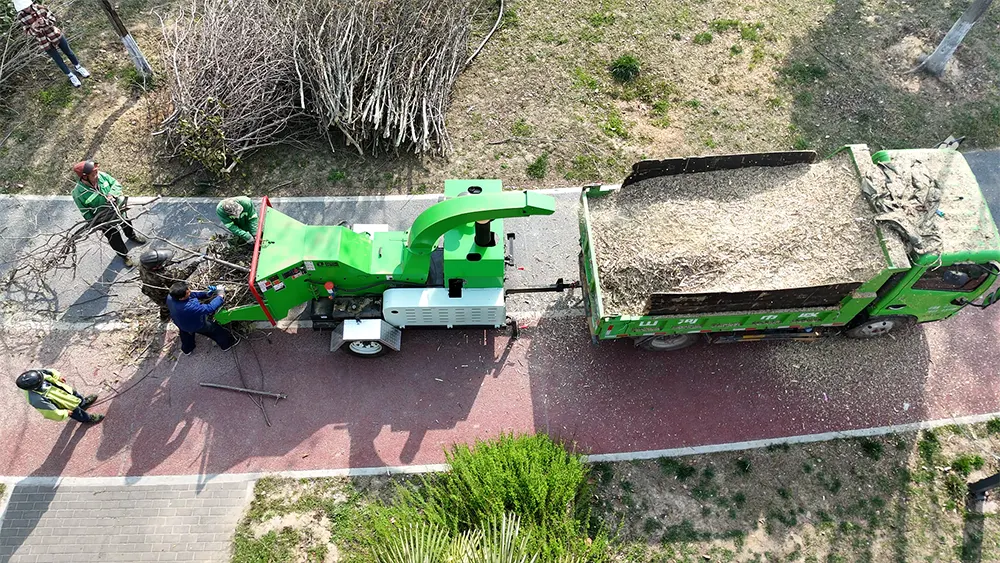
Operators feed raw wood into the chipper. Hydraulic rollers move material evenly toward the blades. The system slices wood into chips of set sizes, then directs them to discharge conveyors or blowers for collection and transport.
Step-by-Step Overview
- Load branches or logs onto the infeed table.
- Hydraulic rollers grip and feed wood into the chamber.
- Blades cut material into chips according to preset size settings.
- Finished chips exit via conveyor or blower for collection.
Integrated emergency stops and lockout systems protect workers. Smart feed controls prevent jams—if a blockage occurs, operators can reverse or halt feed instantly. This keeps productivity high and minimizes risks. ★
Conclusion
Industrial wood chippers transform bulky branches into valuable chips, powering efficient forestry and biomass operations for B2B clients worldwide.